Mon-Fri | 08:00 - 20:00


Find

Contact us

Kyiv
46 Kyrylivska St. (Podil)
 Мережа СТО в місті

Kyiv
46 Kyrylivska St. (Podil)
 Мережа СТО в місті

 Години роботи
 Mon-Fri
08:00 - 20:00
Why Parking Sensors and Rearview Cameras Stop Working
How Parking Sensor and Camera Malfunctions Appear
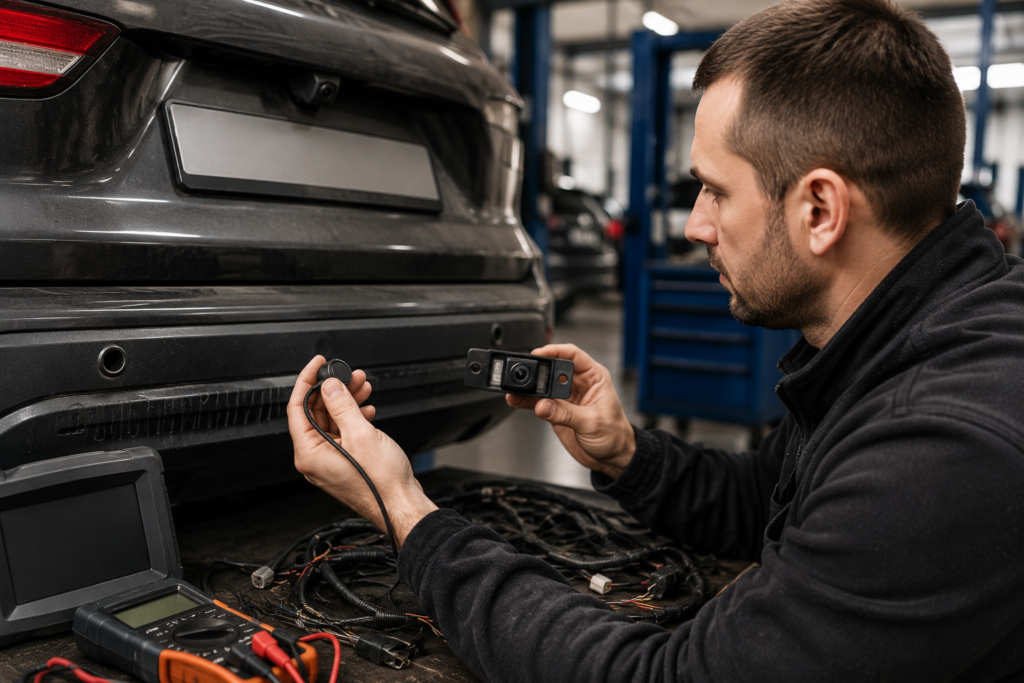
Parking assistance systems have become a standard feature in modern vehicles. Parking sensors and rearview cameras help drivers monitor the area around the vehicle, make maneuvering easier, and reduce the risk of damage while parking. However, even these systems can begin to operate incorrectly over time.
Parking sensor failures can appear in different ways. In some cases, the system continuously emits warning signals even when there are no obstacles nearby. In others, it stops detecting obstacles altogether. Sometimes a parking sensor error message appears on the dashboard, or the system fails to activate when reverse gear is engaged.
Similar issues can occur with cameras. A rearview camera may stop working completely, the image may start flickering, disappear, or a black screen may appear instead of the camera feed. In some cases, the rearview camera only works intermittently, for example after rain or after washing the vehicle.
The cause is not always the parking sensors or the camera itself. Quite often, the issue is related to the vehicle’s wiring, corroded connectors, or faults within the vehicle’s electronic systems.
Main Causes of Parking System Failures
One of the most common causes is contamination or mechanical damage to the sensors. Parking sensors are constantly exposed to moisture, dust, road salt, and small stones, which can eventually damage the sensor surface or reduce its sensitivity.
Parking sensors may also stop working because of:
- sensor damage caused by a bumper impact;
- power supply issues;
- broken or damaged wiring;
- control module failure;
- short circuits in the electrical system;
- faults occurring after electrical repairs.
Another common problem is a malfunctioning control module. If the system periodically shuts down or fails to activate after starting the vehicle, the control unit may be the source of the issue.
In some vehicles, a parking sensor error can appear even after a temporary power interruption or voltage instability. This is particularly common after a discharged battery or modifications to the vehicle’s electrical system.
A rearview camera may also stop working because of mechanical damage, moisture intrusion, or connection problems. Wiring failures often occur in the trunk lid hinge area, where wires are constantly flexed during operation.
Why the Problem May Not Be the Sensors Themselves
Many drivers try to determine why their parking sensors are not working, even though the sensors themselves may be fully functional.
The issue is often caused by:
- a faulty control module;
- poor connector contact;
- CAN bus communication faults;
- corroded electrical contacts;
- unstable system power supply;
- errors after electrical repairs.
In modern vehicles, most electronic systems communicate through the CAN bus network. If a fault occurs within this network, it can affect multiple electronic components at the same time, including parking sensors and cameras.
Even minor corrosion on electrical contacts can cause signal interruptions. As a result, the system may operate inconsistently, working properly one moment and failing completely the next without any obvious reason.
In some cases, parking sensor malfunctions appear after body repairs, alarm system installation, or the addition of aftermarket equipment. In these situations, the problem is often related to wiring or incorrect electrical connections.
How Moisture and Wiring Damage Affect Vehicle Electronics
Moisture is one of the leading causes of parking assistance system failures. Since sensors and cameras are mounted on the exterior of the vehicle, they are constantly exposed to water, snow, dirt, and temperature fluctuations.
As moisture enters electrical connections, corrosion gradually develops. Initially, the system may only behave erratically after rain or a car wash, but over time the problem often becomes permanent.
Vehicle wiring damage is also very common, especially in areas such as:
- trunk lid hinge points;
- camera connection locations;
- wiring routed through the bumper;
- connector junctions;
- areas repaired after bodywork.
In some cases, wires become damaged inside the insulation, making the issue difficult to identify through visual inspection alone. As a result, vehicle electronics may begin operating unpredictably, and the system may randomly shut down or display error messages.
Problems frequently arise after poor-quality repairs or improper installation of aftermarket equipment. Even a loose connection or inadequate insulation can cause interruptions in the operation of parking assistance systems.
When Computer Diagnostics Are Necessary
If the parking sensors are not working or the rearview camera has stopped functioning without an obvious cause, a simple visual inspection is often not enough.
Electrical diagnostics are recommended when:
- the system periodically displays error messages;
- parking sensors activate without obstacles nearby;
- the camera works intermittently;
- the image flickers or disappears;
- electronic problems appeared after a repair;
- other electrical systems started malfunctioning at the same time.
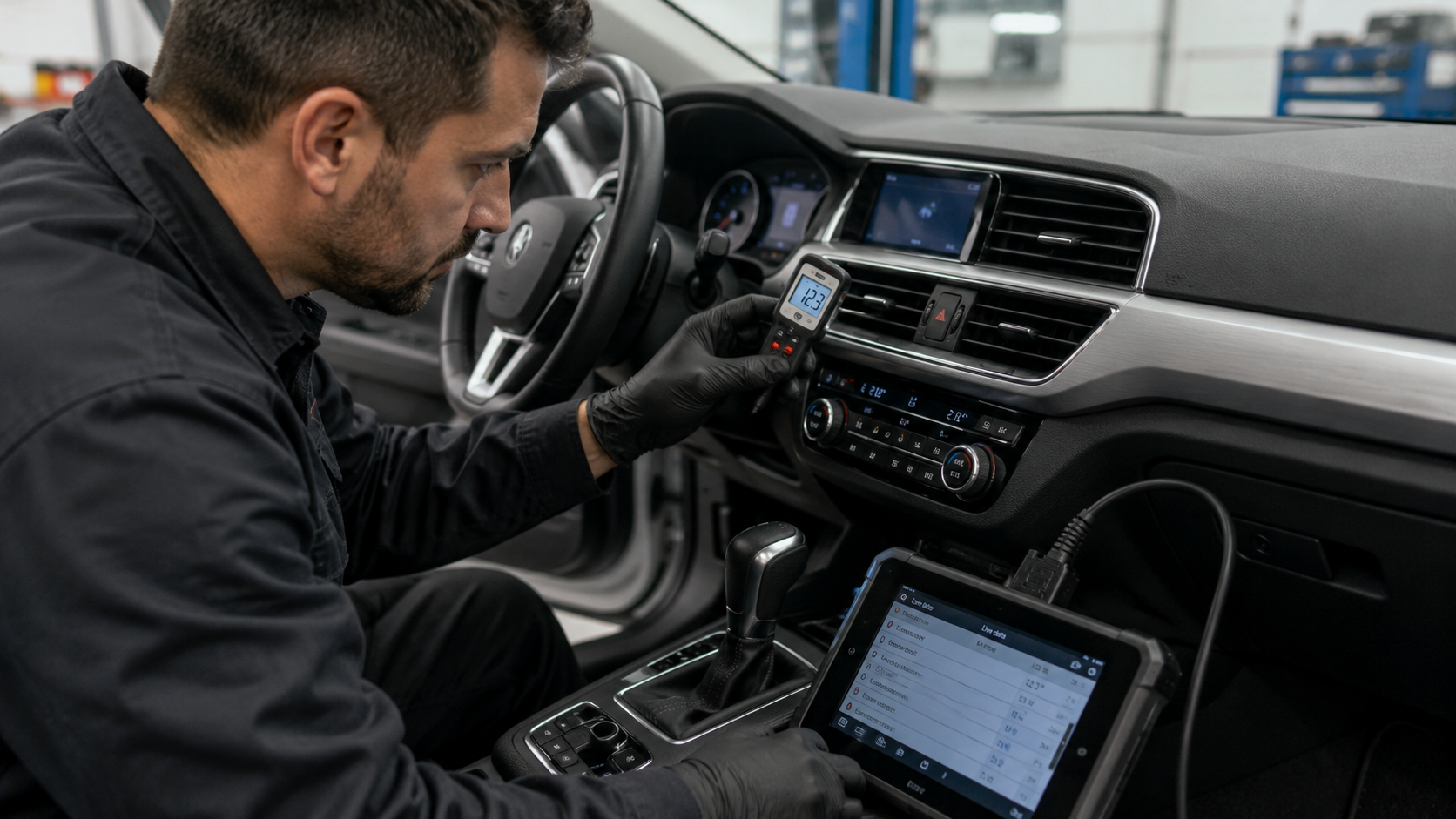
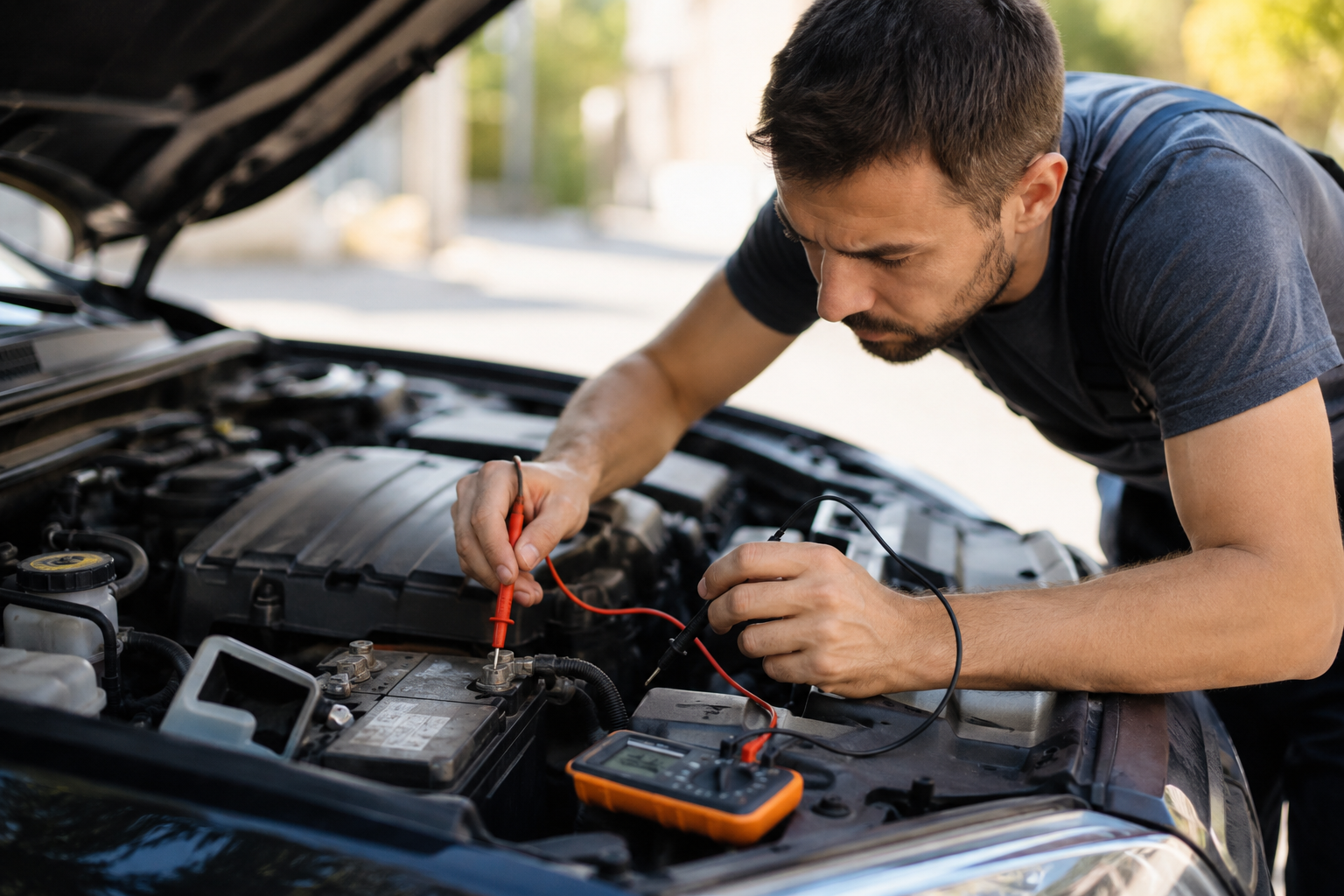
Computer diagnostics allow technicians to evaluate the operation of the control module, test the parking sensors, monitor CAN bus communication, and verify power supply stability.
In many cases, electrical diagnostics help identify the problem before it begins affecting other vehicle electronic systems or results in a more expensive repair.
Top popular news
- Air Conditioner Losing Refrigerant Without Visible Damage: Causes and Solutions
- Why Wheel Alignment Goes Out After Adjustment: It Is Not Always the Alignment Rack
- Seized Brake Caliper: Symptoms, Causes, and Repair
- Changing the Oil in an AWD Differential: Why This Component Is Often Forgotten
- Check Engine Light Flashing: What the Signal Means and Why You Should Not Ignore It
- Preparing a car for a long trip: checklist before departure
- Oil leaking from the valve cover: causes of seepage and finding the source of the problem
- Automatic climate control does not maintain the set temperature: where to look for the cause

Subscribe to our newsletter!
To stay updated with the latest news


Book a service