Mon-Sut | 09:00 - 19:00


Find

Contact us

Kyiv
18 Teplovozna Street (Poznyaki)
 Мережа СТО в місті

Kyiv
18 Teplovozna Street (Poznyaki)
 Мережа СТО в місті

 Години роботи
 Mon-Sut
09:00 - 19:00


Car Soundproofing: Where to Start for the Best Results
Even modern mid range vehicles often come with only basic factory sound insulation. Manufacturers intentionally reduce the amount of insulation material to lower the vehicle’s weight and production costs. As a result, tire noise, small stone impacts, suspension rumble, and aerodynamic wind noise easily enter the cabin. During long trips, this constant background noise tires the driver much faster, even if they have already become accustomed to it.
When planning car soundproofing, it is important to determine where to start in order to achieve a noticeable improvement without spending money on areas that have little effect on overall acoustic comfort.
Why Two Different Layers Are Used
Effective soundproofing consists of two layers, each performing its own function.
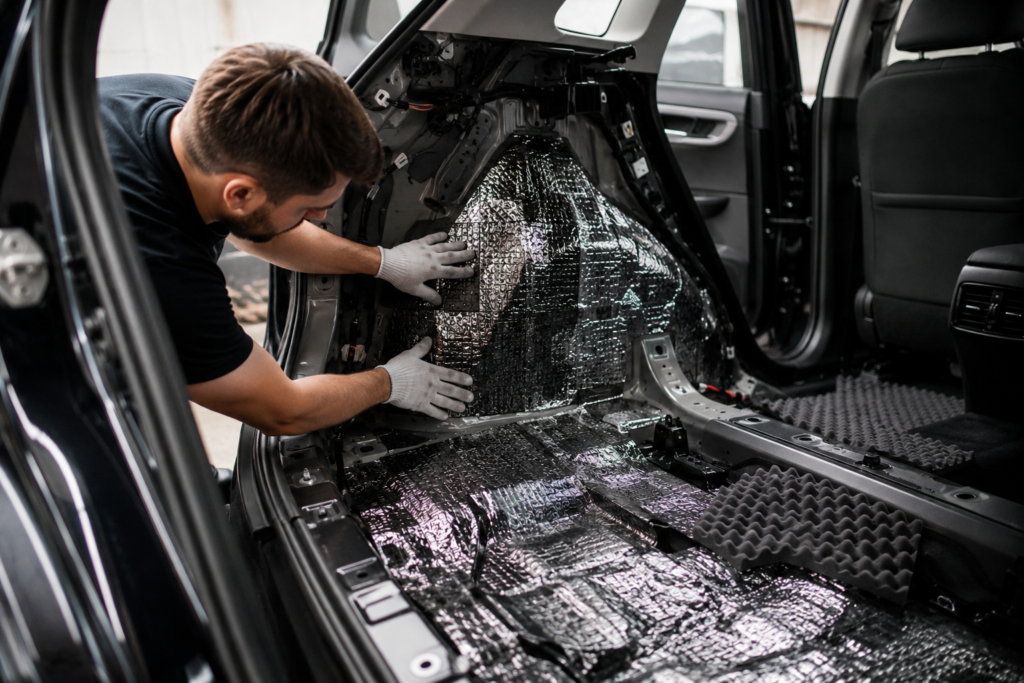
The first layer is a vibration damping material with a butyl based coating. It reduces body panel vibrations that generate low frequency noise while driving.
The second layer is a sound absorbing material. Splen or Biplast are the most commonly used options. These materials absorb sound waves traveling through the body panels and air cavities.
The vibration damper works directly with the metal, while the sound absorber deals with airborne noise. That is why these materials cannot replace one another. Only their proper combination can simultaneously reduce body vibrations and suppress unwanted sounds entering the cabin while driving.
Which Areas Should Be Treated First
To determine which parts of the vehicle should be soundproofed first, it is important to understand where most of the noise comes from. If the budget is limited, it is recommended to follow this order:
- doors;
- wheel arches;
- cabin floor;
- trunk;
- roof.
The most noticeable improvement comes from soundproofing the vehicle doors. Because of their large, thin metal panels, doors easily resonate. After treatment, they close with a more solid sound, while the factory audio system performs much better because the door cavity begins to function as a proper speaker enclosure. In addition, noise from nearby vehicles, especially in city traffic, becomes significantly less noticeable.
After the doors, the greatest improvement comes from treating the floor and the wheel arches. These areas allow most tire noise, stone impacts, water spray, and road vibrations to enter the cabin. If the vehicle is frequently driven on highways, the difference after insulating the wheel arches becomes noticeable during the very first trip.
For hatchbacks, station wagons, and crossovers, insulating the trunk is also important. It helps reduce noise from the rear suspension and exhaust system, which is especially noticeable at higher speeds.
The roof is usually treated last, although it is the part that eliminates the familiar drumming sound during rain and significantly reduces aerodynamic wind noise.
Mistakes That Reduce Effectiveness
Even high quality soundproofing materials will not deliver the expected results if the installation process is not performed correctly.
The most common mistakes include:
- applying the sound absorbing layer without a vibration damper;
- using excessively thick layers inside the doors;
- installing materials without properly cleaning and degreasing the metal;
- failing to roll the material firmly with a special roller;
- skipping anti squeak materials where plastic panels meet.
Anti squeak material does not reduce road noise, but it eliminates friction between plastic interior components. This is what prevents the annoying interior squeaks and rattles that often become even more irritating than tire noise.
Using excessive amounts of insulation is also undesirable. Extra weight may eventually cause doors to sag, while overly thick layers can make it difficult to reinstall plastic interior panels onto their original clips.
Is It Necessary to Soundproof the Entire Vehicle?
Completely insulating the entire body is not always the best solution. If tire noise is the biggest problem, priority should be given to the doors, floor, and wheel arches. If rain noise or wind noise at highway speeds is the main concern, roof insulation will provide the greatest improvement. This approach allows the budget to be spent more efficiently without unnecessarily increasing the vehicle’s weight.
What Determines the Final Result
The quality of soundproofing depends not only on the materials used. During professional installation, the entire interior is removed, while all metal surfaces are thoroughly cleaned and degreased. Each vibration damping sheet is then carefully rolled to eliminate any air pockets where condensation could later accumulate.
If the owner plans complete vehicle soundproofing, the cost of this service in Kyiv depends on the treated area, the number of sections, the selected materials, and the complexity of interior disassembly. The best results are achieved not by installing the largest possible amount of insulation, but by selecting the right areas, following proper installation techniques, and using each material for its intended purpose. This approach delivers a quieter cabin without unnecessary weight or excessive expense.
Top popular news
- Vehicle Maintenance Schedule by Mileage: What Really Needs to Be Replaced at 30,000, 60,000, and 90,000 km
- Importing a Car from the USA to Ukraine: Required Documents and Customs Clearance Costs
- Switching from LPG to Gasoline While Driving: Why the Switching Valve Sometimes Fails
- Wheel Balancing: Why Vibration at High Speed Does Not Always Mean a Bent Rim
- Car Air Conditioner Disinfection: Why It Is Necessary and How Often It Should Be Done
- CV Boot: Why Replacing It Costs Much Less Than Repairing the Drive Shaft
- Wheel Bearing Noise: How to Identify Which Wheel Is Faulty
- Factory Paint Thickness of a Car: How to Read Paint Thickness Gauge Measurements

Subscribe to our newsletter!
To stay updated with the latest news


Book a service