Mon-Fri | 08:00 - 20:00


Find

Contact us

Kyiv
46 Kyrylivska St. (Podil)
 Мережа СТО в місті

Kyiv
46 Kyrylivska St. (Podil)
 Мережа СТО в місті

 Години роботи
 Mon-Fri
08:00 - 20:00
How the condition of the suspension affects safety

Why suspension is not just about comfort
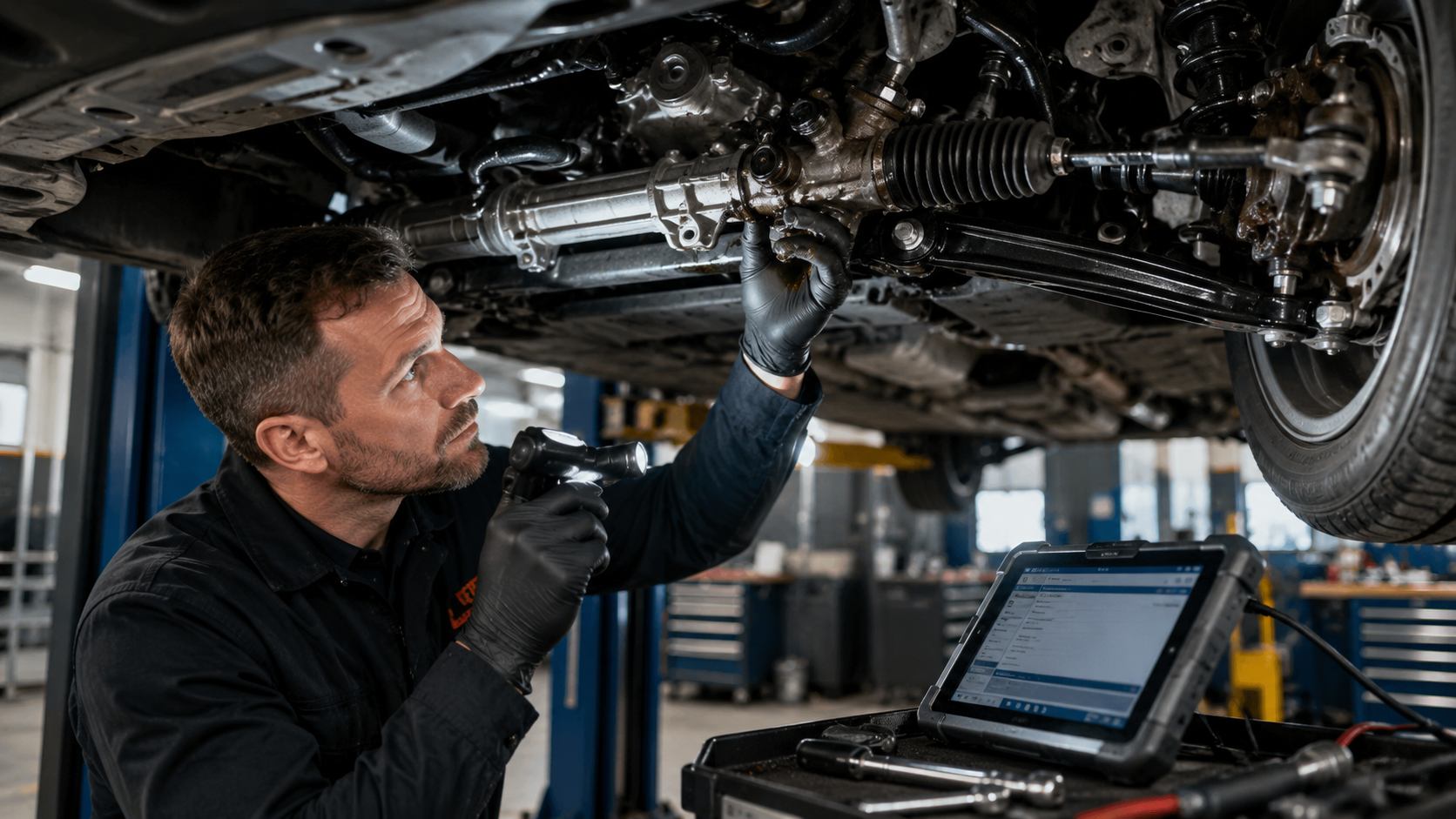
Car suspension safety performs not only the function of comfort while driving, but is also a key element of car safety. It ensures constant contact of the wheels with the road, dampens body vibrations, maintains stability in turns and during speed changes. Even slight wear of shock absorbers or silent blocks changes the behavior of the car during maneuvers, braking and driving on uneven surfaces. Owners often ignore these aspects, perceiving the suspension only as an element of comfort, while in fact its condition directly affects the handling and stability of the car.
It is critically important to understand that trajectory control depends on the suspension, and any problems with it increase the braking distance and the risk of loss of control. The suspension system interacts with tires, steering and brakes, so worn components can significantly affect safety even with the normal condition of other elements.
How wear affects handling
Wear on a car’s suspension manifests itself in the form of vibrations, steering instability, and changes in trajectory during maneuvers. Shock absorbers with reduced efficiency do not dampen body vibrations, silent blocks lose elasticity and transmit shock loads to the chassis. As a result, the car becomes less predictable in motion: light braking or lane changes are accompanied by unpredictable vibrations, and handling decreases.
Handling depends not only on springs and shock absorbers, but also on the accuracy of the operation of silent blocks and suspension arms. When these components are worn out, even small irregularities in the road can lead to a sharp change in trajectory, which is especially dangerous at high speeds. Controlling the car in such conditions becomes difficult, and the risk of accidents increases.
The relationship between suspension and braking

The condition of the suspension directly affects the braking distance. When shock absorbers are worn, the wheels do not fully contact the road, which increases the distance required to stop completely. Worn silent blocks and struts worsen the load distribution between the axles, increasing the likelihood of wheel locking and loss of stability.
Even modern ABS and ESP systems work effectively only if the suspension is working properly. The lack of clear contact between the wheels and the road means that the electronic systems cannot adjust the trajectory and braking as intended by the manufacturer. This is especially noticeable during emergency braking or on a slippery surface.
Risks at high speed
At high speeds, any suspension defects become critical. Body vibrations, car instability, unpredictable changes in trajectory and reduced handling significantly increase the risk of losing control of the car. The combination of worn shock absorbers and road irregularities can lead to serious consequences, especially during sharp maneuvers or overtaking.
A worn suspension changes the interaction with the braking system, which directly affects the braking distance and the effectiveness of trajectory control. Even small defects in shock absorbers or silent blocks at high speeds can cause a significant increase in braking distance and loss of stability in turns.
When the suspension becomes dangerous
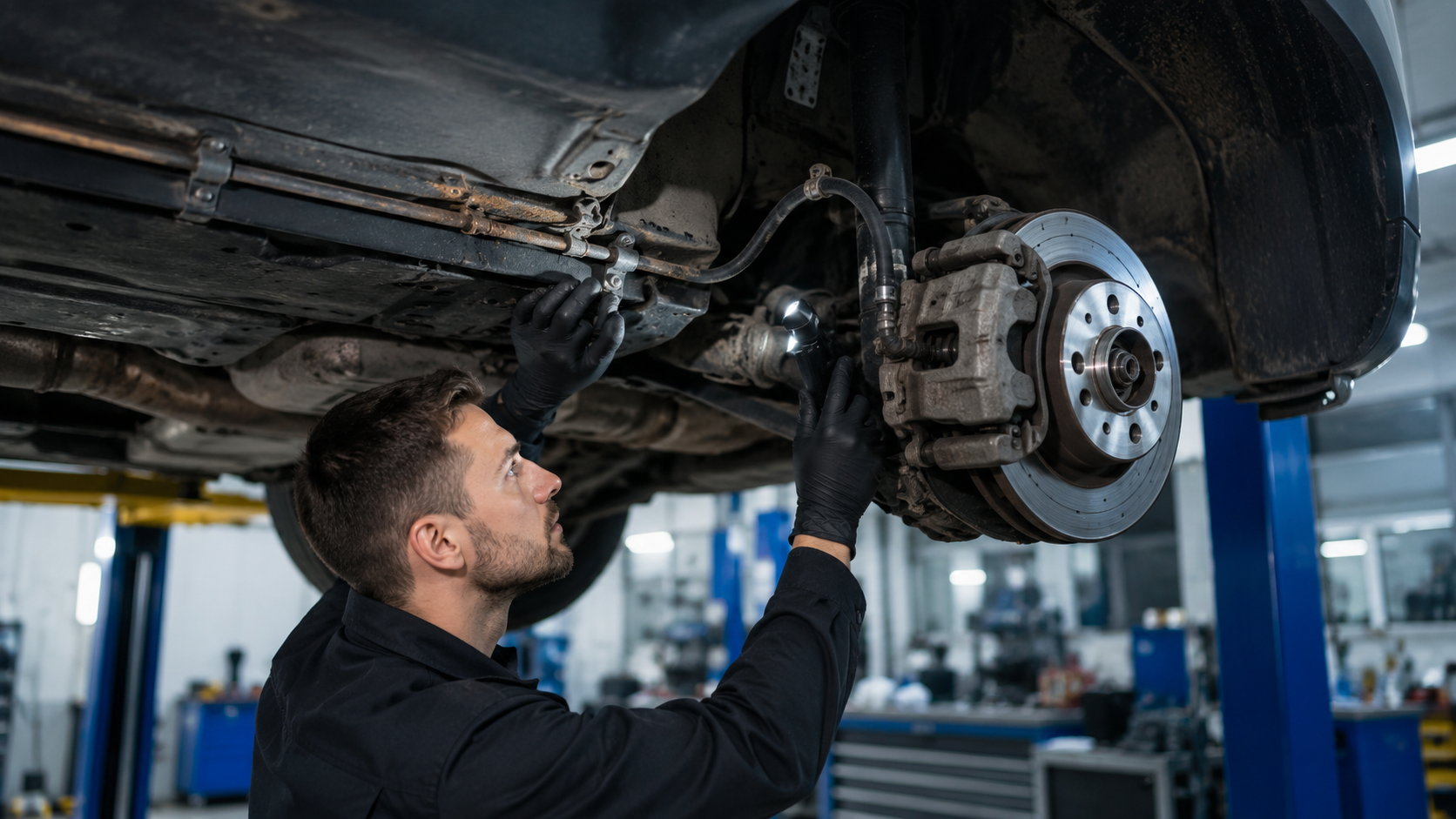
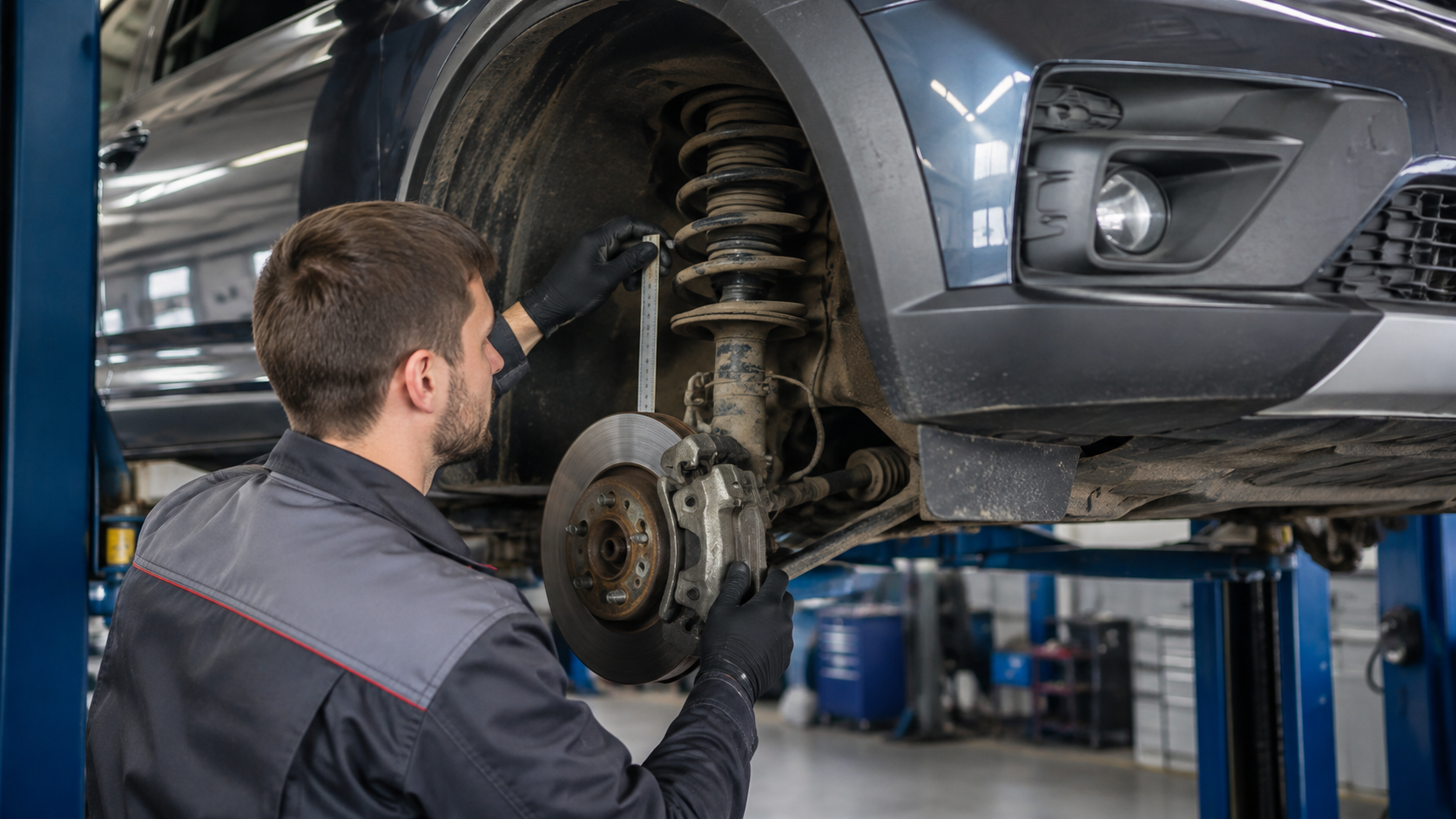
The suspension becomes dangerous when its components lose their technical efficiency. Signs of wear are strong vibrations, creaks when passing bumps, wheel misalignment, unstable response to steering. Regular comprehensive inspection of shock absorbers, silent blocks, struts and other elements allows you to identify problems before they lead to dangerous situations.
Timely diagnostics ensure safe handling, stability and control of the braking distance, allowing you to avoid critical situations on the road. Compliance with the technical condition of the suspension with safety standards is mandatory to prevent accidents and save the lives of the driver and passengers.
Top popular news
- Air Conditioner Losing Refrigerant Without Visible Damage: Causes and Solutions
- Why Wheel Alignment Goes Out After Adjustment: It Is Not Always the Alignment Rack
- Seized Brake Caliper: Symptoms, Causes, and Repair
- Changing the Oil in an AWD Differential: Why This Component Is Often Forgotten
- Check Engine Light Flashing: What the Signal Means and Why You Should Not Ignore It
- Preparing a car for a long trip: checklist before departure
- Oil leaking from the valve cover: causes of seepage and finding the source of the problem
- Automatic climate control does not maintain the set temperature: where to look for the cause

Subscribe to our newsletter!
To stay updated with the latest news


Book a service