Mon-Fri | 08:00 - 20:00


Find

Contact us

Kyiv
46 Kyrylivska St. (Podil)
 Мережа СТО в місті

Kyiv
46 Kyrylivska St. (Podil)
 Мережа СТО в місті

 Години роботи
 Mon-Fri
08:00 - 20:00
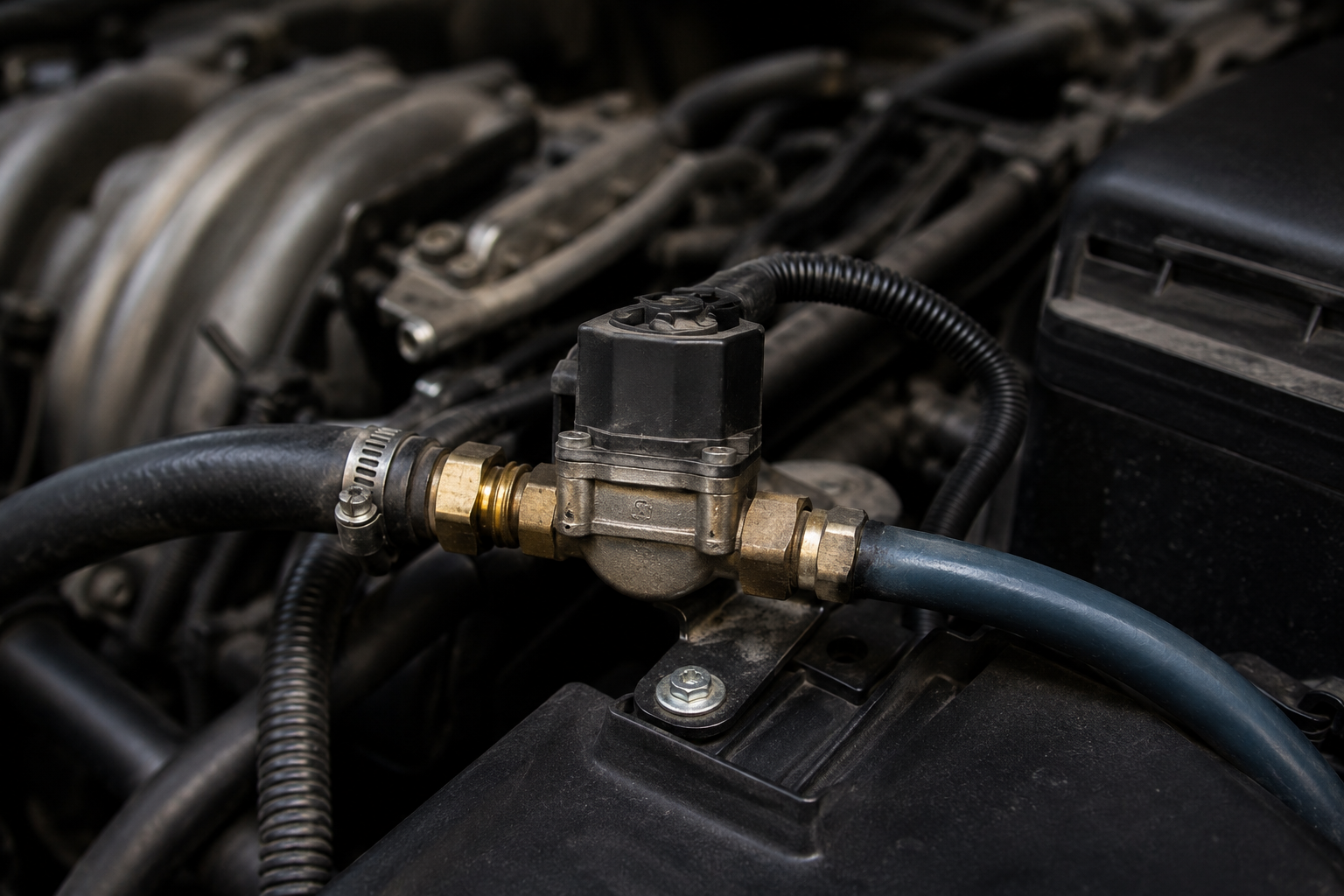
PCV crankcase ventilation valve: why a fault leads to oil leaks
The crankcase ventilation system is an important part of a modern engine. Its job is not only to remove excess gases from inside the engine but also to maintain the correct pressure in the crankcase.
During engine operation, some gases pass the piston rings and enter the lower part of the engine. These gases contain oil vapour, combustion products, and moisture. The positive crankcase ventilation (PCV) system is used to control them.
Under normal conditions, the PCV valve regulates gas flow and routes it back into the intake system to be burned again. This keeps pressure inside the engine stable and prevents engine oil from being forced through seals.
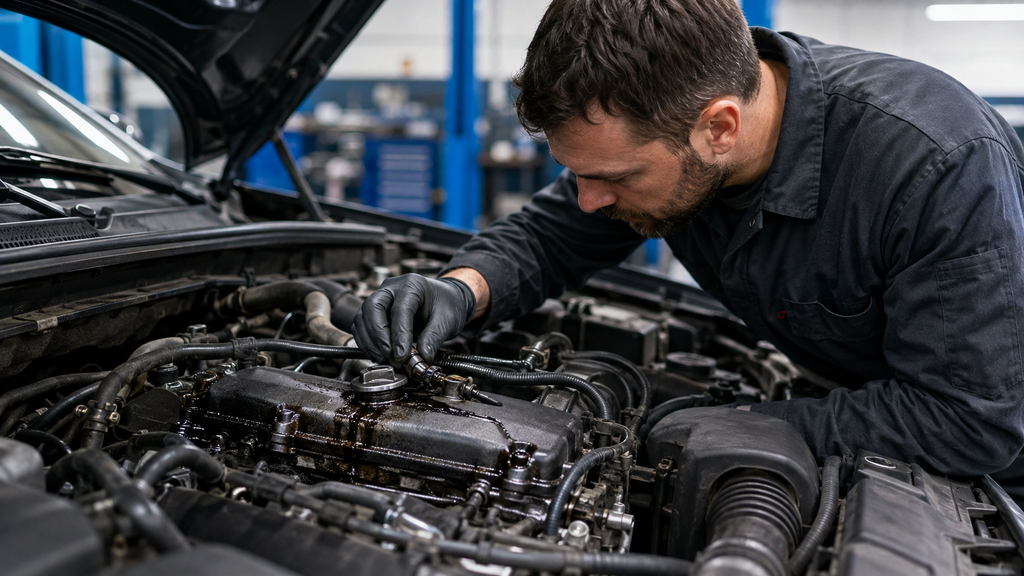
Problems begin when deposits contaminate the mechanism. A PCV crankcase ventilation valve fault is often related to carbon deposits, oil sludge, or malfunction of the internal valve element.
How the crankcase ventilation system works in a healthy engine
During operation of the piston group, some gases enter the crankcase. This process cannot be eliminated completely, so the engine has a dedicated circuit to remove them.
The system consists of:
- the PCV valve;
- ventilation passages;
- gas ventilation hoses;
- an oil separator or catch system;
- a connection to the intake system.
The valve controls the amount of gas leaving the crankcase. At the same time, it prevents excessive vacuum or a dangerous increase in pressure.
A properly functioning ventilation system helps to:
- reduce moisture accumulation inside the engine;
- return oil vapour to the combustion process;
- protect seals from excessive load;
- maintain normal engine operation.
What happens when the PCV valve becomes contaminated
Deposits accumulate in the system over time. Combustion products, poor-quality oil, frequent short-trip operation, and sludge formation are common causes.
When the valve or ventilation passages lose flow capacity, crankcase gases can no longer leave the engine normally. As a result, the load on all seals increases.
Possible signs of a PCV valve fault include:
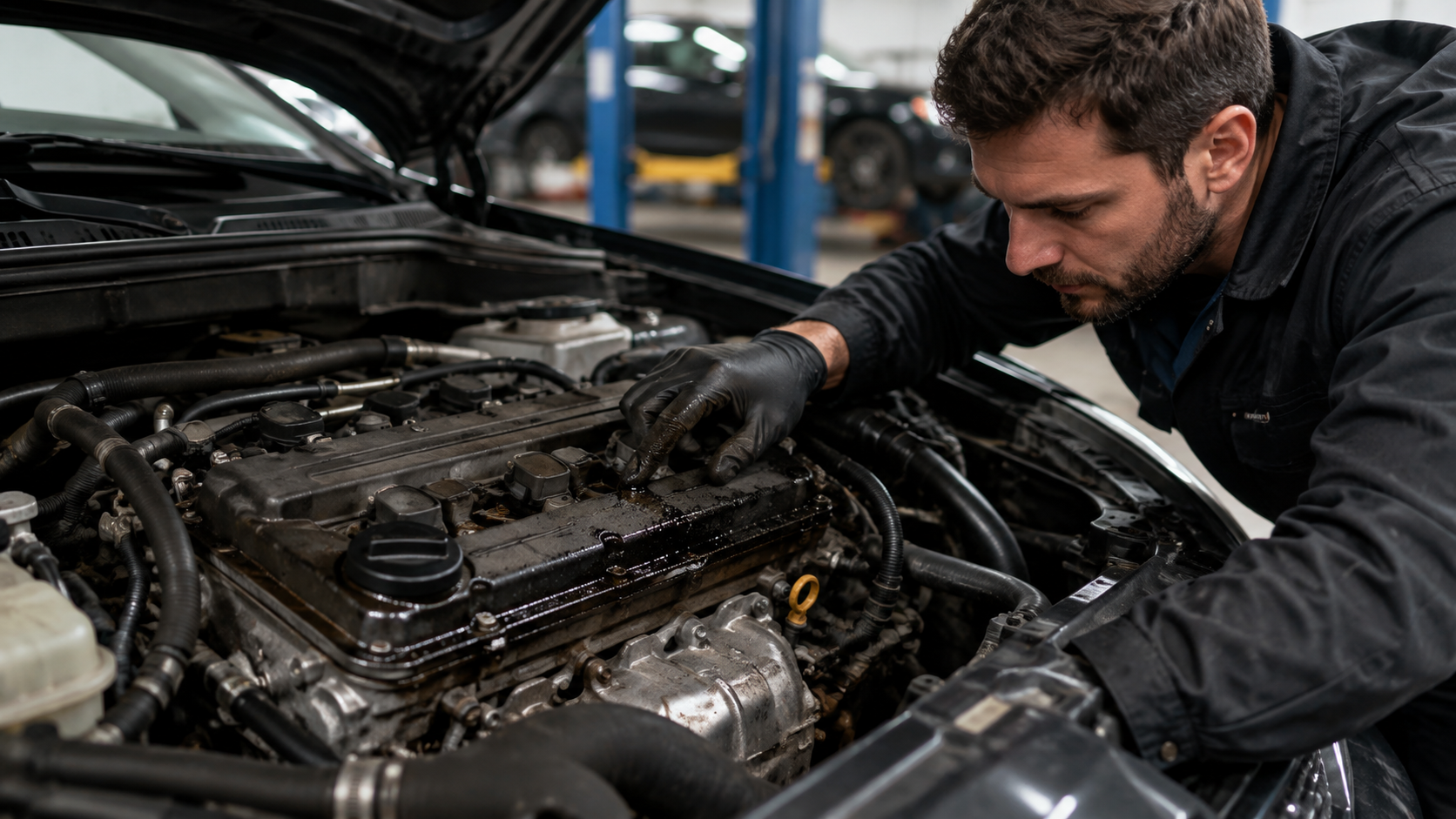
- oil traces near seals;
- unstable engine operation;
- increased oil consumption;
- pressure at the oil filler opening;
- unusual smells in the engine compartment.
From the outside, the problem may look like a simple oil leak even though the real cause is not at the leak point itself.
How increased crankcase pressure affects oil seals
Crankshaft and camshaft oil seals are designed to operate under normal internal engine pressure. Their purpose is to keep oil inside the engine and protect working areas from contamination.
When the ventilation system cannot perform its task, increased engine crankcase pressure develops. Excess gases seek the weakest path out, so seals operating near the limit of their sealing capacity are exposed to the greatest load.
This leads to the question: why a crankshaft oil seal is pushed out – the causes are often not limited to ageing of the seal itself.
The main factors are:
- a faulty PCV valve;
- blocked ventilation passages;
- excessive crankcase gas production;
- high pressure inside the engine.
In this situation, a new seal may also lose its sealing ability soon after replacement because the source of the excessive load remains.
For this reason, repairing only the oil leak without checking the ventilation system does not guarantee a lasting result.
Indirect signs of a PCV fault
Ventilation problems do not always appear as an obvious leak. Early symptoms may be related to changes in system operation that are not immediately noticeable.
One such sign is oil mist from the engine filler opening. When the oil filler cap is opened, excessive oil vapour or noticeable pressure may be present.
It is also worth checking for:
- increased engine oil consumption;
- oil traces around the valve cover;
- contamination of intake components;
- unstable engine speed.
An increased amount of crankcase gases may be related not only to the PCV valve. Piston-group problems can also be responsible, so accurate diagnostics should take the overall engine condition into account.
Replacing an oil seal without repairing the PCV system: treating the symptom instead of the cause
An oil leak through a seal is often the first visible symptom, so repair may begin with replacing the seal. However, the true source of the problem may be elsewhere in the system.
A new seal will work correctly only if pressure inside the engine is normal. With a faulty crankcase ventilation system, the load on it will remain excessive.
Before installing new seals, it is necessary to check:
- PCV valve operation;
- the condition of the ventilation passages;
- the presence of deposits;
- crankcase pressure.
This approach helps prevent the same repair from being needed again shortly afterwards.
What determines PCV valve replacement
The way the problem is repaired depends on the design of the specific engine. On some models, the valve is a separate part; on others, it is integrated into the valve cover or another system component.
The cost of replacing the crankcase ventilation valve depends on parts prices, access to the component, and the amount of additional work required.
Timely PCV inspection helps preserve engine sealing and prevents situations where an oil leak is repaired externally while the actual cause remains inside the system.
The crankcase ventilation system works unnoticed, but its condition directly affects seal life, intake cleanliness, and stable engine operation. When the first signs of a problem appear, it is better to check the source than simply replace an individual part.
Top popular news
- Preparing a car for a long trip: checklist before departure
- Oil leaking from the valve cover: causes of seepage and finding the source of the problem
- Automatic climate control does not maintain the set temperature: where to look for the cause
- Brake pipes and hoses: different designs with different risks
- Suspension spring sagging: gradual loss of performance without an obvious failure
- Headlights fogging from the inside: normal condensation or a sign of housing damage
- Steering rack: hydraulic leak or electric power-steering fault – how the problem is diagnosed
- Engine air and cabin filter replacement: why urban conditions change service intervals

Subscribe to our newsletter!
To stay updated with the latest news


Book a service