Mon-Fri | 08:00 - 20:00


Find

Contact us

Kyiv
46 Kyrylivska St. (Podil)
 Мережа СТО в місті

Kyiv
46 Kyrylivska St. (Podil)
 Мережа СТО в місті

 Години роботи
 Mon-Fri
08:00 - 20:00
Signs of Worn Shock Absorbers
Why Shock Absorbers Are Important for Safety and Handling
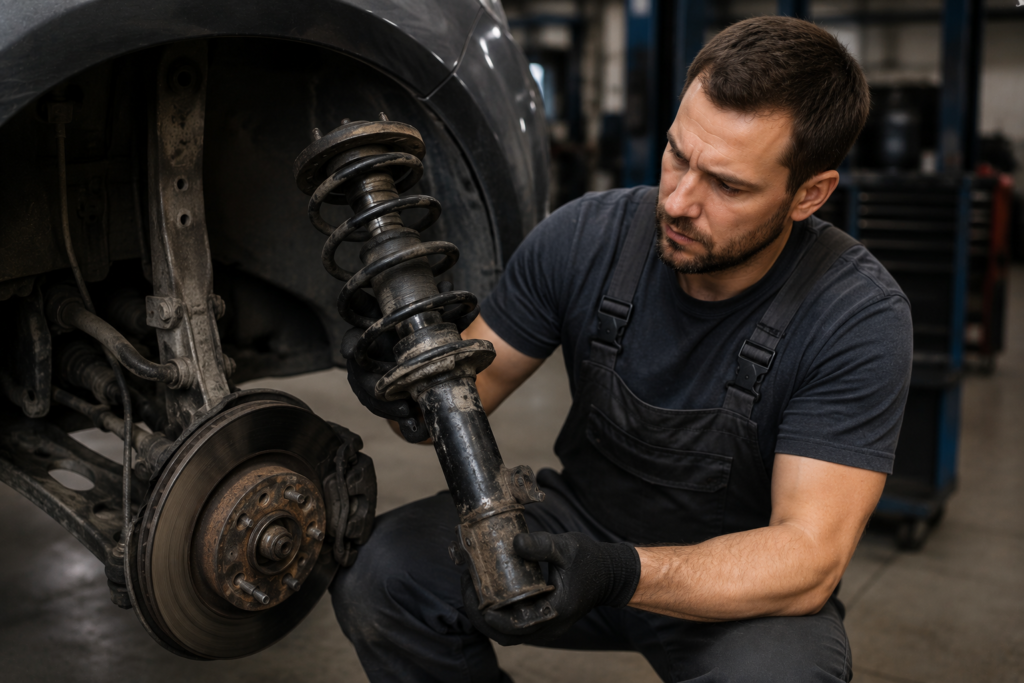
Worn shock absorbers directly affect vehicle stability, ride comfort, and handling. Shock absorbers stabilize the vehicle body after bumps, help the tires maintain contact with the road, and reduce stress on the suspension system.
When shock absorber struts begin to function improperly, the vehicle gradually becomes less stable while driving. Drivers do not always notice the problem immediately because faulty shock absorbers typically wear out gradually. However, even without obvious failures, the suspension system is already performing less effectively, and suspension wear accelerates.
This becomes especially noticeable:
- during hard braking;
- at high speeds;
- while cornering;
- on uneven roads;
- during sudden maneuvers.
The vehicle begins to lean more, loses stability, and responds less precisely to steering inputs.
Main Symptoms of Worn Shock Absorbers
One of the most common signs of worn shock absorbers is excessive body bouncing after driving over potholes or speed bumps. If the vehicle continues to oscillate after hitting a bump, this indicates a loss of shock absorber effectiveness.
Problems are also often accompanied by unusual noises. Knocking sounds from the shock absorbers may appear when driving over small bumps or rough roads. Sometimes the noise is barely noticeable at first but gradually becomes louder over time.
Other common symptoms include:
- reduced vehicle handling;
- instability at higher speeds;
- excessive body roll during turns;
- vibrations on uneven surfaces;
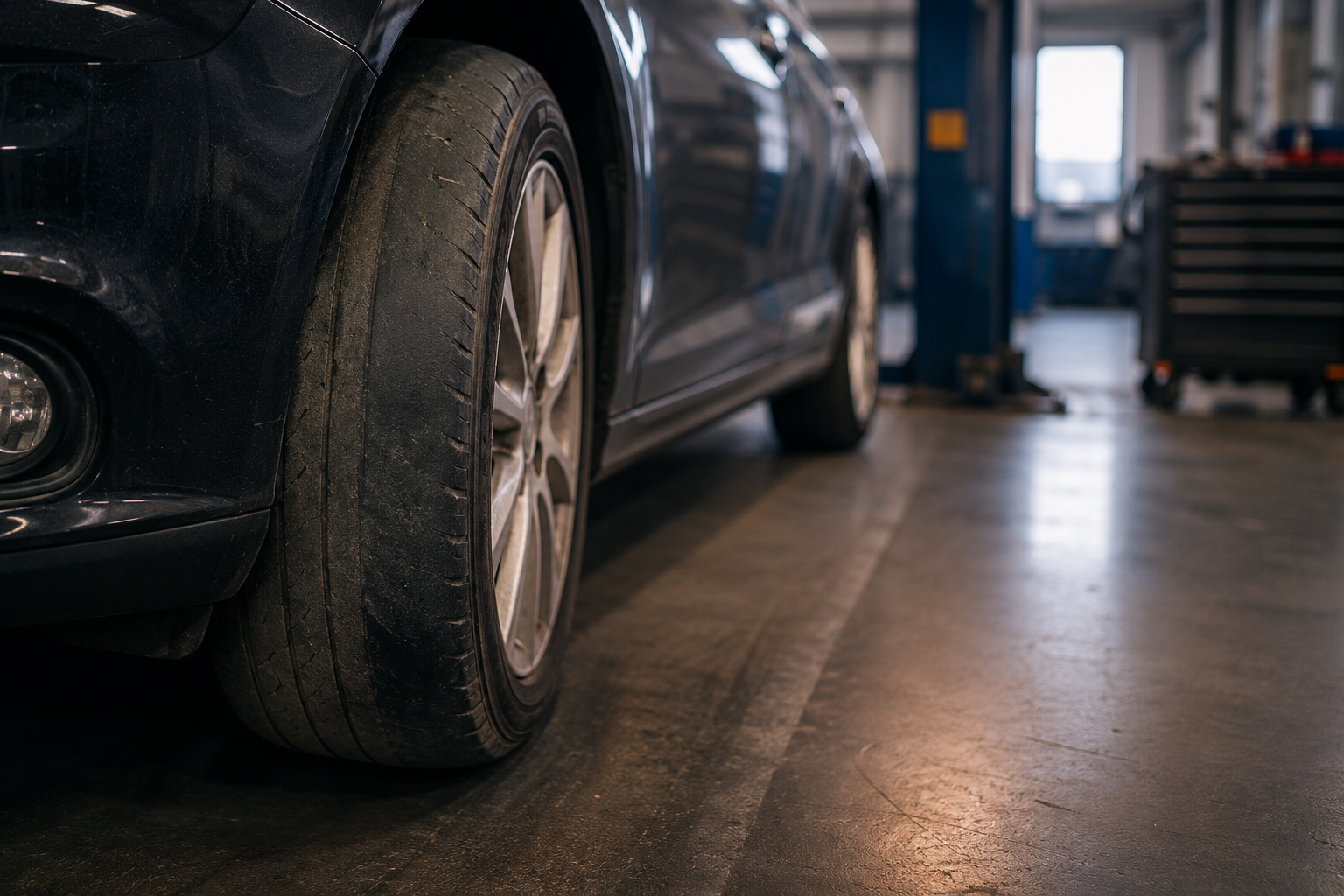
- uneven tire wear;
- increased body movement and bouncing.
When shock absorber struts become heavily worn, the wheels maintain less consistent contact with the road, causing the suspension system to operate unevenly. As a result, tires and other suspension components wear out more quickly.
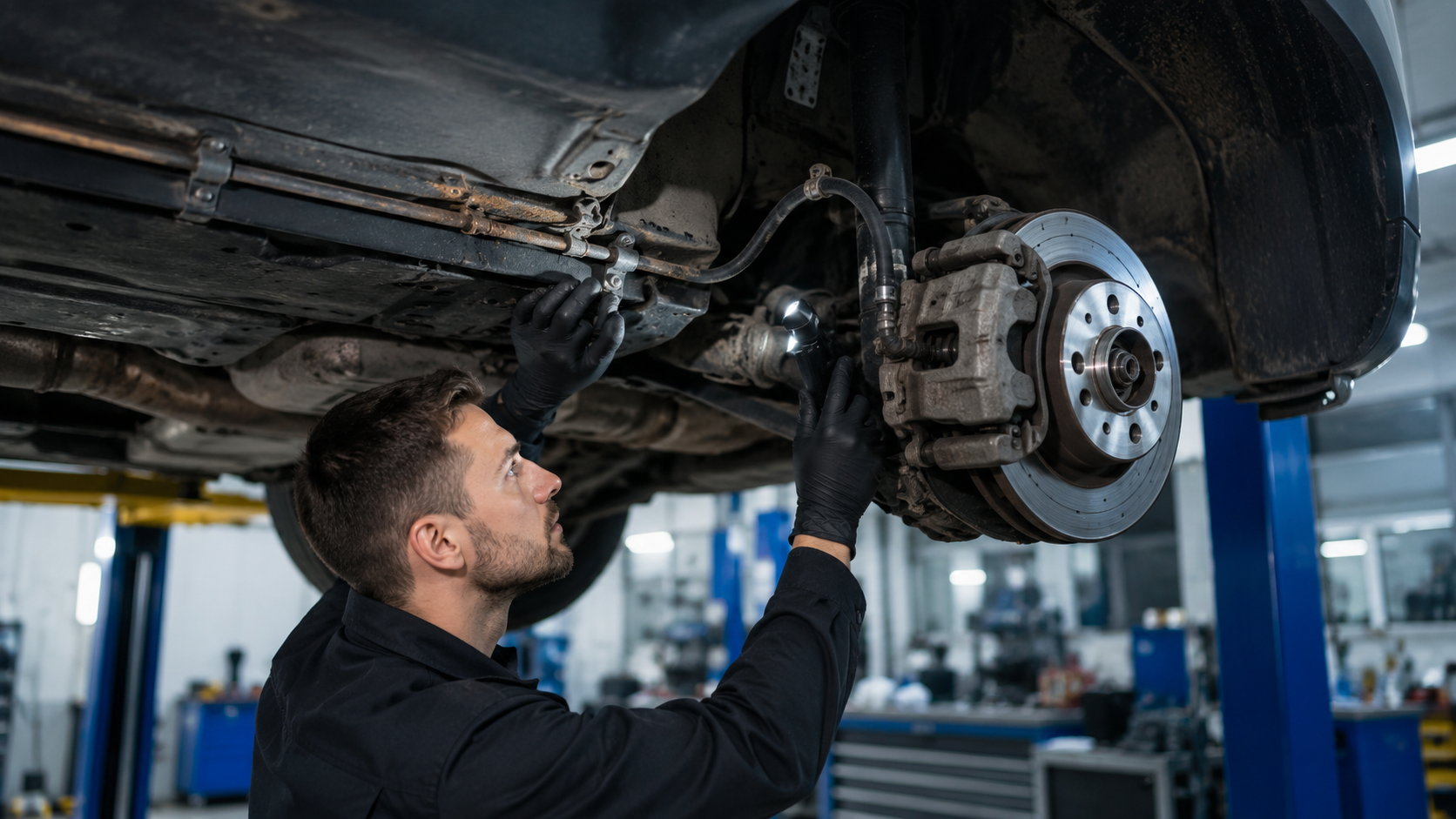
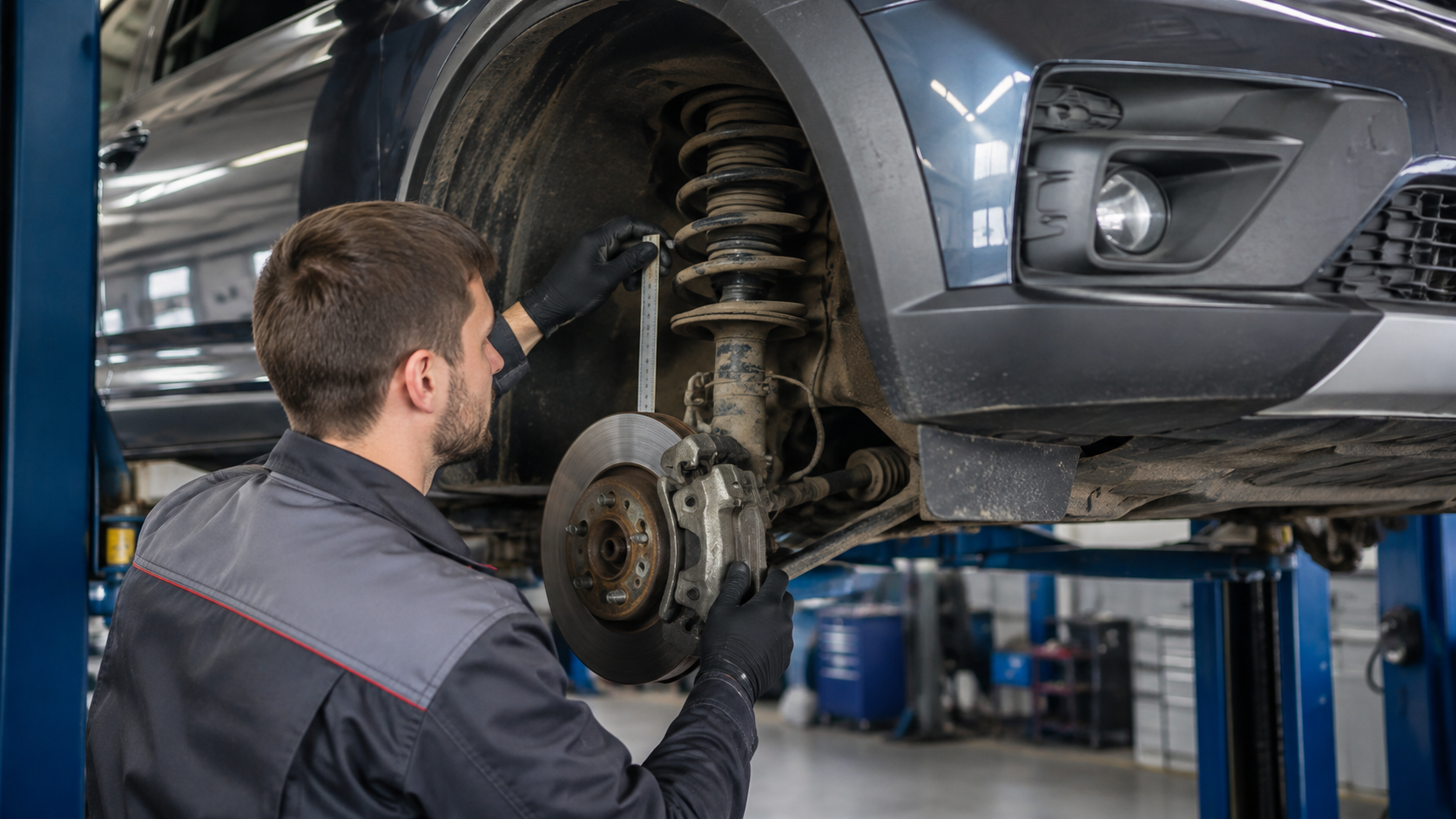
In some cases, faulty shock absorbers can be identified through a visual inspection. Oil stains or visible fluid leaks may appear on the shock absorber housing.
Many drivers postpone repairs and do not think about when to replace shock absorbers until the suspension becomes noticeably harsh or unstable.
How a Faulty Suspension Affects Vehicle Behavior
Suspension problems affect more than just driving comfort. When shock absorbers lose their effectiveness, the load on other suspension components increases significantly.
As a result, the following parts wear out faster:
- suspension bushings;
- ball joints;
- wheel bearings;
- shock absorber mounts;
- steering system components.
Constant impacts and vibrations accelerate overall suspension wear.
On the road, a vehicle with faulty shock absorbers behaves less predictably. The car may lean excessively in corners, respond poorly to steering inputs, and lose stability during sudden maneuvers.
Braking performance also deteriorates noticeably. Because the tires maintain weaker contact with the road surface, the vehicle requires a longer distance to come to a complete stop, especially on wet roads.
Why Driving with Worn Shock Absorbers Is Dangerous
Faulty shock absorbers affect more than ride quality. The main issue is that the vehicle becomes less controllable in critical situations.
During hard braking or sudden maneuvers, the tires may lose grip more easily while the vehicle body experiences excessive movement. This makes it more difficult for the driver to maintain the intended driving path.
Worn shock absorbers become particularly dangerous:
- during rainy conditions;
- on slippery roads;
- during emergency braking;
- at high speeds;
- when avoiding obstacles.
In addition to reducing safety, faulty shock absorbers accelerate wear on other vehicle components. Continuous overloading gradually affects the entire suspension system and increases the risk of costly repairs.
Tires also wear out more quickly. Due to improper suspension operation, tire tread may wear unevenly, and the vehicle becomes less stable at higher speeds.
When You Should Inspect the Suspension System
Suspension diagnostics are necessary not only when the suspension begins making loud noises. The condition of the shock absorbers should be checked whenever changes in vehicle behavior become noticeable.
Particular attention should be paid if:
- knocking sounds from the shock absorbers appear;
- the vehicle begins bouncing excessively;
- handling performance deteriorates;
- uneven tire wear becomes visible;
- the vehicle feels unstable at higher speeds.
An inspection is also recommended after severe impacts with potholes, prolonged driving on poor road surfaces, or the appearance of unusual suspension noises.
Timely suspension diagnostics help identify problems at an early stage and prevent major repairs to the suspension system and other chassis components.
Top popular news
- Air Conditioner Losing Refrigerant Without Visible Damage: Causes and Solutions
- Why Wheel Alignment Goes Out After Adjustment: It Is Not Always the Alignment Rack
- Seized Brake Caliper: Symptoms, Causes, and Repair
- Changing the Oil in an AWD Differential: Why This Component Is Often Forgotten
- Check Engine Light Flashing: What the Signal Means and Why You Should Not Ignore It
- Preparing a car for a long trip: checklist before departure
- Oil leaking from the valve cover: causes of seepage and finding the source of the problem
- Automatic climate control does not maintain the set temperature: where to look for the cause

Subscribe to our newsletter!
To stay updated with the latest news


Book a service