Mon-Sut | 09:00 - 19:00


Find

Contact us

Kyiv
18 Teplovozna Street (Poznyaki)
 Мережа СТО в місті

Kyiv
18 Teplovozna Street (Poznyaki)
 Мережа СТО в місті

 Години роботи
 Mon-Sut
09:00 - 19:00


Uneven Tire Wear: What the Pattern of a “Worn-Out” Tire Can Tell You About Your Vehicle
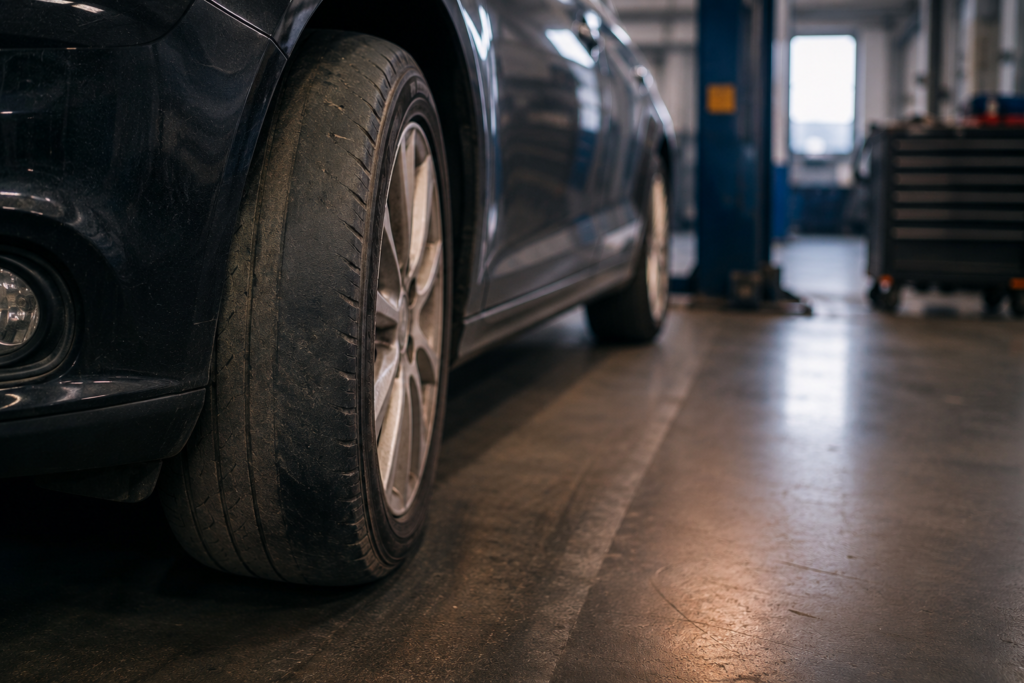
A set of high-quality tires can last for several seasons. However, drivers sometimes notice that the tread wears out much faster than expected. One side of the tire may wear more than the other, while waves or isolated worn spots begin to appear on the tread surface. In such cases, the problem is often related not to the quality of the tires but to the technical condition of the vehicle.
The tire tread acts as an indicator of the condition of the suspension, steering system, and wheel alignment. That is why uneven tire wear, whose causes are not always obvious during normal vehicle operation, can reveal a mechanical problem before more serious symptoms appear.
How to Read Tire Wear Patterns
The way a tire wears often helps identify the source of the problem.
The most common wear patterns include:
- inner edge tire wear;
- outer edge tire wear;
- tire wear on both edges;
- excessive center tread wear;
- patchy (cupped) tire wear;
- feathered or sawtooth tire wear.
Each type has its own causes and points to specific vehicle issues.
Why Tires Wear on the Inside Edge
One of the most common questions among vehicle owners is why the inside edge of a tire wears faster.
In most cases, the cause is incorrect wheel alignment. If the camber angle falls outside the manufacturer’s specifications, the load becomes concentrated on the inner portion of the tread. As a result, that side of the tire wears significantly faster.
The problem may also be aggravated by worn suspension components or excessive play in the steering system. Under load, the wheel changes its position, causing uneven contact with the road surface.
For this reason, checking wheel alignment is usually the first step when this type of tire wear is detected.
What Tire Wear on Both Edges or in the Center Means
If the tread wears more quickly on both edges while the center remains relatively unworn, the most common cause is insufficient tire pressure.
When tire pressure is too low, the side sections of the tire press harder against the road surface. As a result, most of the load is concentrated on the outer edges of the tread.
The opposite occurs when tire pressure is too high. In this case, most of the load is carried by the center of the tire, causing the middle section to wear more rapidly than the shoulders.
Therefore, maintaining the correct tire pressure directly affects not only tire life but also vehicle handling.
Why Tire Pressure Affects the Contact Patch
While driving, a tire does not contact the road across its entire surface. Instead, only a specific area known as the contact patch touches the pavement.
When tire pressure matches the manufacturer’s recommendations, the load is distributed evenly across the entire tread surface. If the tire is underinflated or overinflated, the shape of the contact patch changes.
This results in:
- accelerated wear of certain tread areas;
- reduced braking performance;
- increased fuel consumption;
- decreased vehicle stability.
Even a slight deviation from the recommended tire pressure can gradually shorten tire life over time.
How the Suspension Affects Tire Wear
If waves, dips, or irregular worn areas appear on the tread, the suspension should be inspected.
One particularly noticeable pattern is patchy or cupped tire wear. This is often caused by a worn shock absorber.
When functioning properly, the shock absorber keeps the tire in continuous contact with the road surface. As its performance deteriorates, the wheel begins to bounce over bumps. Whenever the tire loses contact with the road and then strikes it again, excessive force is concentrated on individual areas of the tread.
Over time, this creates the characteristic patches or waves seen on the tire surface.
Similar wear patterns may also be caused by:
- worn suspension bushings;
- excessive play in suspension joints;
- bent suspension control arms;
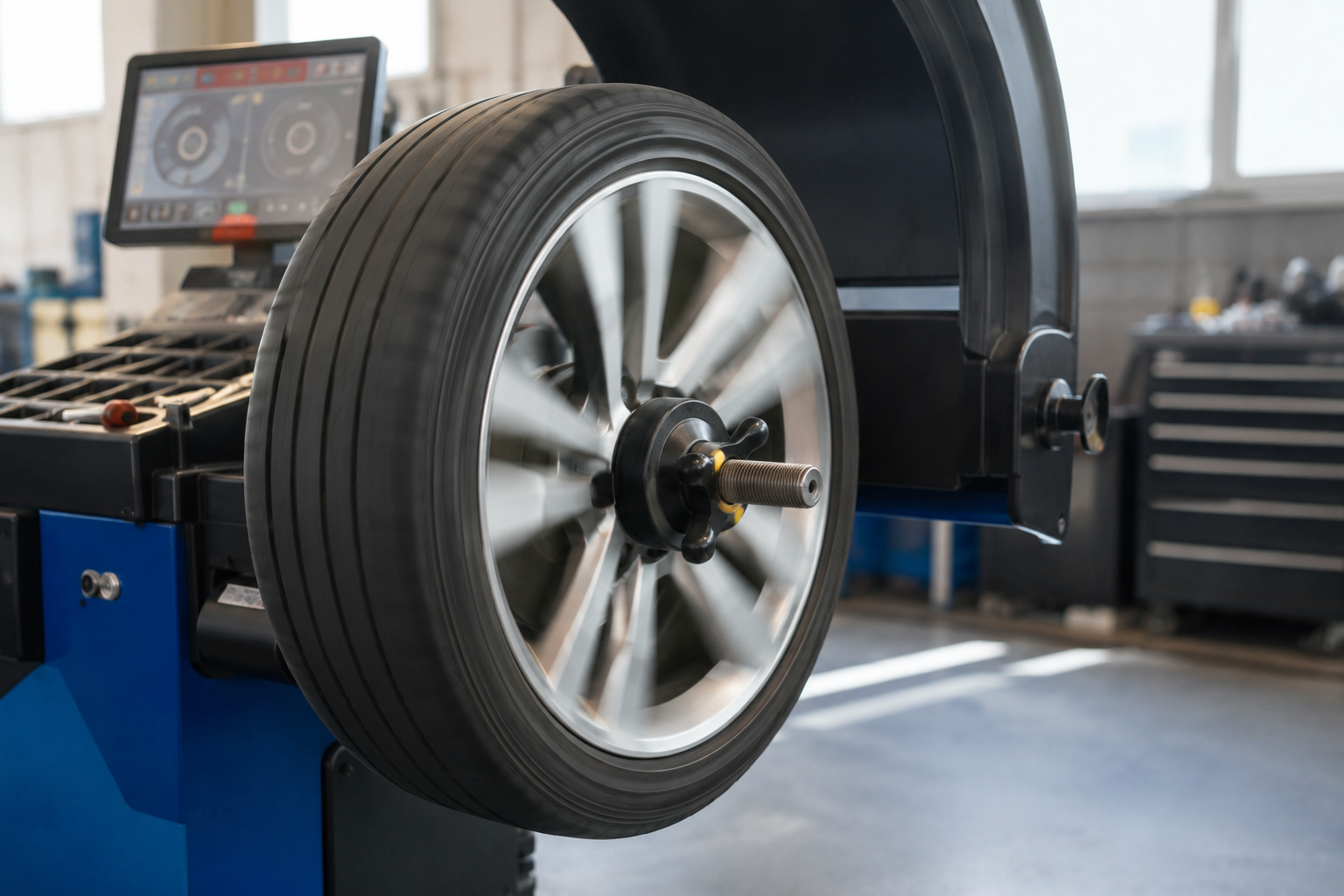
- improper wheel balancing.
For this reason, suspension diagnostics often allow technicians to identify a problem before serious tire damage occurs.
What Feathered Tire Wear Means
Feathered tire wear is easy to identify by touch. If you run your hand across the tread in opposite directions, one side of each tread block will feel sharp while the other feels smooth.
This type of wear is usually associated with incorrect suspension geometry or excessive play in steering components.
As the vehicle moves, the tread blocks contact the road at slightly different angles. Consequently, one side of each tread block experiences greater stress and wears more rapidly. Over time, this creates the characteristic “step” or feathered pattern, which not only shortens tire life but may also increase road noise.
A Practical Example
A vehicle owner noticed that the front tires had lost a significant amount of tread along the inside edge in less than one season. At the same time, the vehicle showed no obvious handling problems.
During inspection, technicians discovered that the wheel alignment had shifted significantly after the vehicle struck a large pothole. Further suspension diagnostics revealed early wear in one of the suspension control arms.
After repairing the suspension and performing a wheel alignment, the new set of tires began wearing evenly without accelerated wear on the inside edge.
What to Check When Inspecting Your Tires
During regular tire inspections, it is important to evaluate not only the overall condition of the tires but also the remaining tread depth.
To assist drivers, tire manufacturers include tread wear indicators small raised bars located between the tread blocks. Once the tread surface becomes level with these indicators, the tire can no longer provide the required level of safety.
You should also pay attention to:
- differences between inner and outer edge wear;
- wave-like wear patterns;
- stepped or feathered tread blocks;
- localized worn spots;
- sidewall cracks and damage.
What to Do If Your Tires Wear Unevenly
If your tires begin wearing unevenly, simply replacing them is not enough.
The recommended course of action is to:
- check tire pressure;
- measure tread depth;
- inspect wheel balancing;
- perform suspension diagnostics;
- check wheel alignment;
- repair any detected faults.
Without identifying and correcting the underlying cause, even a brand-new set of tires may begin wearing exactly like the previous one.
A tire’s tread can reveal a great deal about the condition of a vehicle. Inner or outer edge wear, patchy wear, wave-like patterns, or feathered tread blocks usually have specific mechanical causes. In most cases, these include incorrect wheel alignment, improper tire pressure, or suspension problems.
Regular tire inspections and professional tire service help not only extend tire life but also detect early signs of mechanical issues that require comprehensive suspension diagnostics.
Top popular news
- Air Conditioner Losing Refrigerant Without Visible Damage: Causes and Solutions
- Why Wheel Alignment Goes Out After Adjustment: It Is Not Always the Alignment Rack
- Seized Brake Caliper: Symptoms, Causes, and Repair
- Changing the Oil in an AWD Differential: Why This Component Is Often Forgotten
- Check Engine Light Flashing: What the Signal Means and Why You Should Not Ignore It
- Preparing a car for a long trip: checklist before departure
- Oil leaking from the valve cover: causes of seepage and finding the source of the problem
- Automatic climate control does not maintain the set temperature: where to look for the cause

Subscribe to our newsletter!
To stay updated with the latest news


Book a service