Mon-Sut | 09:00 - 19:00


Find

Contact us

Kyiv
18 Teplovozna Street (Poznyaki)
 Мережа СТО в місті

Kyiv
18 Teplovozna Street (Poznyaki)
 Мережа СТО в місті

 Години роботи
 Mon-Sut
09:00 - 19:00


Suspension Knocking Over Bumps: How to Tell the Difference Between a Dull Strut Knock and a Rattling Stabilizer Link
Any new noise coming from a vehicle’s suspension deserves attention. Many drivers gradually get used to increasing knocking sounds and postpone an inspection until a serious failure occurs. However, a suspension rarely starts making noise without a reason. A knocking sound in the suspension over bumps usually indicates wear in a specific component, and the type of noise often helps identify the source of the problem even before visiting a repair shop.
That is why, when new noises appear, it is worth turning off the music, opening a window, and carefully listening to how the vehicle behaves on different types of road surfaces. Cobblestones, washboard roads, speed bumps, and deep potholes place different loads on suspension components, making it easier to determine the nature of the problem.
How Different Suspension Problems Sound
The type of noise often helps narrow down the possible causes before diagnostics even begin.
The most common examples include:
- stabilizer links – frequent light clicking or rattling noises;
- stabilizer bushings – dull tapping over small bumps;
- shock absorber or bump stop – a heavy dull knock over large potholes;
- ball joint – a single metallic knock under load;
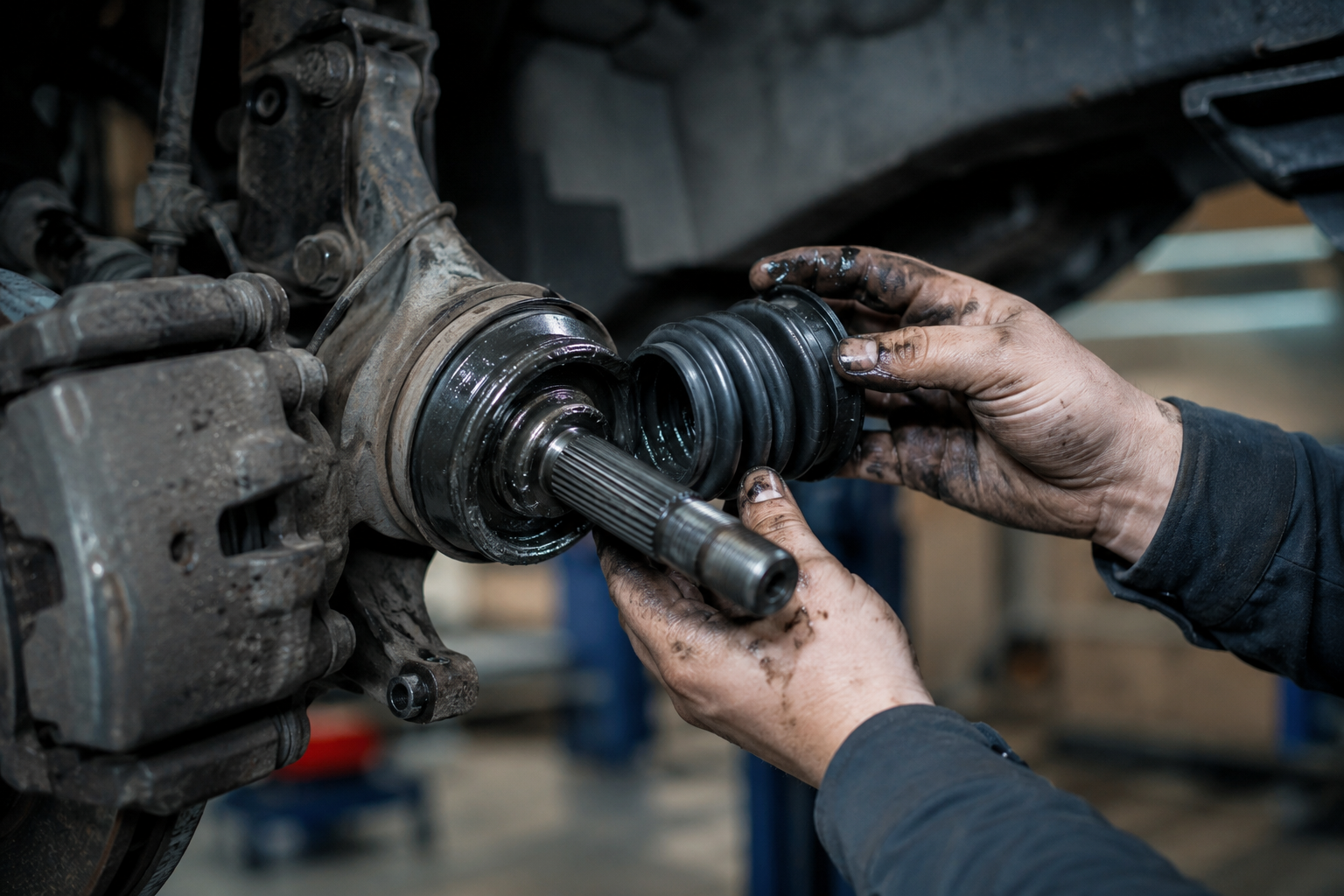
- CV joint – a characteristic clicking or crunching sound while turning;
- strut mount bearing – clicking or jerking when turning the steering wheel.
Although these observations do not replace professional diagnostics, they help determine which components should be inspected first.
Frequent Light Knocking on Cobblestones and Washboard Roads

One of the most common suspension noises is a frequent metallic rattle or clicking sound while driving over small road irregularities.
This noise is especially noticeable on:
- cobblestone roads;
- washboard surfaces;
- asphalt expansion joints;
- small potholes.
In most cases, the cause is worn stabilizer links or stabilizer bushings.
Many drivers ask how worn stabilizer links sound. Typically, they produce short, repetitive knocking or clicking sounds that are clearly audible over small bumps but almost disappear when driving over larger potholes.
The reason is excessive play in the stabilizer link joints or worn stabilizer bushings. As the vehicle moves, the stabilizer bar shifts from its normal position, creating the characteristic noise.
During the early stages, this type of wear rarely affects driving safety, but over time it increases the load on other suspension components.
Heavy Dull Knocks Over Large Bumps
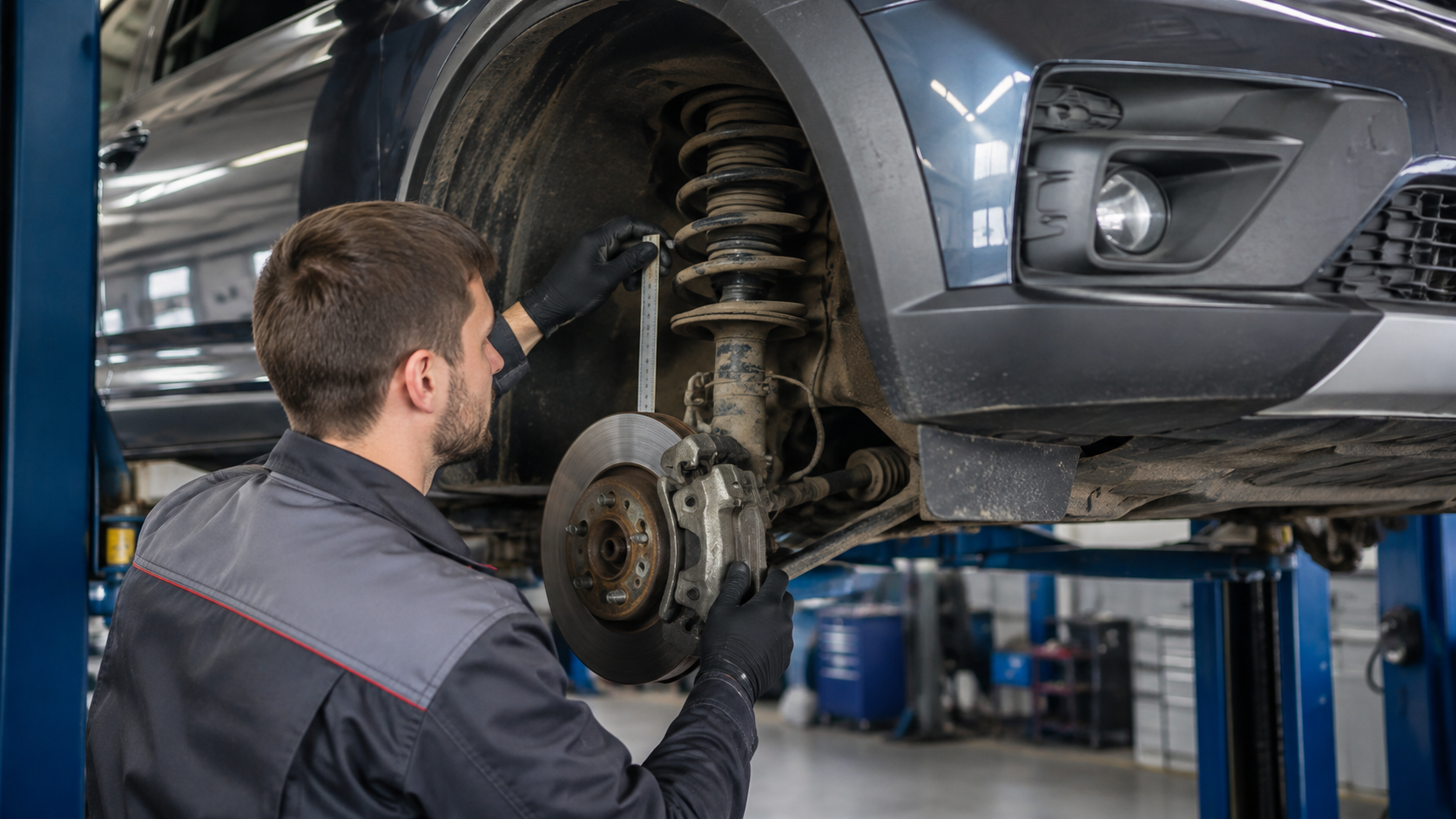
If a heavy dull thump is heard when driving over deep potholes or speed bumps, attention should be directed toward the shock absorbers.
A dull knocking sound from the front suspension is often caused by:
- a worn shock absorber strut;
- a damaged bump stop;
- a worn upper strut mount;
- excessive play in the shock absorber mounting points.
A properly functioning shock absorber not only improves ride comfort but also controls wheel movement after passing over obstacles. As its effectiveness decreases, other suspension components begin operating under much higher impact loads.
Similar symptoms may also occur in the rear suspension. Common sources include worn shock absorbers, rear axle bushings, or stabilizer bushings that gradually lose their effectiveness.
Knocking or Clicking While Turning the Steering Wheel
Another category of suspension problems involves noises that occur while turning the steering wheel.
If clicking or crunching sounds are heard during steering maneuvers, possible causes include:
- a worn strut mount bearing;
- a steering tie rod;
- worn tie rod ends;
- constant velocity (CV) joints.
The strut mount bearing allows the shock absorber strut to rotate together with the wheel. When its working surfaces become worn or contaminated, unusual noises and jerky steering movements may occur during turns.
If the CV joint is faulty, the clicking or crunching noise usually becomes more noticeable when accelerating from a standstill or making turns under load.
Grinding, Excessive Play, and Metallic Knocks
The most serious suspension noises are those accompanied by noticeable looseness or changes in vehicle handling.
Possible causes include:
- a worn control arm bushing;
- a faulty ball joint;
- excessive play in the suspension control arms;
- worn suspension joints.
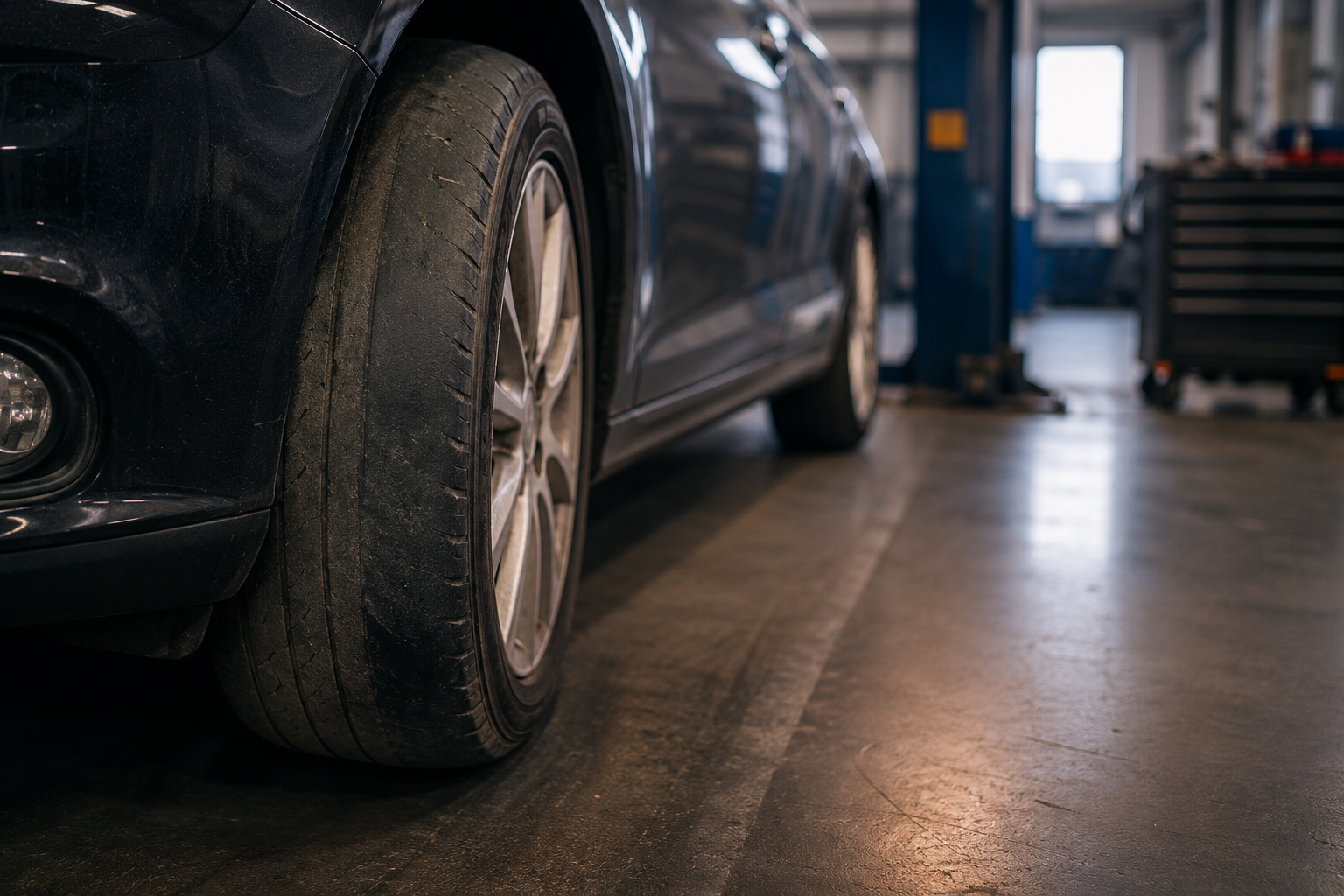
Symptoms of a worn ball joint may develop gradually. Initially, the driver hears occasional knocking over bumps. Over time, wheel play increases, steering precision decreases, and uneven tire wear begins to appear.
Control arm bushings serve as dampers between metal suspension components. When the rubber deteriorates or separates, the metal parts begin contacting each other more directly, resulting in grinding noises, knocking sounds, and reduced vehicle stability.
Why Even Minor Suspension Noise Should Not Be Ignored
A common mistake is assuming that a small suspension noise is insignificant.
In reality, even an inexpensive stabilizer bushing can eventually cause accelerated wear of other suspension components. As additional play develops, loads become unevenly distributed, gradually affecting control arms, joints, and shock absorbers.
Many vehicle owners wonder why suspension repair costs can vary so significantly. In most cases, the total cost depends on how many additional components become damaged before the original problem is repaired. This is why early diagnostics often result in much lower repair costs.
A Practical Example
A vehicle owner reported hearing a light rattling noise while driving over cobblestone streets. The suspension remained almost silent when passing over larger bumps.
During inspection, technicians found that the worn stabilizer links were the source of the noise. The owner had suspected faulty shock absorbers, but they proved to be in excellent condition.
After replacing the stabilizer links, the unwanted noise disappeared completely, and no additional suspension repairs were required.
Why Professional Suspension Diagnostics Are More Accurate Than Guesswork
Even experienced drivers cannot always identify the source of a suspension knock based solely on the sound.
The same symptom may be caused by different mechanical problems. For example, similar knocking noises may originate from stabilizer bushings, a worn ball joint, or a steering tie rod.
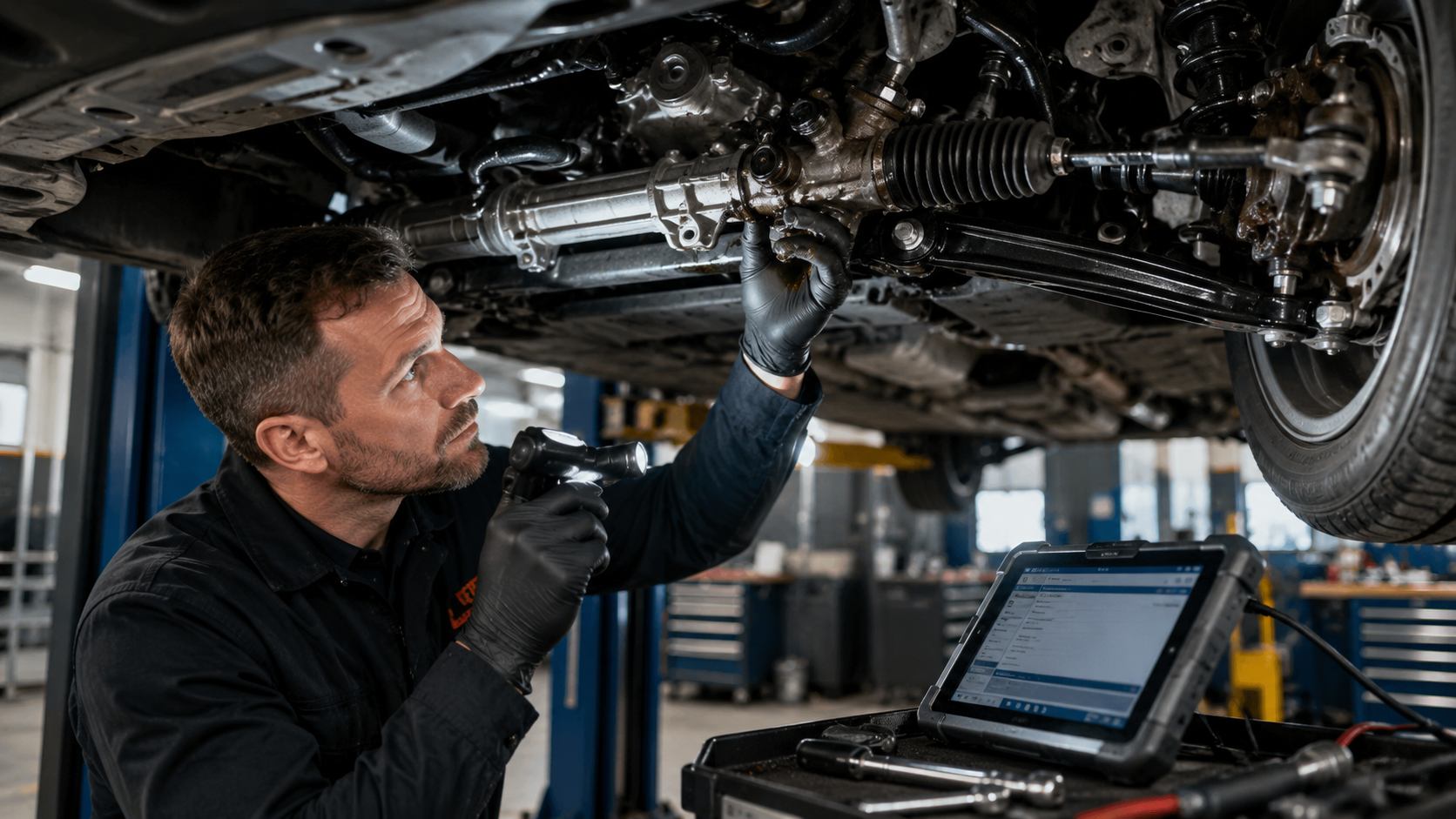
Professional suspension diagnostics typically include:
- a visual inspection of the suspension;
- checking all components for excessive play;
- inspecting control arm bushings;
- testing the shock absorbers;
- inspecting suspension joints and steering components.
To detect hidden looseness, technicians often use a pry bar, allowing them to identify worn components even when the wear is not yet visible during a standard inspection.
Suspension knocking rarely occurs without a reason. Metallic rattling over cobblestones usually indicates worn stabilizer links or bushings, heavy dull knocks over large bumps often point to worn shock absorbers, while grinding noises and excessive play commonly indicate worn ball joints or suspension bushings.
The sooner the source of the noise is identified, the lower the likelihood of expensive repairs in the future. Timely suspension diagnostics not only eliminate unwanted noises but also preserve the vehicle’s handling, stability, and overall driving safety.
Top popular news
- Air Conditioner Losing Refrigerant Without Visible Damage: Causes and Solutions
- Why Wheel Alignment Goes Out After Adjustment: It Is Not Always the Alignment Rack
- Seized Brake Caliper: Symptoms, Causes, and Repair
- Changing the Oil in an AWD Differential: Why This Component Is Often Forgotten
- Check Engine Light Flashing: What the Signal Means and Why You Should Not Ignore It
- Preparing a car for a long trip: checklist before departure
- Oil leaking from the valve cover: causes of seepage and finding the source of the problem
- Automatic climate control does not maintain the set temperature: where to look for the cause

Subscribe to our newsletter!
To stay updated with the latest news


Book a service