Mon-Sut | 09:00 - 19:00


Find

Contact us

Kyiv
18 Teplovozna Street (Poznyaki)
 Мережа СТО в місті

Kyiv
18 Teplovozna Street (Poznyaki)
 Мережа СТО в місті

 Години роботи
 Mon-Sut
09:00 - 19:00


Sagging Suspension Springs: Hidden Symptoms and Why Replacing Only the Shock Absorbers Won’t Solve the Problem
Has your vehicle become lower than it was a few years ago, started scraping the underbody more often on bumps, or begun to ride more harshly? In many cases, the cause is not the shock absorbers but the suspension springs. Many drivers notice the problem only when the reduced ride height becomes obvious, although the process begins much earlier.
Sagging suspension springs, whose symptoms often go unnoticed, are a natural consequence of years of vehicle operation. Constant loads, carrying heavy cargo, poor road conditions, and the natural fatigue of the spring steel gradually change the spring’s characteristics. As a result, the suspension no longer performs as the manufacturer originally intended.
Why Suspension Springs Lose Their Properties

Every suspension spring constantly works under compression and decompression. Over the years, each spring goes through hundreds of thousands of load cycles. Eventually, the structure of the metal changes, and the spring gradually loses its original elasticity.
The process may be accelerated by:
- regularly carrying heavy loads;
- frequent driving on rough roads;
- systematic vehicle overloading;
- corrosion of the spring steel;
- prolonged operation without replacing worn suspension components.
As a result, suspension stiffness decreases, and the vehicle body settles below its designed ride height.
A new spring provides the correct ground clearance and the full suspension travel designed by the manufacturer. A sagging spring still performs its function but can no longer support the vehicle body at the proper height. That is why the problem usually develops gradually and often remains unnoticed.
How to Tell If Your Suspension Springs Have Sagged
Unlike many other suspension problems, sagging springs rarely fail suddenly. Most changes occur gradually over time.
Common symptoms include:
- reduced vehicle ground clearance;
- frequent suspension bottoming over bumps;
- the vehicle leaning to one side;
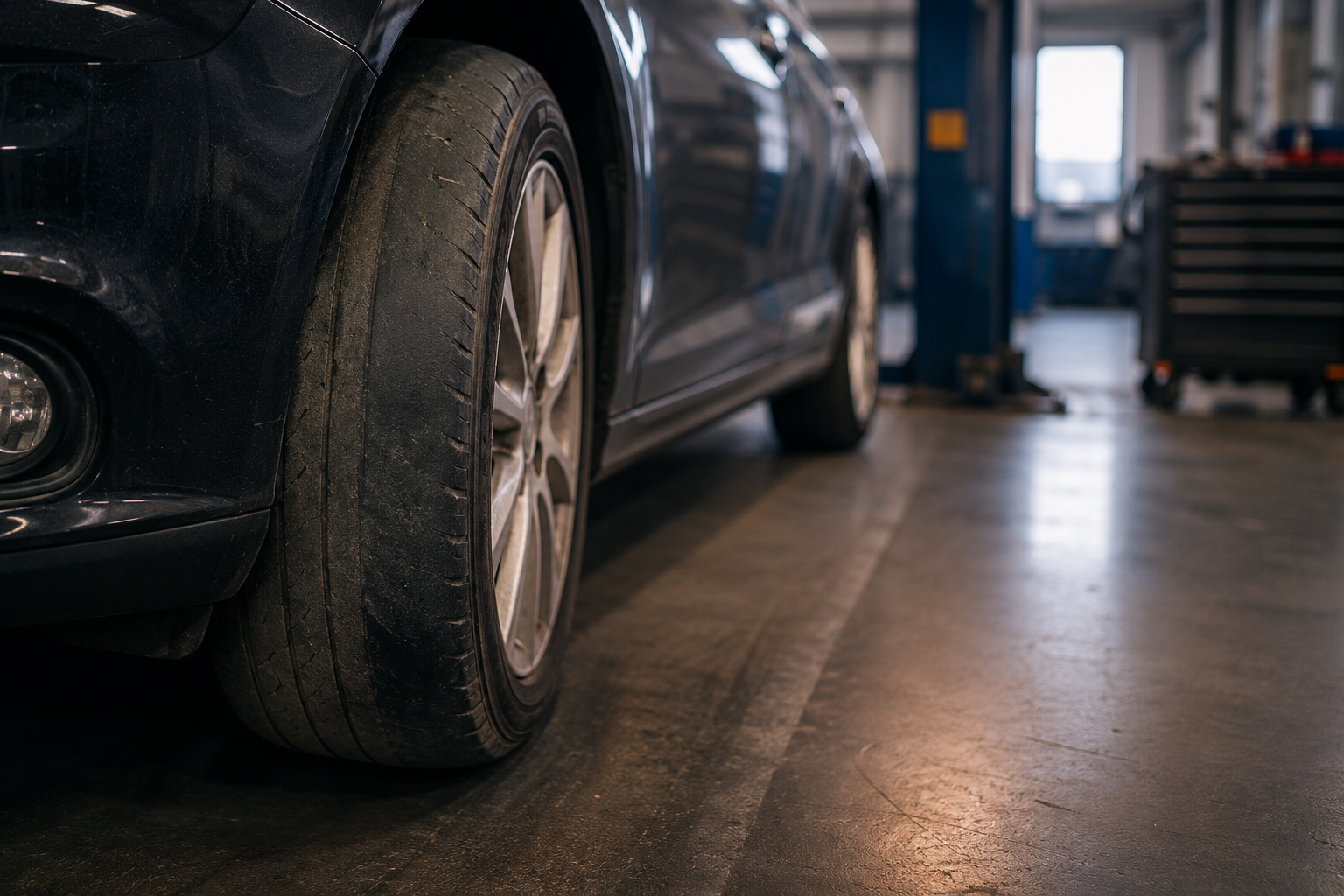
- uneven tire wear;
- reduced shock absorber performance;
- changes in headlight beam alignment;
- decreased load-carrying capacity.
The problem becomes especially noticeable after loading the trunk or carrying several passengers. The vehicle sags more than usual, and the suspension reaches the end of its travel much sooner.
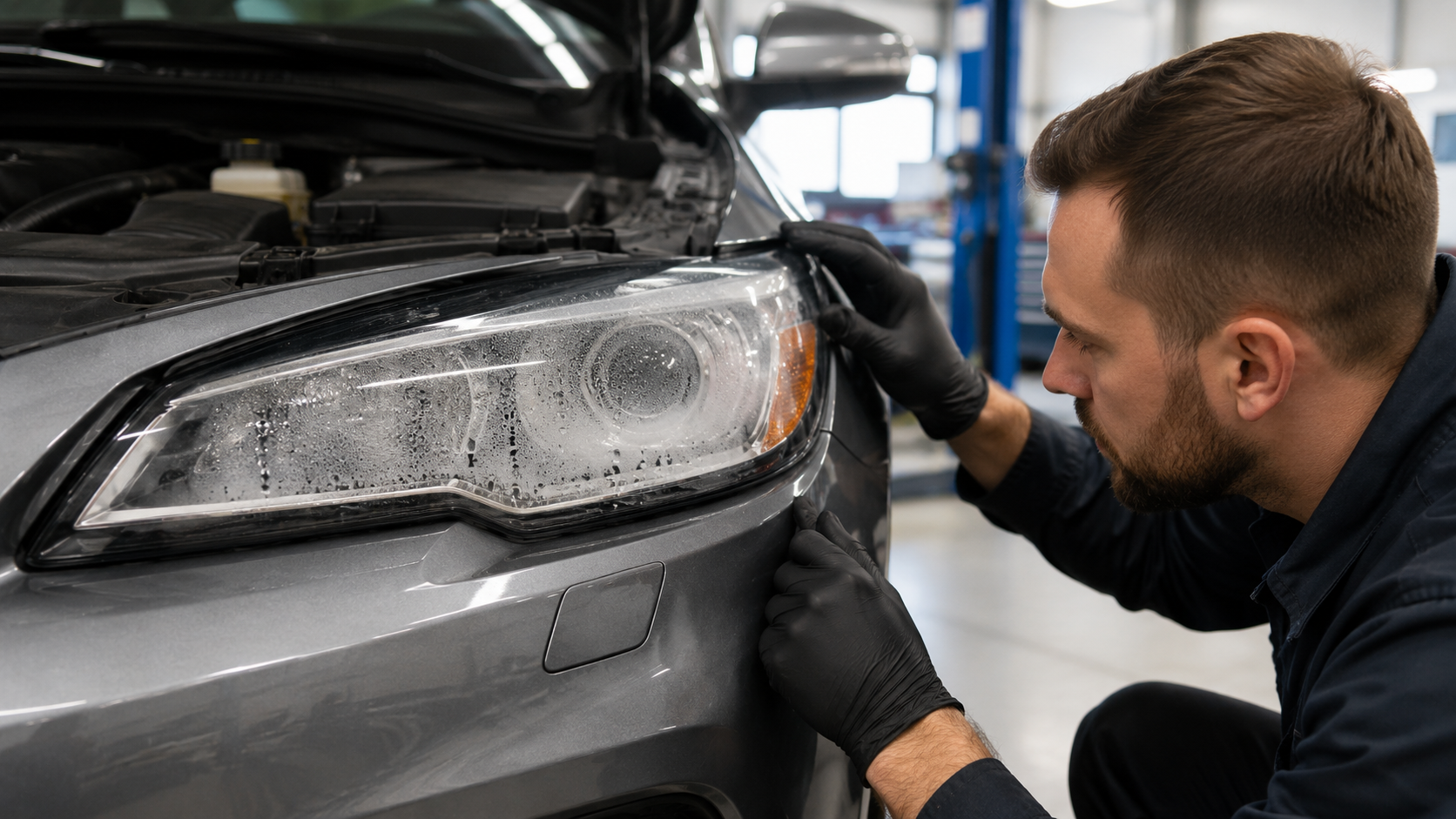
Another symptom that is often overlooked is the change in headlight alignment. Because the vehicle body tilts differently, the headlights may point higher than normal and dazzle oncoming drivers.
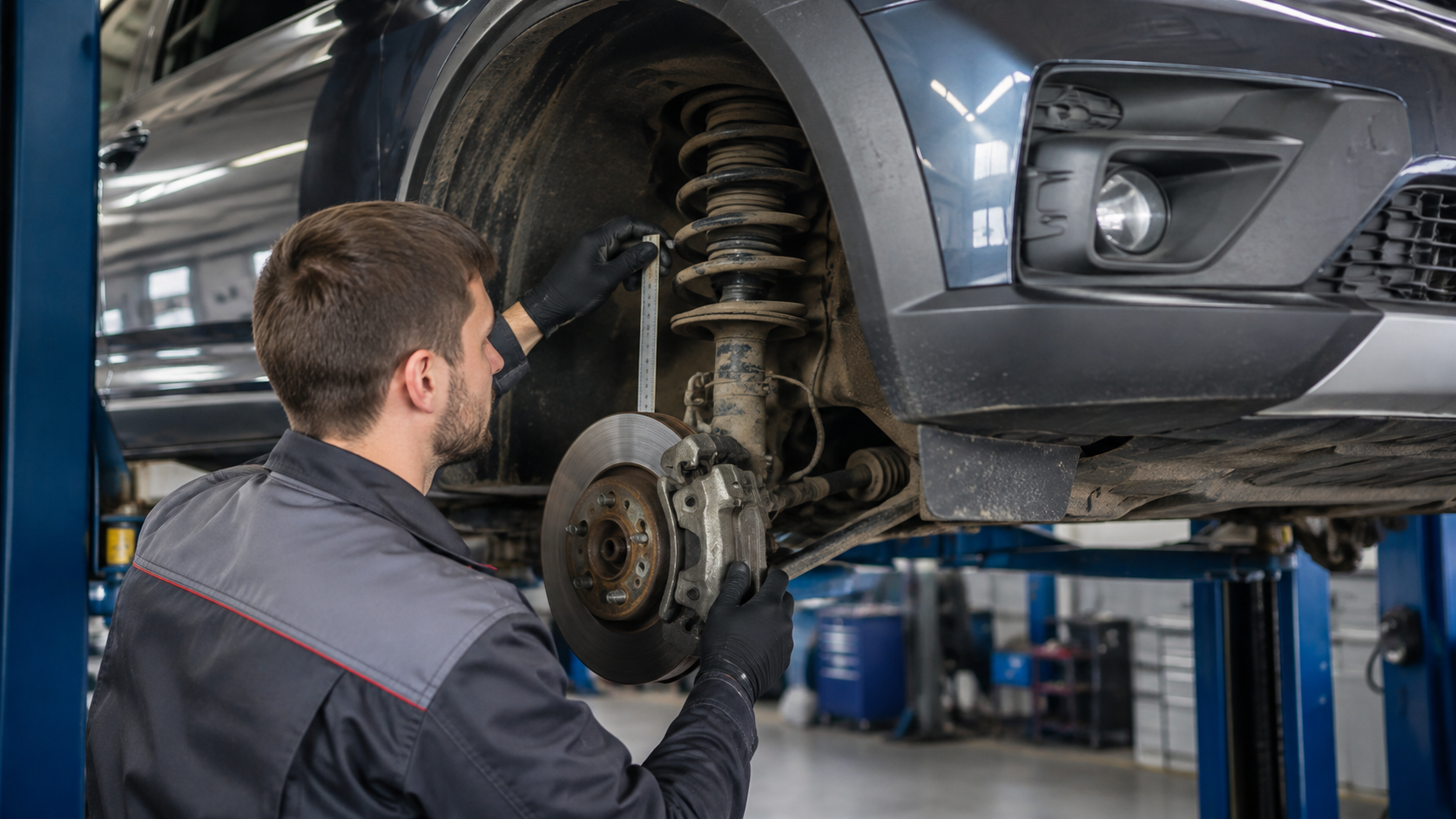
During a visual inspection, it is also worth checking the distance between the tire and the wheel arch. If the gap has become smaller or differs from one side of the vehicle to the other, the springs may have lost their elasticity.
Why New Shock Absorbers Won’t Fix the Problem
A common mistake is replacing only the shock absorbers without inspecting the suspension springs.
At first glance, it may seem that the shock absorber alone is responsible for ride comfort and absorbing impacts. In reality, the shock absorber works together with the spring and is designed to operate within a specific piston position.
When the spring sags, the shock absorber constantly operates in a different working range. As a result:
- internal components experience higher loads;
- seals wear out more quickly;
- vibration damping becomes less effective;
- the shock absorber’s service life is shortened.
As the spring height decreases, the shock absorber has less available suspension travel. When driving over larger bumps, the suspension reaches the bump stop more frequently, causing the driver to feel a harsh impact commonly referred to as suspension bottoming.
For this reason, new shock absorbers installed together with worn, sagging springs often lose their effectiveness much sooner than expected.
Safety Risks While Driving
Sagging suspension springs affect more than just ride comfort.
Reduced ground clearance changes the suspension geometry and alters the position of the wheels relative to the road surface.
The main consequences include:
- reduced directional stability;
- increased body roll while cornering;
- greater tendency to skid;
- poorer tire contact with the road;
- longer braking distances on uneven surfaces.
In addition, wheel alignment angles also change. Even a slight reduction in ride height can lead to uneven tire wear and reduced vehicle handling.
Why Springs Should Always Be Replaced in Pairs
Sometimes only one spring sags or breaks, making it tempting to replace just the damaged one.
However, a new spring has different height and stiffness characteristics than an old spring. As a result, the load will be distributed unevenly between the wheels.
Many vehicle owners wonder why the cost of replacing suspension springs varies significantly. In most cases, it depends on the suspension design, accessibility of the components, and whether additional repairs are required.
What Should Be Done After Replacing the Springs
Once new springs are installed, the vehicle ride height changes. Consequently, the suspension geometry changes as well.
Even if the vehicle continues to drive straight without pulling to either side, the wheel alignment angles may no longer match the factory specifications.
After replacing the springs, the following procedures should be performed:
- wheel alignment inspection and adjustment;
- steering wheel position check;
- tire wear inspection;
- inspection of other suspension components.
This is especially important for heavy sedans, station wagons, and crossover SUVs. That is why, during Mercedes suspension repairs, technicians always inspect the springs as part of a comprehensive suspension diagnosis.
What You Can Check Yourself
Before visiting a repair shop, you can inspect several simple things yourself:
- compare the vehicle ride height on the left and right sides;
- inspect the gap between the tires and the wheel arches;
- check whether the suspension frequently bottoms out;
- inspect the tires for uneven wear;
- observe how the vehicle behaves after loading the trunk.
These observations can help technicians identify the problem more quickly during diagnostics.
Sagging suspension springs are a natural consequence of long-term vehicle use, but they should never be ignored. Reduced ground clearance, frequent suspension bottoming, poorer handling, uneven tire wear, and accelerated shock absorber wear are often directly related to springs that have lost their elasticity.
Regular visual inspections, monitoring vehicle ride height, and replacing suspension springs in pairs help preserve proper suspension performance, driving comfort, and vehicle safety. After installing new springs, a professional wheel alignment should always be the final step of the repair process.
Top popular news
- Air Conditioner Losing Refrigerant Without Visible Damage: Causes and Solutions
- Why Wheel Alignment Goes Out After Adjustment: It Is Not Always the Alignment Rack
- Seized Brake Caliper: Symptoms, Causes, and Repair
- Changing the Oil in an AWD Differential: Why This Component Is Often Forgotten
- Check Engine Light Flashing: What the Signal Means and Why You Should Not Ignore It
- Preparing a car for a long trip: checklist before departure
- Oil leaking from the valve cover: causes of seepage and finding the source of the problem
- Automatic climate control does not maintain the set temperature: where to look for the cause

Subscribe to our newsletter!
To stay updated with the latest news


Book a service