Mon-Sut | 09:00 - 19:00


Find

Contact us

Kyiv
18 Teplovozna Street (Poznyaki)
 Мережа СТО в місті

Kyiv
18 Teplovozna Street (Poznyaki)
 Мережа СТО в місті

 Години роботи
 Mon-Sut
09:00 - 19:00


Airbag Warning Light Is On: Reasons You Should Never Delay Diagnostics
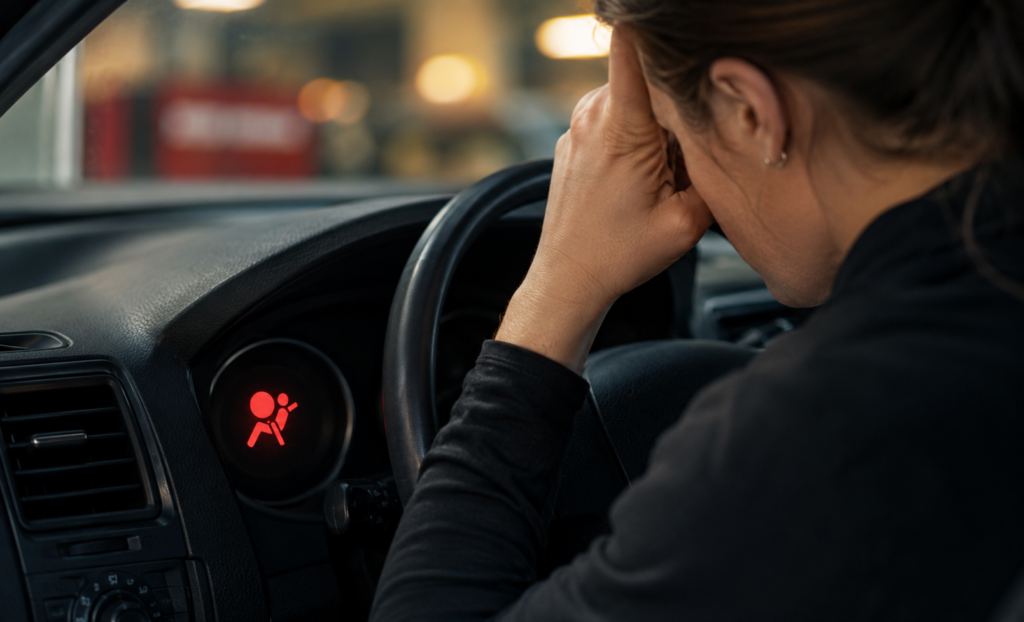
After starting the engine, the Airbag warning light does not go out or comes back on a few seconds later. Since the vehicle continues to drive normally, many drivers postpone diagnostics, assuming it is just a random electronic glitch. In reality, if the Airbag warning light is on, the cause may involve any component of the passive safety system. In the event of a traffic accident, this can affect the operation of the airbags and seat belt pretensioners, reducing the level of protection for everyone inside the vehicle.
How the SRS Airbag System Works
The SRS Airbag system consists of several interconnected components. These include impact and acceleration sensors, the electronic control unit, the steering wheel clock spring, airbag inflators, seat belt pretensioners, wiring, connectors, and monitoring sensors.
After the ignition is switched on, the electronic control unit automatically performs a self diagnosis. It checks the integrity of the wiring, the resistance of every circuit, and communication between all system components. If all values are within specification, the warning light turns off after a few seconds. If the electronics detect an open circuit, a short circuit, or an unstable connection, a fault code is stored in the system memory.
Circuit resistance is critically important. Even a slight deviation from the manufacturer’s specified values is interpreted by the control unit as a potential risk of incorrect airbag deployment. That is why it is impossible to determine why the Airbag warning light is on without checking every electrical circuit in the system.
The Most Common Causes of Airbag Faults
The most common causes include:
• a damaged steering wheel clock spring;
• oxidized or loose connectors under the seats;
• a faulty passenger occupancy sensor;
• damaged wiring;
• poor quality repairs after a traffic accident.
The steering wheel clock spring constantly flexes as the steering wheel turns. Over time, the flexible ribbon cable may break, preventing the electronic control unit from receiving a signal from the driver’s airbag. If diagnostics confirm this fault, the clock spring must be replaced. During steering wheel clock spring replacement in Kyiv, technicians also inspect the wiring, connectors, and the integrity of the entire SRS circuit.
Another common problem involves the connectors beneath the front seats. After interior detailing, moisture exposure, or sudden seat movement, electrical contact may deteriorate. For the control unit, even a brief interruption is enough to store a fault code.
A faulty passenger occupancy sensor can also trigger the warning light. This sensor detects whether the front passenger seat is occupied and sends the information to the control unit. Incorrect data affects the SRS operating algorithm, causing the warning light to remain illuminated.
Vehicles that have previously been involved in accidents represent another common source of problems. If resistor simulators were installed instead of restoring the original safety system correctly, they may eventually lose contact or change electrical resistance. As a result, the warning light appears again.
How the Real Cause Is Identified
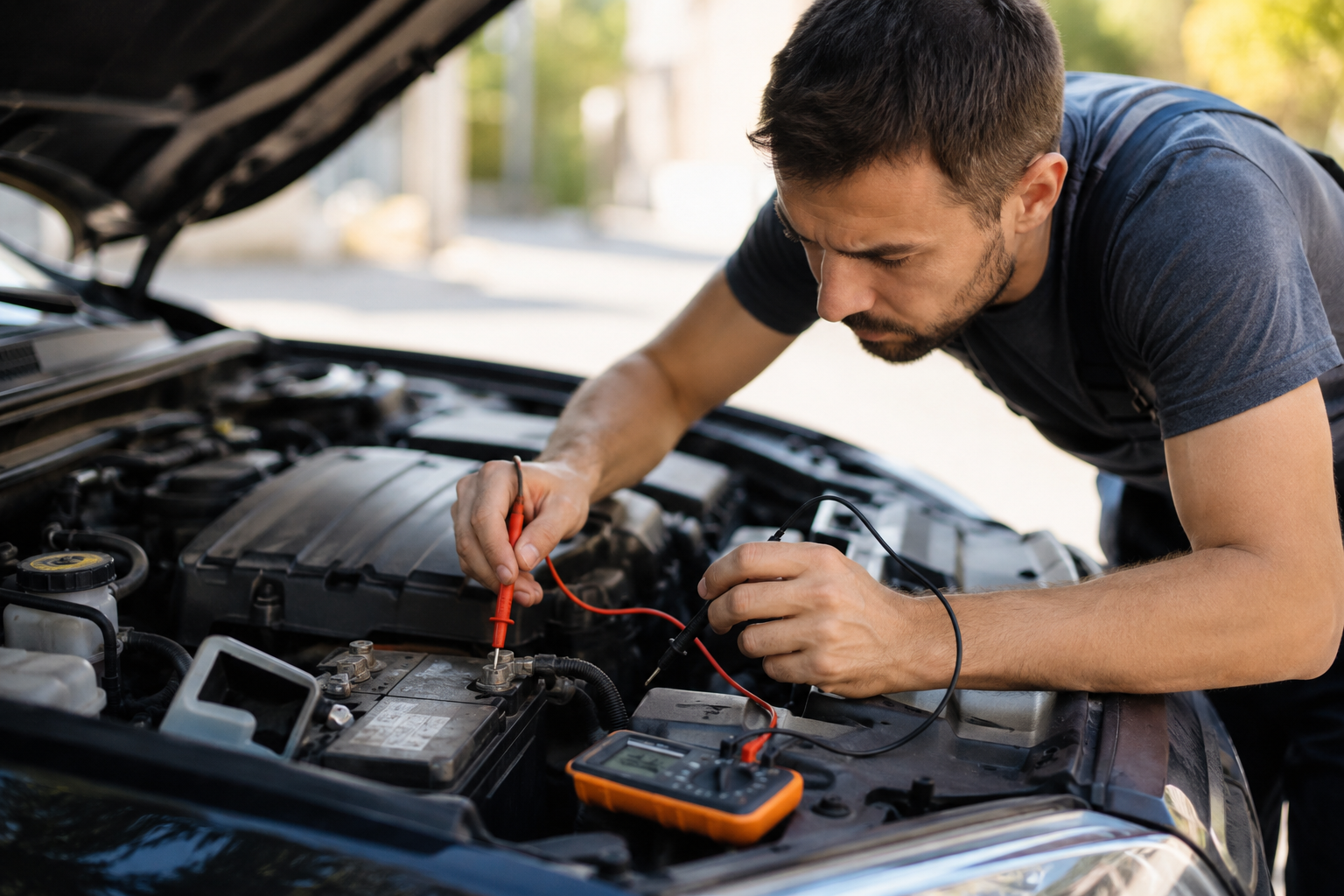
A visual inspection alone is not enough. The process begins with computerized SRS Airbag diagnostics, which identify the circuit where the fault code has been recorded. Technicians then measure circuit resistance and inspect the steering wheel clock spring, impact sensors, seat belt pretensioners, wiring, and electrical connectors. This systematic approach makes it possible to locate the actual source of the problem rather than simply eliminating its visible symptoms.
Why Clearing the Fault Code Does Not Solve the Problem
After clearing the fault memory, the warning light may disappear temporarily, but only until the next self diagnostic cycle. If a damaged wire, faulty connection, or any other defect has not been repaired, the control unit will once again switch the SRS into emergency mode and store the fault code again. In some cases, a complete inspection reveals that the SRS control unit itself requires repair, but this decision should only be made after its failure has been fully confirmed. The goal is not to remove the fault code itself, but to eliminate the reason it appeared. Only then will the vehicle’s passive safety system perform exactly as the manufacturer intended.
Top popular news
- Vehicle Maintenance Schedule by Mileage: What Really Needs to Be Replaced at 30,000, 60,000, and 90,000 km
- Importing a Car from the USA to Ukraine: Required Documents and Customs Clearance Costs
- Switching from LPG to Gasoline While Driving: Why the Switching Valve Sometimes Fails
- Wheel Balancing: Why Vibration at High Speed Does Not Always Mean a Bent Rim
- Car Air Conditioner Disinfection: Why It Is Necessary and How Often It Should Be Done
- CV Boot: Why Replacing It Costs Much Less Than Repairing the Drive Shaft
- Wheel Bearing Noise: How to Identify Which Wheel Is Faulty
- Car Soundproofing: Where to Start for the Best Results

Subscribe to our newsletter!
To stay updated with the latest news


Book a service