Mon-Sut | 09:00 - 19:00


Find

Contact us

Kyiv
18 Teplovozna Street (Poznyaki)
 Мережа СТО в місті

Kyiv
18 Teplovozna Street (Poznyaki)
 Мережа СТО в місті

 Години роботи
 Mon-Sut
09:00 - 19:00


How to Know When Your Vehicle Needs a Wheel Alignment
How Incorrect Wheel Alignment Affects a Vehicle

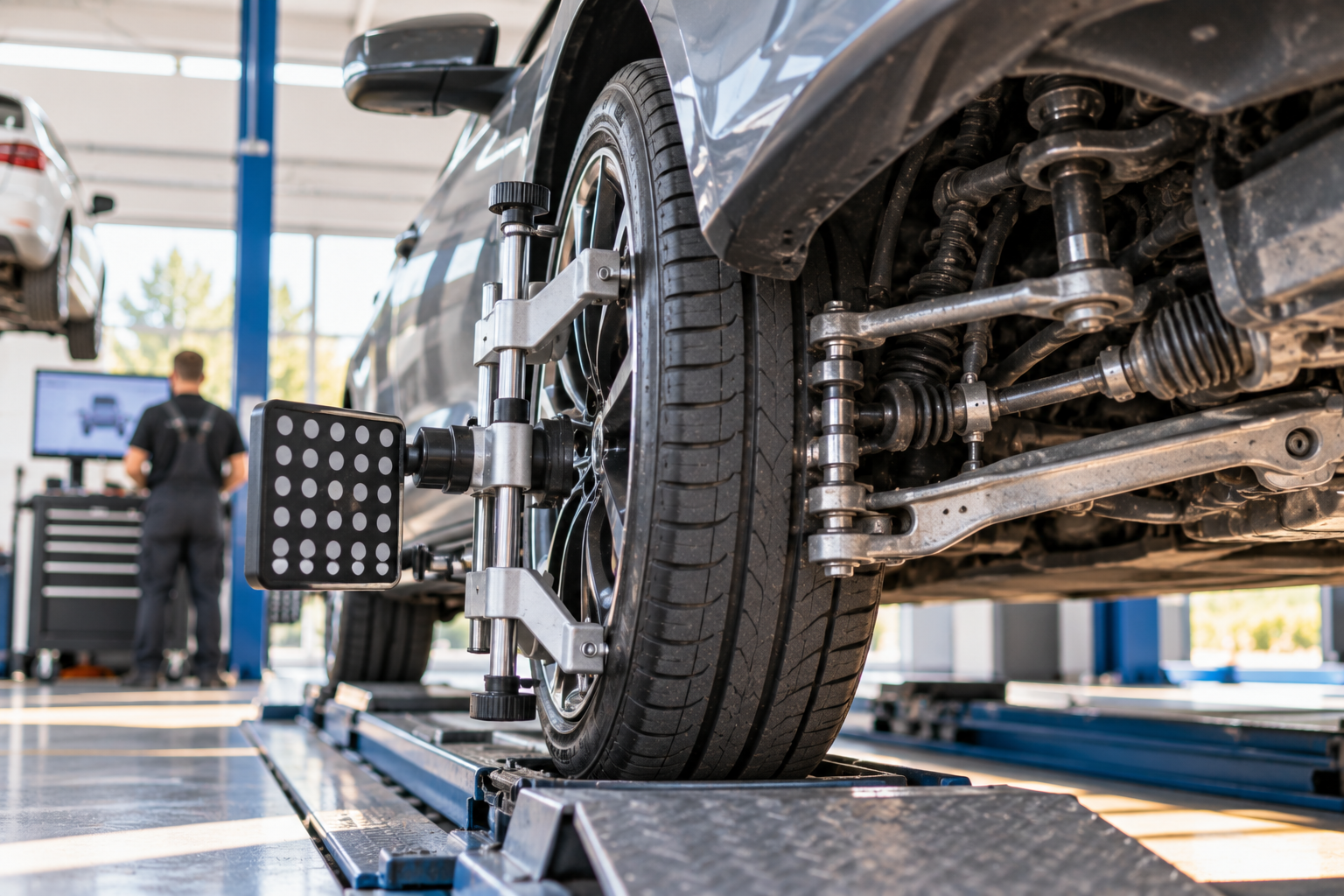
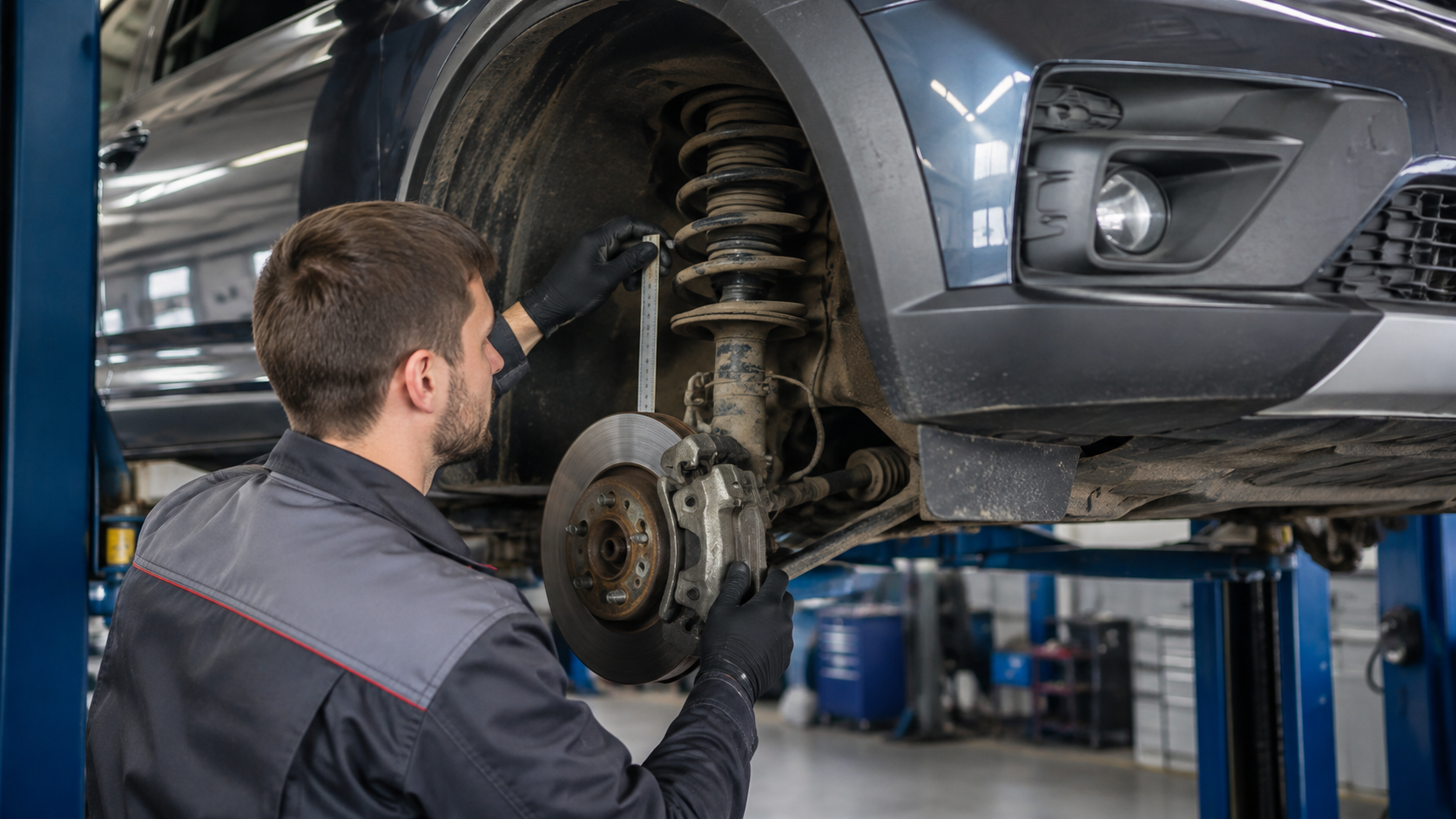
Wheel alignment directly affects how a vehicle behaves on the road. When the wheel alignment angles are incorrect, the position of the wheels changes in relation to both the road surface and each other. As a result, vehicle handling deteriorates, tires wear out more quickly, and additional stress is placed on suspension components.
At the early stages, the problem may be barely noticeable. The driver may simply feel that the steering has become less precise or that the vehicle feels less stable at higher speeds. Over time, the symptoms become more obvious:
- the vehicle pulls to one side;
- uneven tire wear appears;
- the steering wheel may sit off-center while driving straight;
- the vehicle responds less accurately to steering inputs;
- the suspension system operates under increased stress.
Incorrect suspension geometry also affects steering performance and the overall stability of the vehicle during maneuvers.
Main Signs of Suspension Geometry Problems
One of the most common signs of improper wheel alignment is when the vehicle begins changing direction on its own. If the car pulls to one side even on a level road, it often indicates a suspension geometry issue.
Other common symptoms include:
- an off-center steering wheel;
- reduced stability at higher speeds;
- the need for constant steering corrections;
- excessive sensitivity to road grooves and ruts;
- steering wheel vibrations.
In some cases, the problem appears after hitting a pothole, striking a curb, or performing suspension repairs. Even a slight shift in suspension components can affect wheel alignment angles.
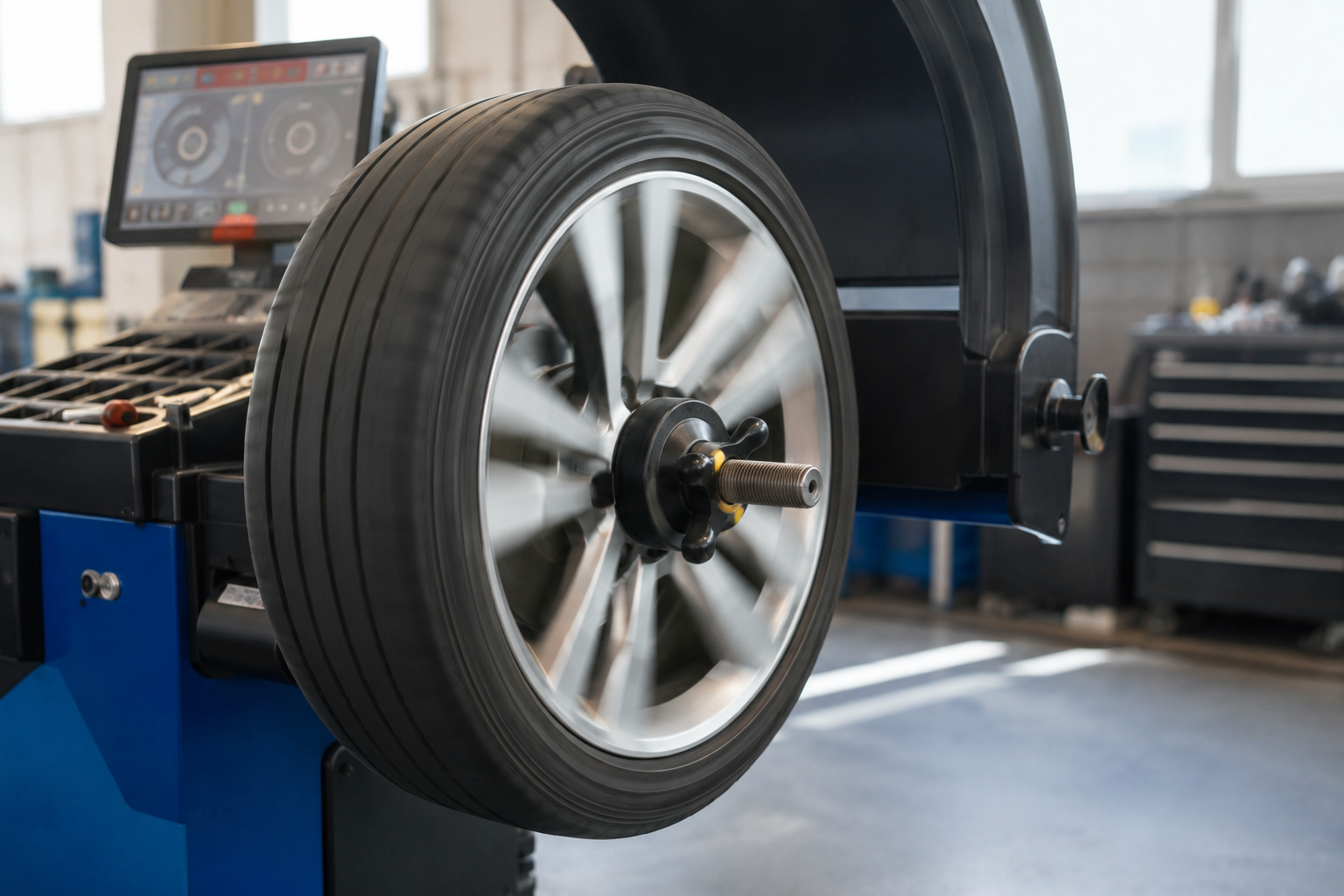
Sometimes signs of improper alignment appear together with steering wheel vibrations. However, it is important to understand that the cause may not be related solely to suspension geometry. Similar symptoms can also result from wheel balancing issues.
Why Tires Begin Wearing Unevenly
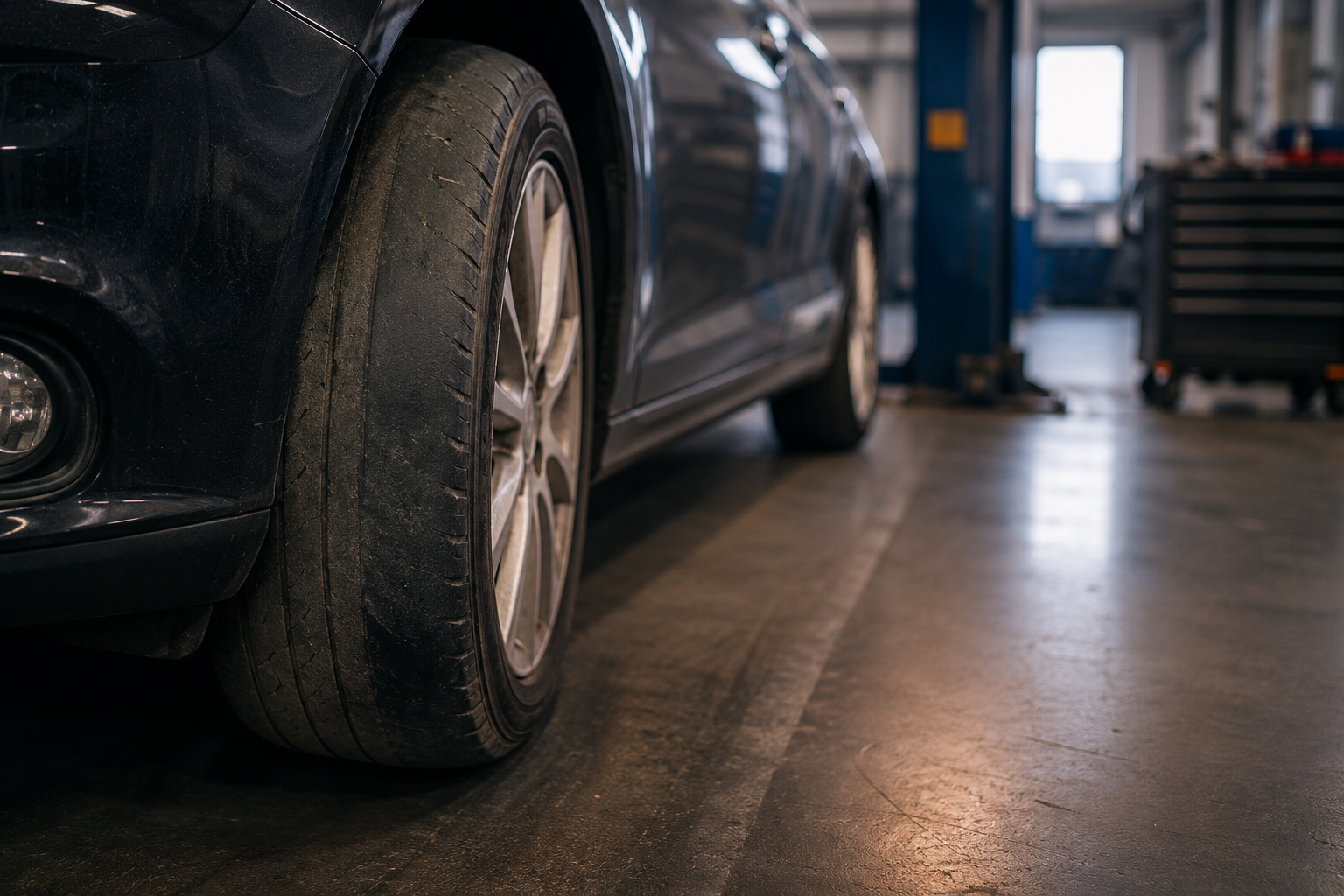
Uneven tire wear is one of the most noticeable consequences of incorrect wheel alignment. When wheel angles are out of specification, the tire does not contact the road surface evenly, causing one section of the tread to wear faster than another.
Common signs of uneven tire wear include:
- excessive wear on the inner edge of the tire;
- excessive wear on the outer edge;
- feathered or stepped tread wear patterns;
- increased tire noise;
- reduced vehicle stability at speed.
The problem is not limited to accelerated tire wear. Improper road contact also reduces traction, making the vehicle less stable during braking and cornering.
Many drivers replace tires or perform wheel balancing, only to see the problem return. If the root cause is incorrect suspension geometry, even new tires will wear unevenly unless the wheel alignment is properly adjusted.
How Wheel Alignment Affects Handling and Safety
Incorrect wheel alignment affects not only driving comfort but also overall road safety. The vehicle becomes less predictable, especially at higher speeds or during sudden maneuvers.
When suspension geometry is incorrect, the wheels cannot maintain optimal contact with the road surface. As a result, vehicle handling deteriorates, and the driver must constantly correct the driving path.
Additional stress is also placed on:
- the steering system;
- suspension components;
- the vehicle suspension as a whole;
- tires and wheel hub assemblies.
The problem becomes especially noticeable during emergency braking or when driving on wet roads. The vehicle may feel unstable, and tire grip can be significantly reduced.
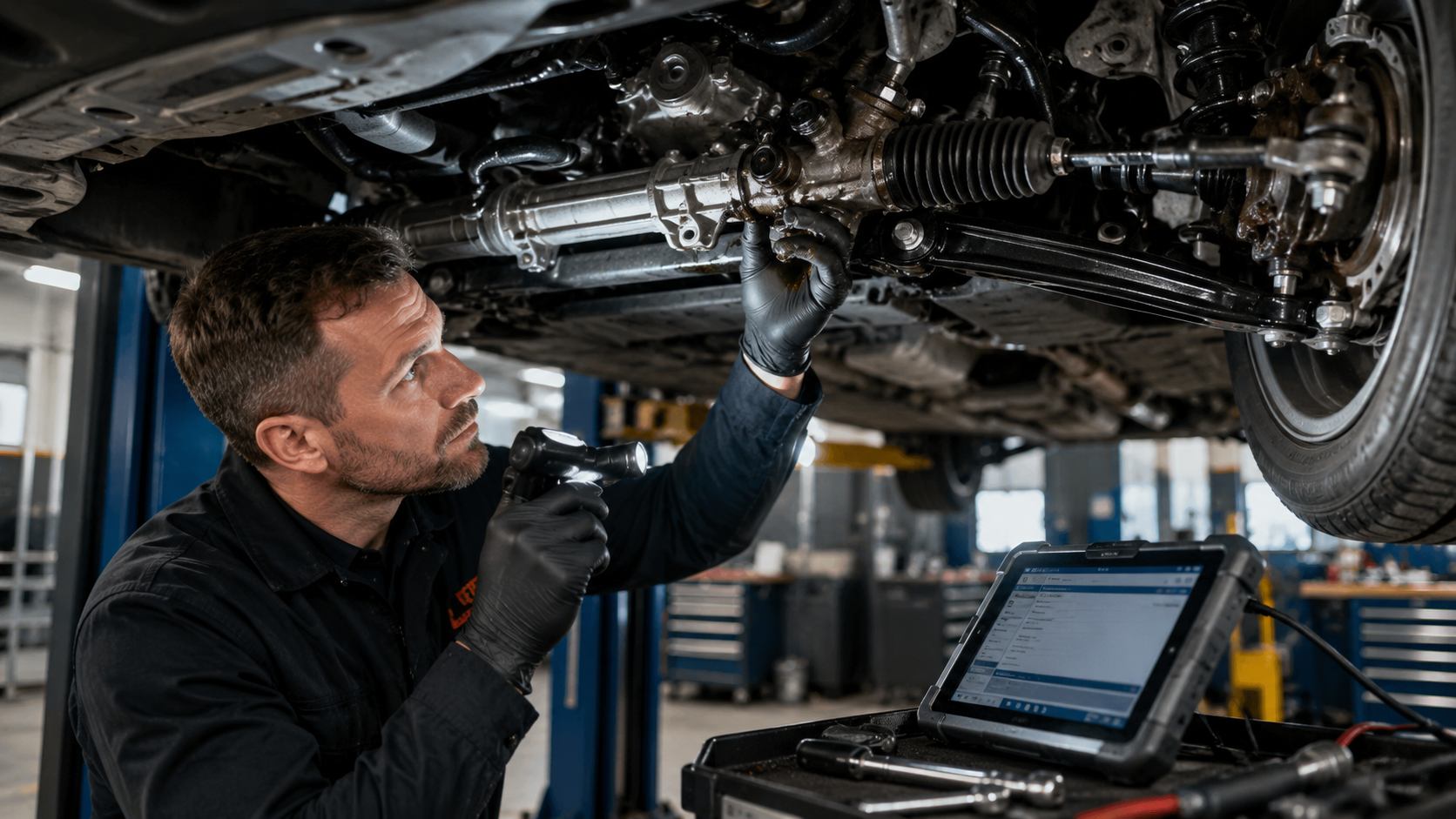
When You Should Have the Suspension System Checked
Many drivers only think about wheel alignment after experiencing handling problems or excessive tire wear. However, wheel alignment angles should be checked even when obvious symptoms are not yet present.
Suspension diagnostics are recommended in the following situations:
- after hitting a large pothole;
- after striking a curb;
- after suspension repairs;
- after replacing steering system components;
- when uneven tire wear appears;
- if the vehicle pulls to one side;
- if the steering wheel is not centered.
Timely suspension diagnostics help identify suspension geometry problems early, preventing accelerated tire wear, excessive stress on suspension components, and reduced driving safety.
Top popular news
- Air Conditioner Losing Refrigerant Without Visible Damage: Causes and Solutions
- Why Wheel Alignment Goes Out After Adjustment: It Is Not Always the Alignment Rack
- Seized Brake Caliper: Symptoms, Causes, and Repair
- Changing the Oil in an AWD Differential: Why This Component Is Often Forgotten
- Check Engine Light Flashing: What the Signal Means and Why You Should Not Ignore It
- Preparing a car for a long trip: checklist before departure
- Oil leaking from the valve cover: causes of seepage and finding the source of the problem
- Automatic climate control does not maintain the set temperature: where to look for the cause

Subscribe to our newsletter!
To stay updated with the latest news


Book a service