Mon-Fri | 08:00 - 20:00


Find

Contact us

Kyiv
46 Kyrylivska St. (Podil)
 Мережа СТО в місті

Kyiv
46 Kyrylivska St. (Podil)
 Мережа СТО в місті

 Години роботи
 Mon-Fri
08:00 - 20:00
Automatic climate control does not maintain the set temperature: where to look for the cause
Automatic climate control is more complex than a conventional heater or manually controlled air conditioner. Once the required mode is selected, the system analyses cabin conditions and automatically regulates the supply of warm or cold air.
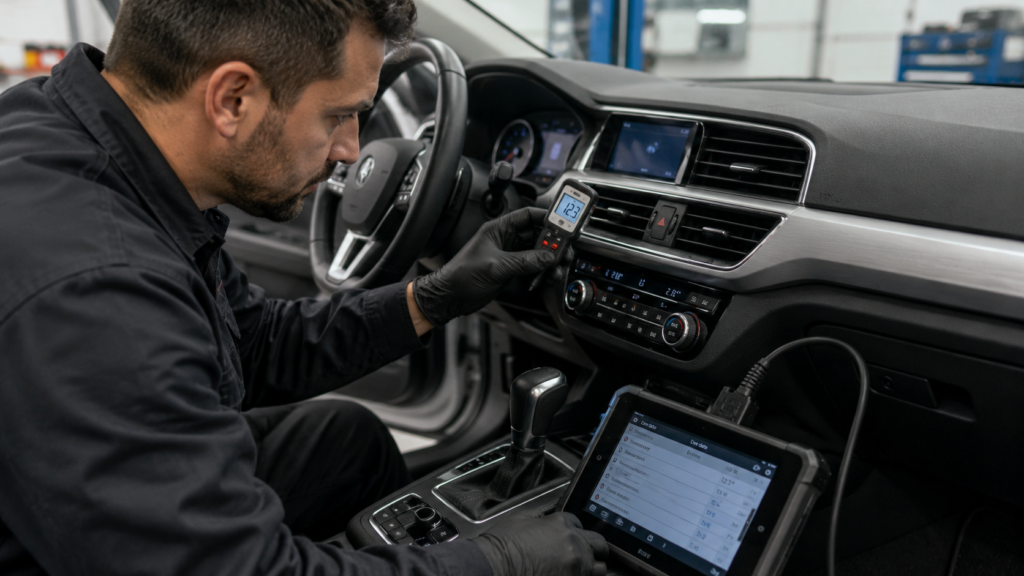
The reasons why climate control does not maintain temperature may involve different system components. The problem is not always in the air conditioner or heater itself because cabin comfort depends on a whole set of electronic and mechanical components.
Temperature stability is affected by:
- the cabin temperature sensor, which sends information to the electronic control unit;
- the climate-control module, which analyses the incoming data;
- the air-mixing flap, which regulates airflow at different temperatures;
- the flap actuator, which moves the flap;
- heating servomotors, which control air distribution.
A fault in any of these components can reduce the accuracy of automatic operation and create an unstable cabin climate.
How automatic climate control differs from manual control
In a conventional heating and air-conditioning system, the driver manually changes temperature, fan speed, and airflow direction. The equipment follows the selected settings without continuously analysing cabin conditions.
Automatic climate control works differently. After the required value is set, the electronics compare the actual temperature with the target and adjust individual components.
For this purpose, data are used from:
- the cabin temperature sensor;
- the outside temperature sensor;
- ventilation-control components;
- additional sensors in more advanced systems.
With dual-zone climate control, settings can be adjusted separately for the driver and passenger sides. As a result, one zone may operate correctly while the other shows deviations.
How climate control determines the required temperature
After a temperature setting is selected, the control unit analyses the difference between the actual readings and the target value. Based on this information, the electronics determine what airflow should be produced.
The air-mixing flap plays the main role in this process. It changes position and regulates the ratio of warm to cold airflow.
A fault in this mechanism causes incorrect regulation. The vehicle may take a long time to reach the required setting, blow air at the wrong temperature, or react slowly when the settings are changed.
Cabin temperature sensor: an underestimated cause of faults
The cabin temperature sensor determines the actual conditions inside the vehicle. Its readings are used to adjust the climate-control system automatically.
This component is usually located in the front part of the dashboard or near a small ventilation passage through which air is drawn for measurement.
Dust contamination or a sensor fault reduces measurement accuracy. As a result, the climate-control module receives incorrect information and selects the wrong operating mode.
Possible signs of a sensor problem include:
- slow response to temperature changes;
- actual cabin temperature not matching the set value;
- unstable automatic temperature control.
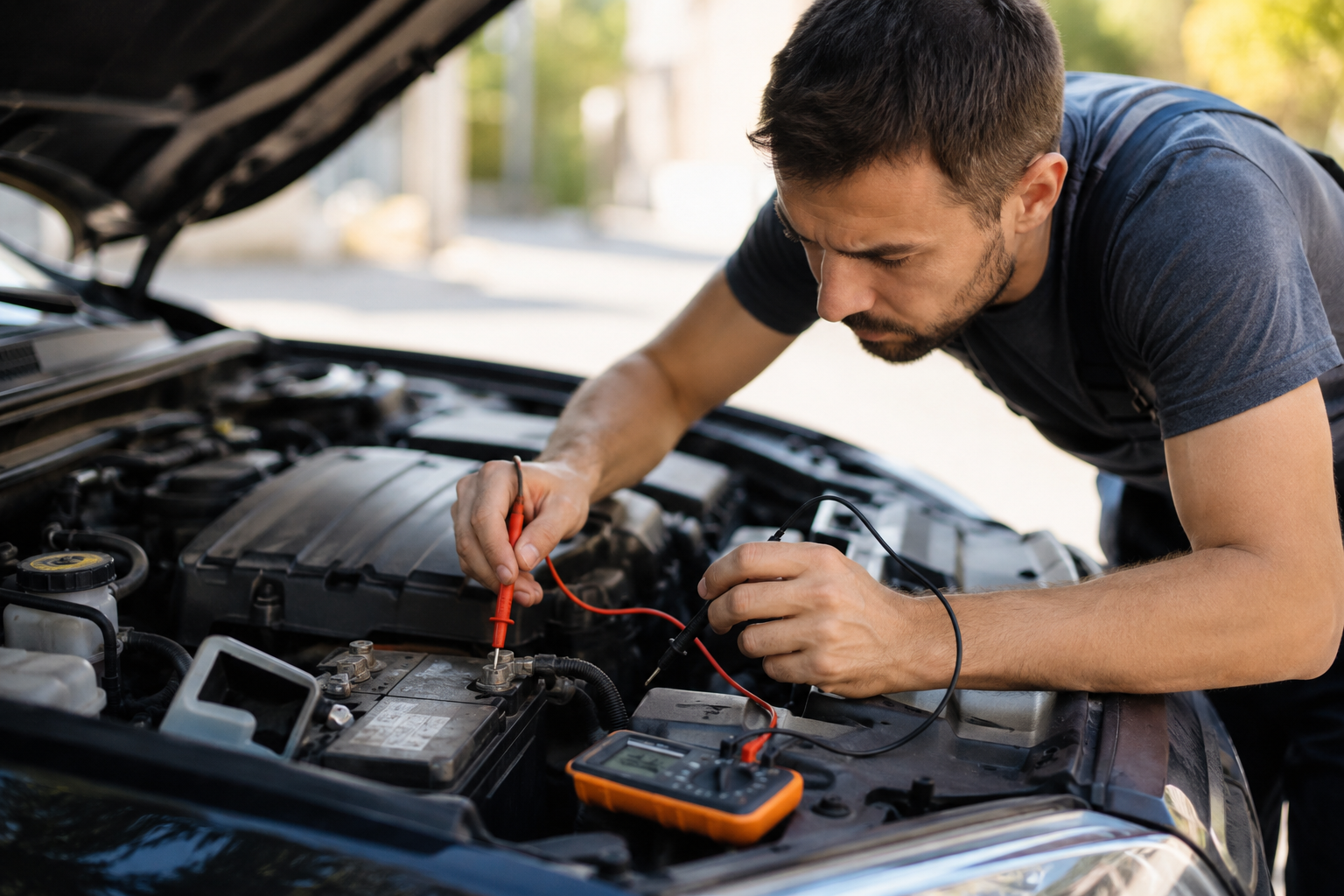
System self-diagnostics can help assess the sensor and other electronic components.
Air-mixing flap and actuator: a mechanical source of temperature fluctuations
The air-mixing flap is responsible for setting outlet-air temperature. It determines how much warm and cold air enters the cabin.
The flap is moved by an actuator. This mechanism consists of an electric drive and reduction gears that change flap position according to commands from the control unit.
An air-mixing flap fault may result from worn internal parts, a jammed mechanism, or a damaged actuator.
One characteristic symptom is that it alternates between blowing hot and cold air. This behaviour indicates unstable flap positioning or a problem with its control.
Before replacing parts, it is necessary to determine whether there is actual mechanical damage or whether adjustment is sufficient.
Calibrating climate-control actuators after a fault
After the battery is disconnected, repairs are carried out, or stored settings are lost, the electronic module may identify flap positions incorrectly. In this case, climate-control actuator calibration is performed.
During basic calibration, the system relearns the end positions of the servomotors and stores them in memory.
Calibration can correct positioning errors, but it cannot repair physical damage. A broken actuator, faulty sensor, or damaged flap requires repair or replacement.
Before work begins, a comprehensive check is performed:
- reading climate-control module fault codes;
- checking actuator operation;
- checking sensor signals;
- assessing flap movement.
When climate-control diagnostics are needed
Unstable cabin temperature can have many causes, so checking only the air conditioner or heater does not always provide the full picture.
The following changes deserve attention:
- cabin temperature does not match the set value;
- air temperature changes without a change in mode;
- one side of a dual-zone system operates differently from the other;
- the system takes a long time to reach the selected setting;
- unusual noises appear around the flaps or actuators.
A systematic check of sensors, actuators, and control mechanisms helps locate the faulty component and restore stable cabin climate without unnecessarily replacing serviceable parts.
Top popular news
- Preparing a car for a long trip: checklist before departure
- Oil leaking from the valve cover: causes of seepage and finding the source of the problem
- Brake pipes and hoses: different designs with different risks
- Suspension spring sagging: gradual loss of performance without an obvious failure
- PCV crankcase ventilation valve: why a fault leads to oil leaks
- Headlights fogging from the inside: normal condensation or a sign of housing damage
- Steering rack: hydraulic leak or electric power-steering fault – how the problem is diagnosed
- Engine air and cabin filter replacement: why urban conditions change service intervals

Subscribe to our newsletter!
To stay updated with the latest news


Book a service