Mon-Sut | 09:00 - 19:00


Find

Contact us

Kyiv
18 Teplovozna Street (Poznyaki)
 Мережа СТО в місті

Kyiv
18 Teplovozna Street (Poznyaki)
 Мережа СТО в місті

 Години роботи
 Mon-Sut
09:00 - 19:00


Car Air Conditioner Disinfection: Why It Is Necessary and How Often It Should Be Done
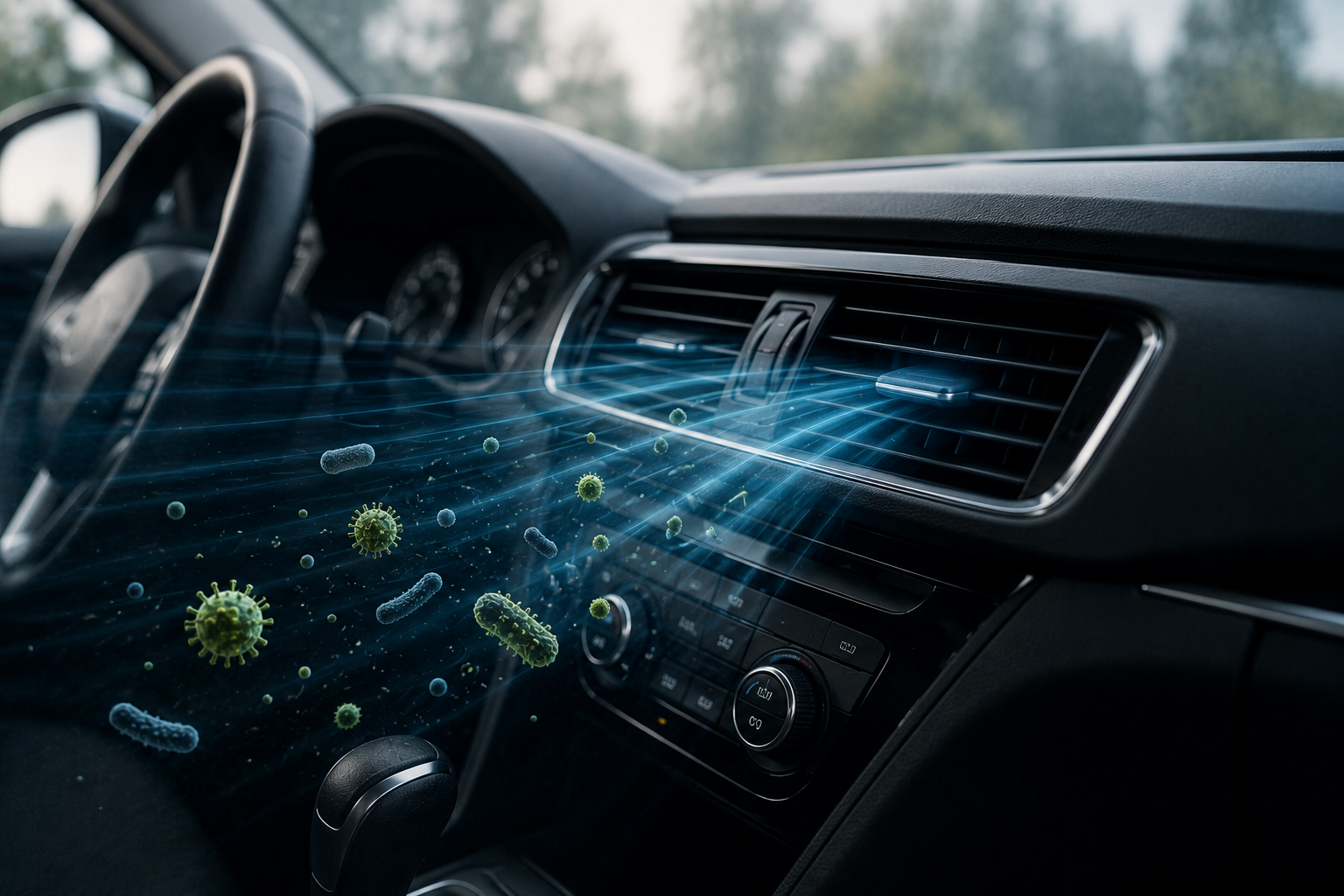
After switching on the air conditioner, you may sometimes notice a musty or damp smell inside the cabin. Many drivers consider it nothing more than a minor inconvenience, but the real cause is often much more serious. An unpleasant odor coming from the vehicle’s air conditioning system frequently indicates the buildup of bacteria, mold, and mildew on the evaporator. These microorganisms can irritate the respiratory tract, cause coughing, worsen allergies, and under certain conditions even increase the risk of respiratory infections.
Why the Evaporator Becomes a Breeding Ground for Bacteria
During operation, the air conditioner evaporator remains constantly cold. As warm air passes through it, condensation forms on its surface and is drained away through the condensate drain tube.
At the same time, tiny dust particles enter the climate control system with the incoming air. Even a high quality cabin air filter cannot capture all of them, so some contaminants settle on the damp evaporator fins. Constant moisture, the absence of sunlight, and organic particles create ideal conditions for the growth of mold, fungi, and bacteria, including Legionella.
If the drain tube becomes partially clogged, water remains inside the system for a longer period, allowing moisture to persist even after the trip has ended. This further accelerates the growth of microorganisms and the development of persistent unpleasant odors.
Common signs that the system requires cleaning include:
- a musty smell when the air conditioner is switched on;
- windows fogging up quickly;
- reduced airflow from the air vents;
- coughing or throat irritation after driving.
How the Climate Control System Is Cleaned
Regular air fresheners only mask unpleasant odors without eliminating their source. That is why cleaning the air conditioner evaporator is far more effective, as it removes contaminants directly from the surface where they accumulate.
Foam Cleaning
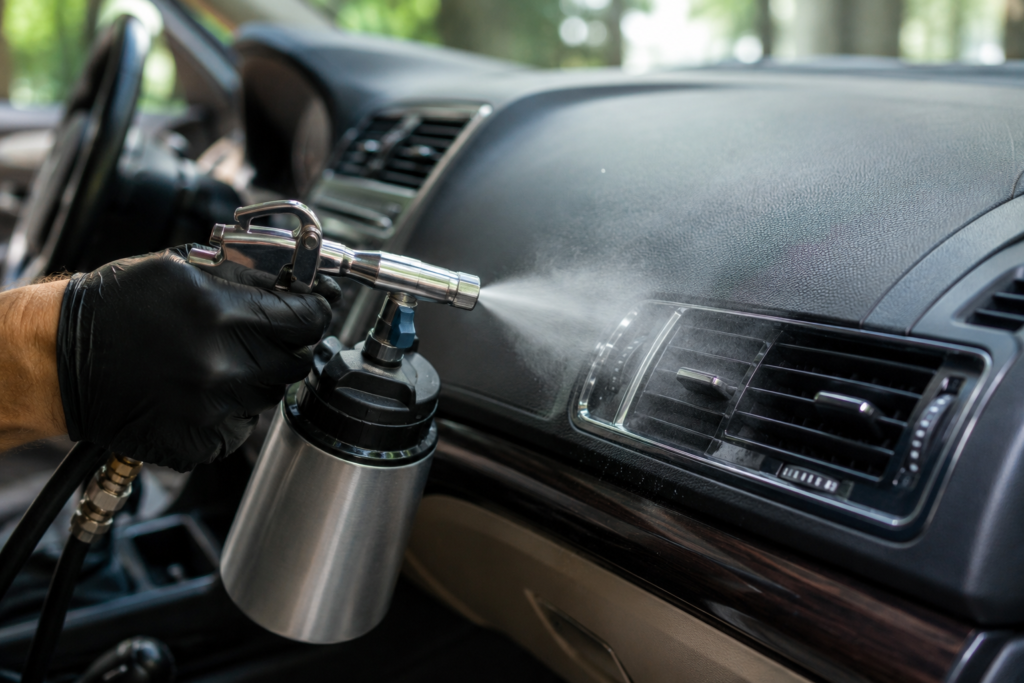
A special antibacterial foam is applied to the evaporator through the drain tube or a service opening. The foam penetrates between the evaporator fins, dissolves dirt, and drains out together with the contaminants. Professional cleaning products, including chlorhexidine based solutions, are commonly used for this procedure.
Ultrasonic Cleaning
During ultrasonic treatment, an antibacterial solution is transformed into a fine mist. In recirculation mode, it travels through the entire ventilation system, settles on internal surfaces, and helps reduce microorganisms even in hard to reach areas. This makes ultrasonic cleaning an excellent option for routine preventive maintenance.
Ozone Treatment
Ozone treatment can also be performed as a separate procedure. Ozone not only neutralizes unpleasant odors but also breaks down the organic compounds that cause them. In addition, it suppresses the growth of most bacteria and fungi inside the air ducts. This procedure is especially beneficial after long periods of vehicle storage, moisture entering the cabin, or transporting pets.
How to Prevent Odors from Returning
For most vehicles, preventive cleaning once a year is sufficient. The best time to perform it is in spring before the air conditioner begins regular seasonal use.
Replacing the cabin air filter should always be performed at the same time. If a carbon activated cabin filter is installed, it traps unpleasant odors and many harmful airborne contaminants more effectively than a standard filter. However, it also has a limited service life and requires timely replacement.
Another useful habit is to switch off the air conditioner approximately five minutes before reaching your destination while leaving the ventilation fan running. The warm airflow dries the evaporator, reduces condensation, and slows the growth of mold and mildew.
Common Mistakes
To keep the cleaning results effective for as long as possible, avoid the following:
- using air fresheners instead of proper cleaning;
- spraying household disinfectants directly into the air vents;
- delaying cabin air filter replacement after disinfection;
- ignoring problems with the condensate drainage system.
Why Comprehensive Service Is More Effective
When scheduling car air conditioner disinfection in Kyiv, choosing a complete climate control system service is the most effective approach. It includes evaporator cleaning, antibacterial treatment of the air ducts, inspection of the condensate drain tube, and replacement of the cabin air filter. This eliminates not only unpleasant odors but also the bacteria, mold, and other microorganisms responsible for them.
The cost of antibacterial air conditioning treatment depends on the cleaning method selected and the condition of the climate control system. Regular preventive maintenance is considerably less expensive than repairing damage caused by a heavily contaminated evaporator or servicing air conditioning components that have operated for an extended period under unfavorable conditions.
Top popular news
- Vehicle Maintenance Schedule by Mileage: What Really Needs to Be Replaced at 30,000, 60,000, and 90,000 km
- Importing a Car from the USA to Ukraine: Required Documents and Customs Clearance Costs
- Switching from LPG to Gasoline While Driving: Why the Switching Valve Sometimes Fails
- Wheel Balancing: Why Vibration at High Speed Does Not Always Mean a Bent Rim
- CV Boot: Why Replacing It Costs Much Less Than Repairing the Drive Shaft
- Wheel Bearing Noise: How to Identify Which Wheel Is Faulty
- Car Soundproofing: Where to Start for the Best Results
- Factory Paint Thickness of a Car: How to Read Paint Thickness Gauge Measurements

Subscribe to our newsletter!
To stay updated with the latest news


Book a service