Mon-Sut | 09:00 - 19:00


Find

Contact us

Kyiv
18 Teplovozna Street (Poznyaki)
 Мережа СТО в місті

Kyiv
18 Teplovozna Street (Poznyaki)
 Мережа СТО в місті

 Години роботи
 Mon-Sut
09:00 - 19:00


Why the Steering Wheel Vibrates During Braking: How to Find the Real Cause
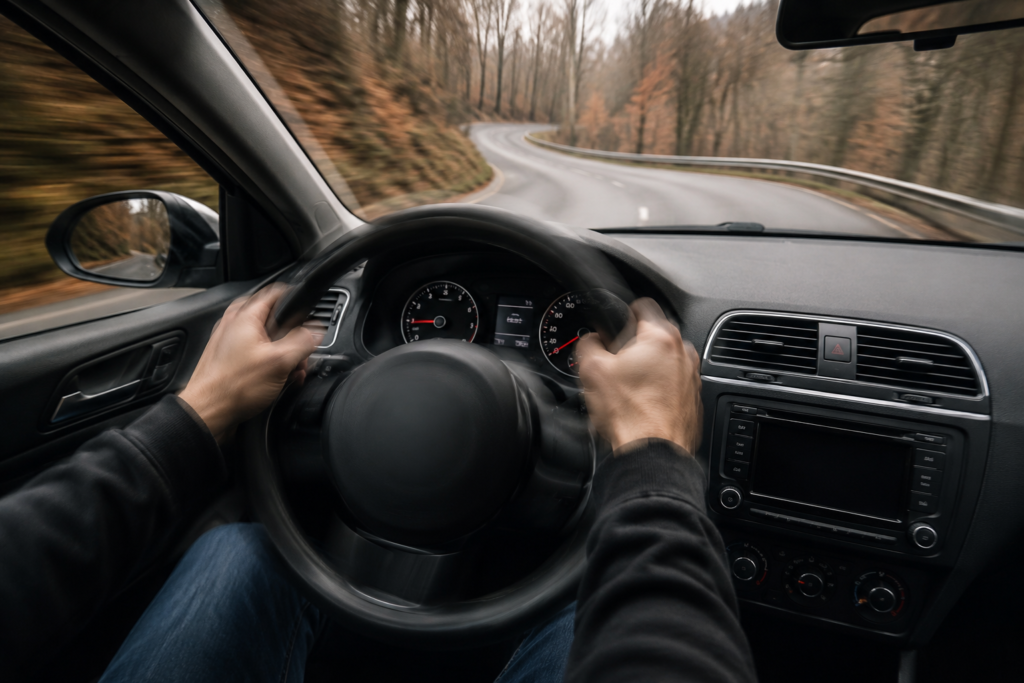
As the vehicle slows down, you may notice a slight vibration in the steering wheel. Once the car comes to a complete stop, the vibration disappears, but as soon as you press the brake pedal again, the unpleasant sensation returns. If your steering wheel shakes while braking, it should not be dismissed as a minor inconvenience. Constant vibration places additional stress on the steering system, suspension components, and the wheel hub assembly, gradually accelerating their wear.
The Type of Vibration Can Help Narrow Down the Cause
Initial conclusions can often be made even before diagnostics begin. If the vibration is felt primarily through the steering wheel, attention should first be focused on the front axle. If the vibration is stronger in the brake pedal or the vehicle body, the rear braking system should also be inspected.
Brake vibration is usually most noticeable at higher speeds. During gentle braking it may be barely noticeable, but after braking from 100 to 120 km/h, it often becomes much more pronounced. This usually indicates that one or more components are not operating evenly.
Why Brake Rotor Geometry Changes
In most cases, brake rotor distortion is caused by sudden temperature changes. After heavy braking, the braking surface becomes extremely hot. If it is suddenly cooled by cold water, the resulting thermal shock can alter the geometry of the metal.
A similar situation may occur after installing new brake rotors. If repeated hard braking is performed immediately without proper bedding in, certain areas of the rotor heat up unevenly. As a result, even a brand new brake rotor may become distorted.
This type of deformation is not always visible to the naked eye. Even a slight deviation in rotor geometry is enough to cause noticeable steering wheel vibration.
The inspection is not limited to a visual examination of the braking surface. Technicians also measure the remaining rotor thickness with a brake rotor micrometer and check wheel hub runout, since even a minor deviation in the hub can produce similar symptoms.
How a Brake Caliper Gradually Warps the Rotor
Replacing the brake rotors does not always eliminate vibration. If the actual source of the problem is the brake caliper, the vibration will return fairly quickly.
The following components are inspected first:
• brake caliper guide pins;
• brake caliper piston;
• even brake pad contact.
When the guide pins seize, the caliper becomes misaligned. One brake pad remains pressed against the rotor more than the other. One section of the braking surface overheats while the rest cools normally. Continuous temperature differences gradually distort the brake rotor and eventually cause vibration.
A similar process occurs when the brake caliper piston fails to retract after the brake pedal is released. The brake pads continue touching the rotor, preventing it from cooling properly even while driving. Heat continues to build up after every braking event, eventually causing unavoidable thermal distortion.
In this situation, restoring proper braking performance is impossible without repairing the brake caliper.
Other Problems That Can Cause Similar Symptoms
Not every vibration during braking is caused by brake rotors or calipers. Similar symptoms may also result from other mechanical problems, including:
• wheel bearing play;
• worn front control arm bushings;
• improperly balanced wheels;
• wheel hub runout.
Because these problems produce similar symptoms, brake rotor distortion should always be evaluated together with neighboring suspension and wheel components. Only a complete inspection can accurately identify the true source of the vibration.
How Brake Vibration Is Repaired
Before deciding on the repair method, technicians measure brake rotor and hub runout, inspect the condition of the guide pins and caliper pistons, measure the remaining rotor thickness, and examine the brake pads. Only then can they determine whether resurfacing is appropriate or whether replacing the components is the safer solution.
Brake rotor resurfacing in Kyiv is effective only when the rotor thickness remains within the manufacturer’s minimum specification and the braking surface does not have excessive wear or deep damage. If overheating was caused by seized guide pins or a faulty caliper piston, those problems must be repaired before the rotor is restored.
The brake pads are also carefully inspected because their wear pattern provides valuable information about the condition of the braking system. If uneven or excessive wear is confirmed, replacing the brake pads together with other braking components is usually recommended. The cost of brake pad replacement depends on the vehicle design and the amount of work required.
If only the brake rotor surface is restored while a seized caliper or wheel hub runout is left unresolved, the vibration will soon return. A lasting repair always requires eliminating the root cause rather than simply addressing its symptoms.
Top popular news
- Vehicle Maintenance Schedule by Mileage: What Really Needs to Be Replaced at 30,000, 60,000, and 90,000 km
- Importing a Car from the USA to Ukraine: Required Documents and Customs Clearance Costs
- Switching from LPG to Gasoline While Driving: Why the Switching Valve Sometimes Fails
- Wheel Balancing: Why Vibration at High Speed Does Not Always Mean a Bent Rim
- Car Air Conditioner Disinfection: Why It Is Necessary and How Often It Should Be Done
- CV Boot: Why Replacing It Costs Much Less Than Repairing the Drive Shaft
- Wheel Bearing Noise: How to Identify Which Wheel Is Faulty
- Car Soundproofing: Where to Start for the Best Results

Subscribe to our newsletter!
To stay updated with the latest news


Book a service