Mon-Sut | 09:00 - 19:00


Find

Contact us

Kyiv
18 Teplovozna Street (Poznyaki)
 Мережа СТО в місті

Kyiv
18 Teplovozna Street (Poznyaki)
 Мережа СТО в місті

 Години роботи
 Mon-Sut
09:00 - 19:00


Humming, Grinding, and Compressor Seizure: Signs of a Faulty Car Air Conditioning Compressor
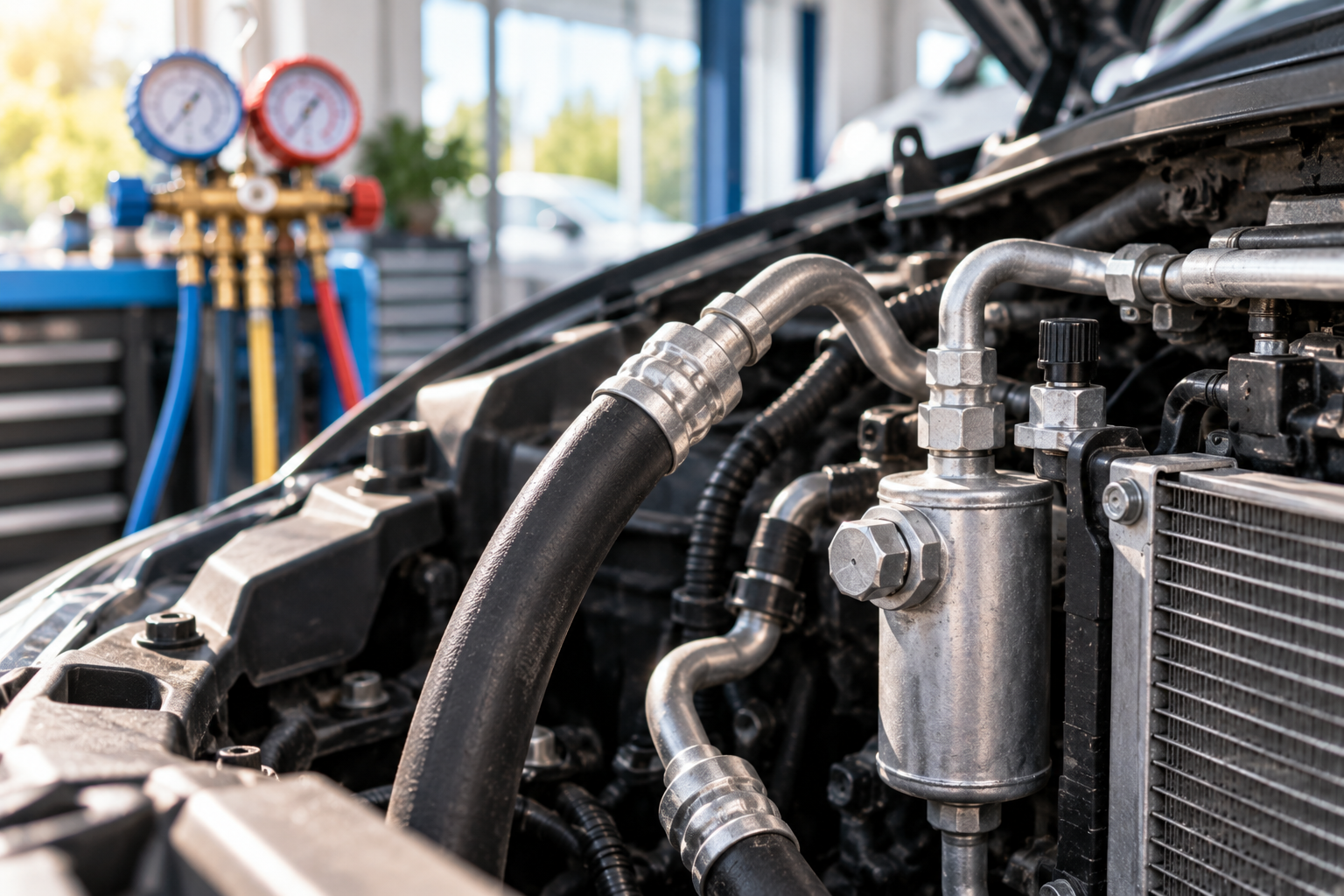
The compressor is the main working component of a vehicle’s air conditioning system. It circulates the refrigerant throughout the system and generates the pressure required to cool the air inside the cabin. If the compressor fails, the air conditioner can no longer operate efficiently, and in some cases, the failure may damage other components of the system. That is why compressor failure is considered one of the most expensive climate control system repairs.
Signs of a faulty car air conditioning compressor often develop gradually. At first, the driver may hear unusual noises or notice reduced cooling performance. However, without timely diagnostics, the problem can eventually lead to compressor seizure and costly repairs throughout the entire air conditioning system.
What Symptoms Indicate a Faulty Compressor?

The first warning signs are usually unusual noises that appear after the air conditioner is switched on.
Typical symptoms include:
- a humming noise from under the hood;
- a metallic squeal;
- grinding or rattling noises;
- vibrations after the air conditioner is activated;
- the absence of the characteristic compressor clutch click;
- weak cooling performance;
- intermittent operation of the air conditioning system.
Many drivers seek diagnostics because their car’s air conditioning compressor is making a humming noise. However, the source of the sound can vary.
If the humming is present continuously regardless of whether the air conditioner is running, the problem is often related to the compressor pulley bearing. If the noise appears only after pressing the A/C button, the compressor’s internal components or the electromagnetic clutch should be inspected.
A metallic squeal often indicates early bearing wear, overheating of clutch components, or improper operation of the clutch pressure plate. During the early stages, these noises may occur only occasionally, but they usually become constant over time.
How the Compressor Clutch Works
In most vehicles, the air conditioning compressor is driven through an electromagnetic clutch.
When the A/C button is pressed, the electromagnet generates a magnetic field that pulls the clutch plate against the compressor pulley. At that moment, engine rotation is transmitted to the compressor, and refrigerant begins circulating through the system.
If the clutch fails to engage or operates inconsistently, the driver may not hear the characteristic clicking sound, and the system will be unable to generate the pressure necessary to cool the cabin.
In many cases, replacing the A/C compressor clutch bearing in time can solve the problem before serious damage occurs to the compressor itself.
Why Air Conditioning Compressors Fail
One of the primary causes of compressor failure is inadequate lubrication.
Unlike many other automotive components, the lubricant in an air conditioning system circulates together with the refrigerant. If a refrigerant leak develops, part of the compressor oil gradually escapes from the system as well.
The failure process typically develops as follows:
- the amount of refrigerant decreases;
- compressor oil is lost along with it;
- friction between moving parts increases;
- the compressor temperature rises;
- internal component wear accelerates;
- metal particles and wear debris begin to form.
For this reason, recharging the air conditioning system with refrigerant and compressor oil is necessary not only to restore cooling performance but also to ensure proper compressor lubrication.
Other common causes of compressor failure include:
- normal bearing wear;
- moisture entering the system;
- contaminated refrigerant;
- corrosion of internal components;
- wear of the compressor piston assembly.
What Happens When the Compressor Seizes?
The most severe compressor failure is complete seizure.
At this stage, the internal moving parts stop operating because of excessive wear or severe damage to the working surfaces. Since the compressor remains connected to the engine drive system, mechanical load increases dramatically.
A seized air conditioning compressor may cause problems far beyond the climate control system itself, including:
- overheating of the compressor pulley;
- bearing failure;
- damage to the electromagnetic clutch;
- damage to or breakage of the serpentine drive belt;
- contamination of the entire air conditioning system with metal debris.
The most dangerous consequence is the formation of metal shavings. These particles circulate with the refrigerant throughout the entire air conditioning system, settling inside pipes, valves, refrigerant lines, and the condenser.
In severe cases, contamination becomes so deeply embedded inside the condenser that proper cleaning is impossible. For this reason, after major compressor failures, some air conditioning components must often be replaced rather than simply flushed.
A Practical Example
A vehicle owner reported hearing a slight humming noise whenever the air conditioner was switched on. Since the system was still cooling the cabin normally, the repair was postponed.
Several months later, the noise became much louder, and a harsh metallic grinding sound appeared while driving. After disassembling the compressor, technicians discovered extensive internal damage and metal debris throughout the air conditioning system.
As a result, the compressor had to be replaced, the refrigerant lines thoroughly cleaned, and the remaining components of the air conditioning circuit carefully inspected.
Why Simply Replacing the Compressor Is Not Enough
After a major compressor failure, installing a new compressor without cleaning the system often leads to another expensive repair.
Metal shavings remaining inside the refrigerant lines or condenser continue circulating with the refrigerant and enter the new compressor. As a result, the service life of the replacement unit may be reduced dramatically.
For this reason, professional automotive air conditioning compressor repair typically includes:
- flushing the entire air conditioning system;
- cleaning the refrigerant lines;
- inspecting the condenser;
- replacing the receiver-drier;
- checking the system for leaks;
- recharging the system with refrigerant.
This comprehensive approach eliminates not only the consequences of the failure but also its underlying cause.
The compressor is the central component of a vehicle’s air conditioning system and one of its most expensive parts to repair. A humming noise, metallic squeal, grinding sounds, or failure of the compressor clutch to engage may indicate anything from a worn bearing to severe internal compressor damage.
One of the greatest risks is insufficient lubrication caused by refrigerant leakage, which gradually destroys the compressor’s internal components. If the compressor eventually seizes, metal debris can spread throughout the entire air conditioning system.
For this reason, timely diagnostics and comprehensive repairs help prevent significantly higher repair costs while preserving the reliability and performance of the vehicle’s climate control system.
Top popular news
- Air Conditioner Losing Refrigerant Without Visible Damage: Causes and Solutions
- Why Wheel Alignment Goes Out After Adjustment: It Is Not Always the Alignment Rack
- Seized Brake Caliper: Symptoms, Causes, and Repair
- Changing the Oil in an AWD Differential: Why This Component Is Often Forgotten
- Check Engine Light Flashing: What the Signal Means and Why You Should Not Ignore It
- Preparing a car for a long trip: checklist before departure
- Oil leaking from the valve cover: causes of seepage and finding the source of the problem
- Automatic climate control does not maintain the set temperature: where to look for the cause

Subscribe to our newsletter!
To stay updated with the latest news


Book a service