Mon-Sut | 09:00 - 19:00


Find

Contact us

Kyiv
18 Teplovozna Street (Poznyaki)
 Мережа СТО в місті

Kyiv
18 Teplovozna Street (Poznyaki)
 Мережа СТО в місті

 Години роботи
 Mon-Sut
09:00 - 19:00


Breaking in new tires: why new wheels need the right start
Myth or Reality: Why New Tires from the Store Require Special Treatment at the Beginning of Their Service Life
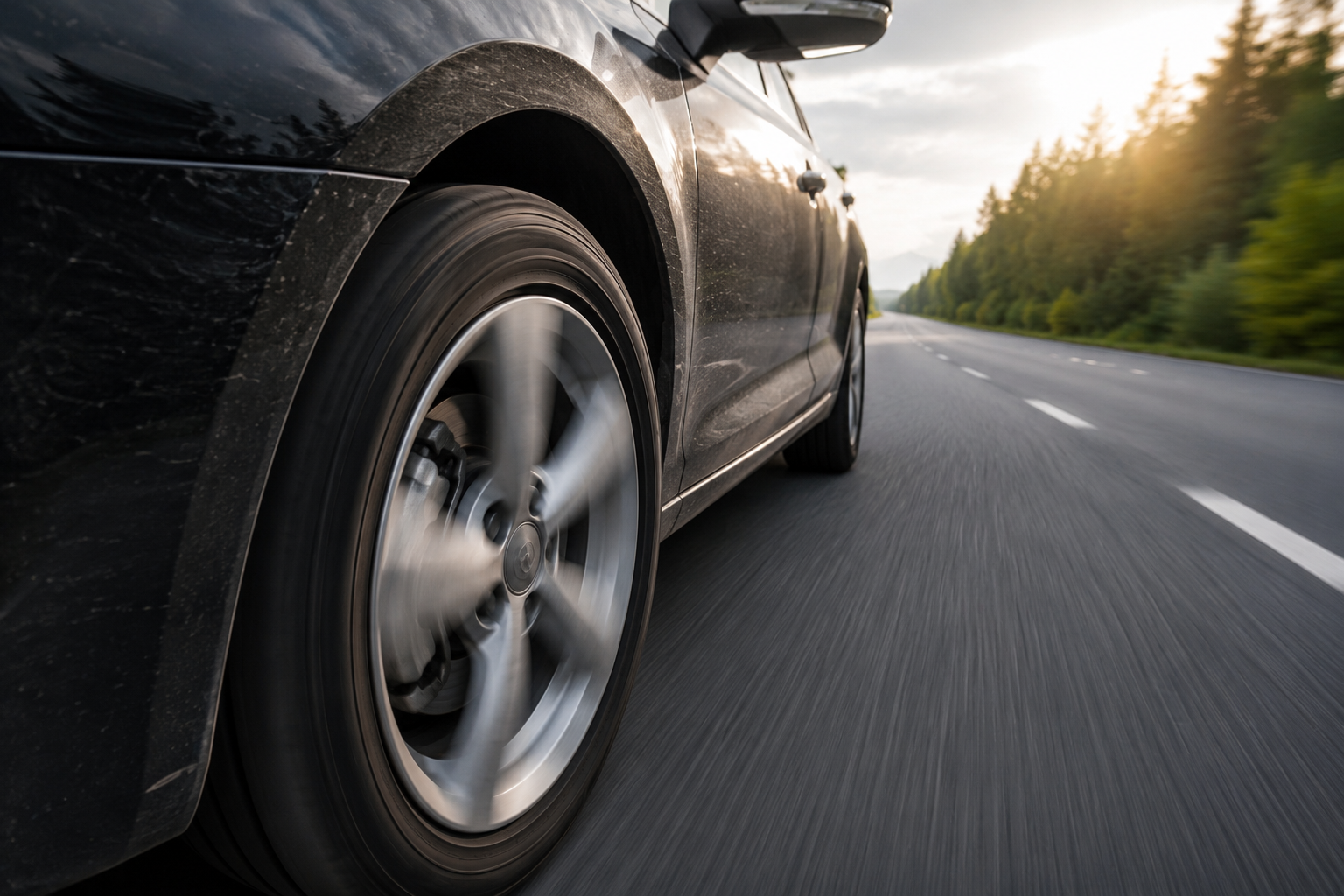
After installing a new set of tires, many drivers expect the vehicle to immediately demonstrate the best handling and confident road grip. It would seem that new automotive tires should perform better than tires that already have some degree of wear. However, the first kilometers after installation have their own characteristics.
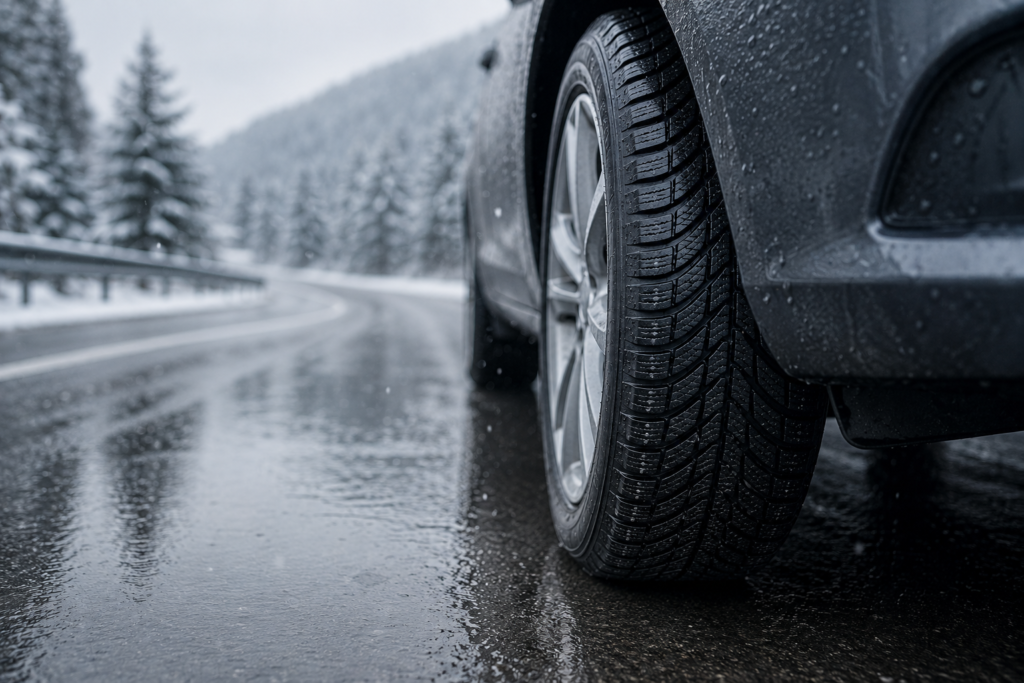
Manufacturers do not recommend a cautious driving style during the initial stage of operation by accident. Breaking in new tires is related to their manufacturing technology and the way the tire adapts to real road conditions. Not only driving comfort but also the longevity of the tire set depends on how the first few hundred kilometers are completed.
The break-in period allows the rubber to gradually reach its optimal operating characteristics and ensures stable vehicle behavior in various situations.
The Technological Reason: Why Manufacturers Coat Molds with Lubricants and How This Affects Handling During the First Days
During tire production, special substances are used to help separate the finished product from the mold after vulcanization. Drivers commonly know some of these materials as factory mold-release lubricant.
After the tires are installed on a vehicle, the remnants of this layer gradually wear away during use. Until the surface is completely cleaned, traction with the asphalt may be slightly lower than after several hundred kilometers of driving.
In addition, the tire tread needs time to establish even contact with the road surface. The working surface gradually adapts to the loads that occur during driving, and the tire’s characteristics become more predictable.
The difference is most noticeable when driving on wet roads, during rapid acceleration, or while performing sharp maneuvers.
Winter Tire Break-In Features for Proper Seating of Tread Elements
The question of how to break in new winter tires becomes especially relevant with the arrival of the cold season. Winter tires have a specific rubber compound and tread design, so the adaptation period is no less important for them than for summer models.
For friction tires, often referred to as “studless” or “snow tires,” the main objective is the uniform formation of the contact surface with the road. During this period, excessive loads on the tires should be avoided.
Studded tire break-in requires even more attention. After installation, the studs need time to become fully secured in their mounting positions. If an aggressive driving style is used immediately after installation, some studs may loosen or fall out prematurely.
For this reason, the first trips on a new winter tire set should be calm and free from abrupt maneuvers.
The First 500 Kilometers: Speed Limits, Avoiding Hard Launches, Skids, and Emergency Braking
The break-in period does not require significant restrictions in everyday vehicle use. The driver’s main task is to avoid actions that create excessive stress on the new tires.
During the first 500 kilometers, it is advisable to:
- avoid hard launches with wheel spin;
- avoid emergency braking unless absolutely necessary;
- use smooth braking;
- monitor driving speed;
- avoid taking corners at the vehicle’s handling limits;
- avoid skidding and sudden lane changes.
These recommendations help distribute loads evenly across the entire tire contact patch. In addition, gradual adaptation allows the tire’s grip potential to be fully realized and helps ensure a stable braking distance under various road conditions.
A Tire Shop Tip: Why It Is Important to Check Tire Pressure and Rebalance the Wheels After the Break-In Period
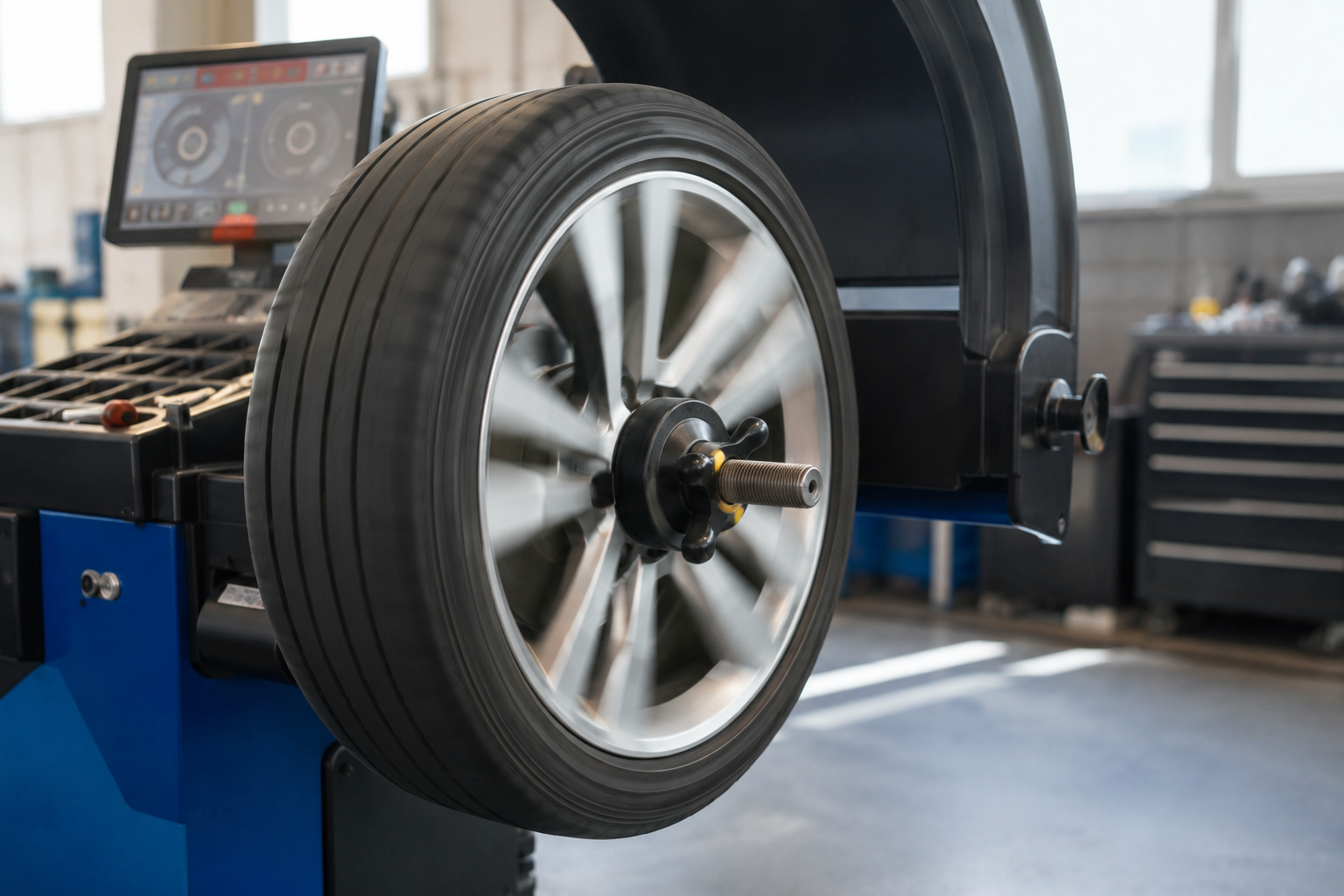
After completing the break-in period, it is useful to perform a follow-up wheel inspection. During the first few hundred kilometers, the tire settles into its final working position on the rim, so certain parameters may require additional checking.
During the inspection, it is advisable to check:
- tire pressure;
- tread wear uniformity;
- balancing quality;
- the absence of mechanical damage.
When searching for tire service providers on the Right Bank of Kyiv, drivers often encounter recommendations to check wheel balancing after the break-in period. This is because, during the first few hundred kilometers, a new tire fully settles into its working position on the wheel rim. A follow-up inspection allows any deviations to be detected in time and helps prevent vibrations when driving at higher speeds.
Breaking in new tires does not require complicated procedures or special preparation. It is sufficient to drive the first 500 kilometers without excessive loads, monitor the condition of the wheels, and follow the manufacturer’s recommendations. This approach helps preserve tire characteristics, improve road performance, and maximize the service life of the new tire set.
Top popular news
- Air Conditioner Losing Refrigerant Without Visible Damage: Causes and Solutions
- Why Wheel Alignment Goes Out After Adjustment: It Is Not Always the Alignment Rack
- Seized Brake Caliper: Symptoms, Causes, and Repair
- Changing the Oil in an AWD Differential: Why This Component Is Often Forgotten
- Check Engine Light Flashing: What the Signal Means and Why You Should Not Ignore It
- Preparing a car for a long trip: checklist before departure
- Oil leaking from the valve cover: causes of seepage and finding the source of the problem
- Automatic climate control does not maintain the set temperature: where to look for the cause

Subscribe to our newsletter!
To stay updated with the latest news


Book a service