Mon-Fri | 08:00 - 20:00


Find

Contact us

Kyiv
46 Kyrylivska St. (Podil)
 Мережа СТО в місті

Kyiv
46 Kyrylivska St. (Podil)
 Мережа СТО в місті

 Години роботи
 Mon-Fri
08:00 - 20:00
Suspension spring sagging: gradual loss of performance without an obvious failure
Suspension springs work under load every day. They support the weight of the body, absorb part of the impact from road irregularities, and maintain the correct position of the vehicle relative to the road surface.
Unlike parts with cracks or obvious mechanical damage, springs can lose their characteristics gradually. Under repeated compression and extension cycles, the properties of the metal change. This process is known as metal fatigue.
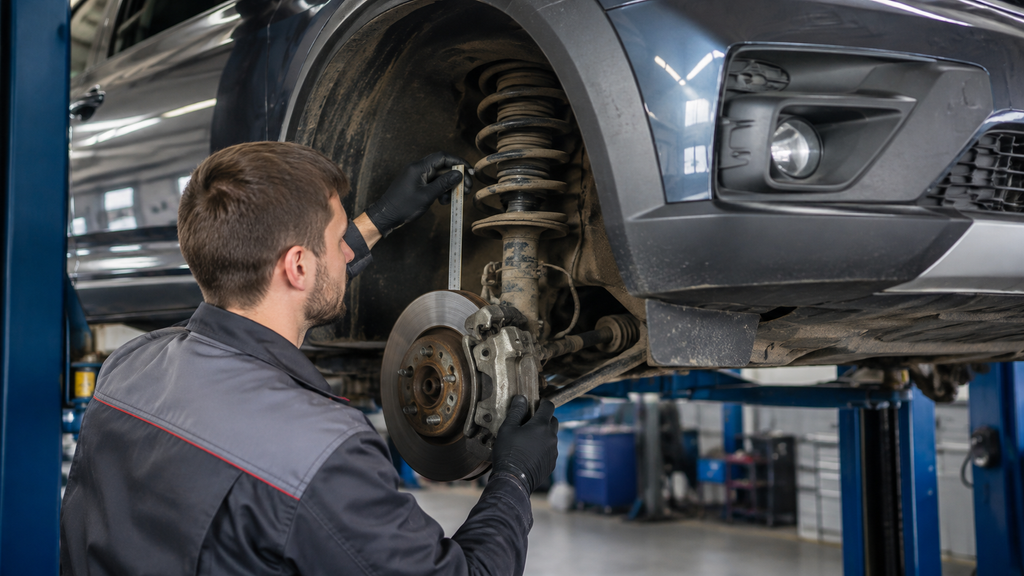
A spring may still look intact from the outside, but its ability to return to its original shape decreases. This changes body height, vehicle behaviour, and the load on suspension components.
Suspension springs lose their original characteristics gradually, so reduced effectiveness may remain unnoticed for a long time. The vehicle adapts to the changed conditions, and the actual difference can be assessed by measuring ride height and comparing it with factory specifications.
Metal fatigue: gradual loss of spring properties without cracks
A spring is designed for a large number of operating cycles, but every load causes small changes in the structure of the metal. Over the years, this process reduces the spring’s original elasticity.
Spring life is affected by:
- road surface quality;
- how often heavy loads are carried;
- operating the vehicle above its permitted mass;
- corrosion of the metal surface;
- long-term use without replacement.
The main sign of gradual ageing is a loss of spring elasticity. The spring can no longer maintain the original body height even though no obvious defects may be visible during inspection.
Possible signs of suspension spring fatigue include:
- a smaller gap between the wheel and wheel arch;
- different ride heights on the left and right sides of the vehicle;
- frequent suspension bottoming on uneven roads;
- greater sagging when the vehicle is loaded;
- reduced ride comfort.
Subtle lowering of the body and its consequences for the suspension
A drop of just a few millimetres may seem insignificant, but over time the difference becomes noticeable. The static body height (ride height) changes, bringing the vehicle closer to the road.
Owners often notice that the car has become lower over time, even though there was no sudden failure. The reason is the gradual loss of the metal’s properties.
Reduced ground clearance affects the operation of the entire suspension. Available spring travel decreases, bottoming occurs more often, and suspension components are exposed to additional load.
It is also important to consider how all the components work together. The shock absorber and spring work as a pair to stabilise the body, so a change in the characteristics of one component affects the behaviour of the other.
How sagging springs affect wheel alignment and tyre wear
Springs do not directly adjust wheel alignment angles, but changes in body height affect suspension geometry.
Because the position of control arms and other parts changes, camber and toe values may move away from specification.
Possible consequences include:
- uneven tyre wear;
- reduced road stability;
- changes in vehicle response to steering input;
- additional load on suspension components.
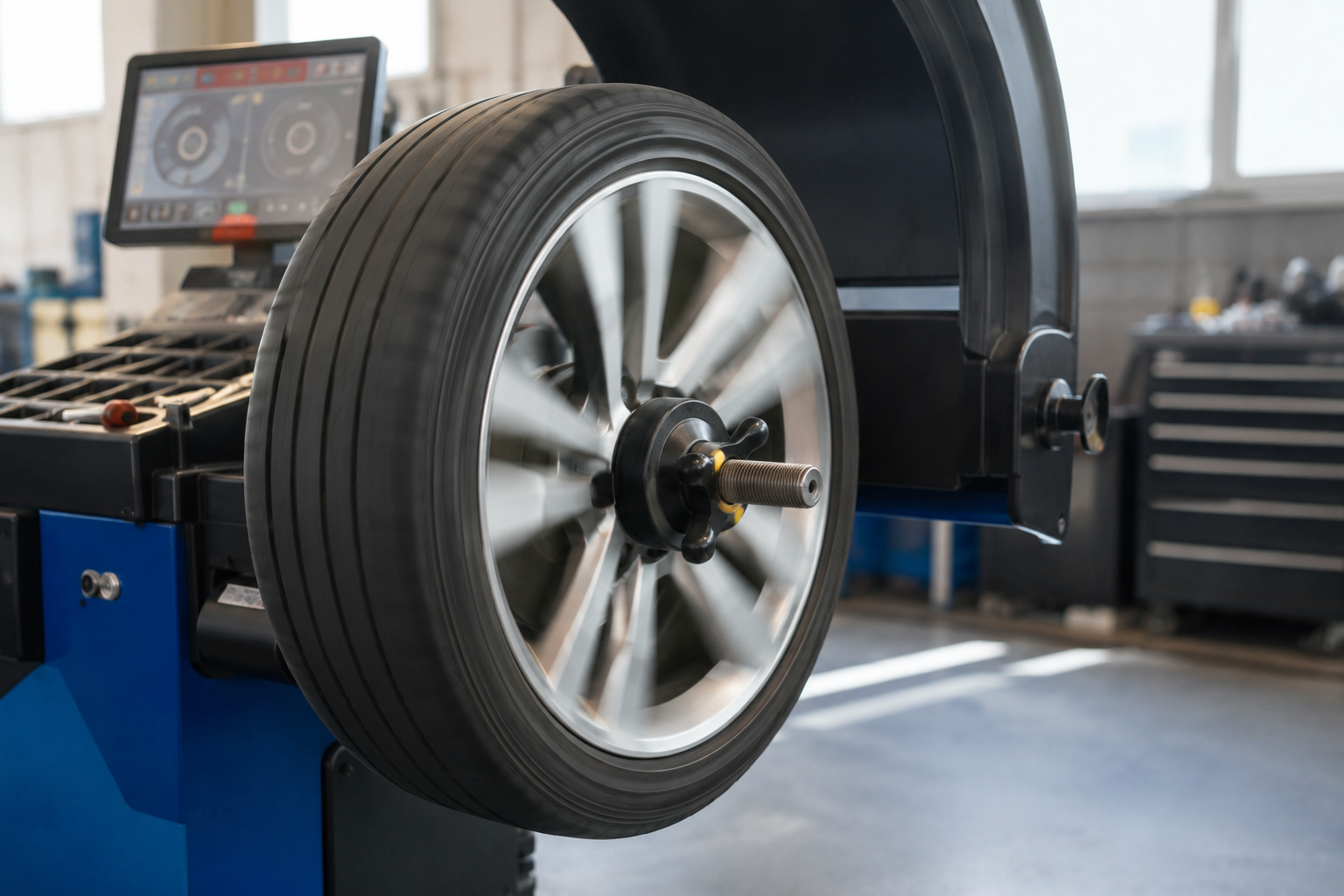
For this reason, the effect of sagging springs on wheel alignment should be considered during suspension diagnostics. After new parts are installed, wheel geometry often needs to be checked.
Checking body height: assessing ride height without special equipment
An initial assessment of spring condition can be carried out independently. The vehicle should be placed on a level surface and the distance from matching body reference points to the ground should be checked.
Check procedure:
- check the pressure in all tyres;
- place the vehicle without additional load;
- measure the height from the wheel centre to the edge of the wheel arch;
- compare the readings on both sides of the same axle;
- compare the result with factory specifications.
This method can reveal a noticeable difference in body height. A professional inspection is required for an accurate assessment of spring condition.
When sagging springs need replacement
A small drop in body height does not always mean there is a critical fault. However, certain signs indicate that the part has lost its working properties.
Replacement is required when there is:
- a significant reduction in ride height;
- damage to the spring coils;
- a noticeable height difference between the two sides of an axle;
- regular suspension bottoming;
- worsening vehicle handling.
The final cost of the work is determined by the type of vehicle, suspension design, and the parts selected.
During repair, the condition of both springs on the same axle is assessed because installing parts with different characteristics can affect vehicle balance.
Sagging springs do not always look like a serious failure, but they gradually change suspension operation, wheel geometry, and tyre life. Timely inspection helps determine when replacement is needed because of lost technical properties rather than merely the appearance of the vehicle.
Top popular news
- Preparing a car for a long trip: checklist before departure
- Oil leaking from the valve cover: causes of seepage and finding the source of the problem
- Automatic climate control does not maintain the set temperature: where to look for the cause
- Brake pipes and hoses: different designs with different risks
- PCV crankcase ventilation valve: why a fault leads to oil leaks
- Headlights fogging from the inside: normal condensation or a sign of housing damage
- Steering rack: hydraulic leak or electric power-steering fault – how the problem is diagnosed
- Engine air and cabin filter replacement: why urban conditions change service intervals

Subscribe to our newsletter!
To stay updated with the latest news


Book a service