Mon-Fri | 08:00 - 20:00


Find

Contact us

Kyiv
46 Kyrylivska St. (Podil)
 Мережа СТО в місті

Kyiv
46 Kyrylivska St. (Podil)
 Мережа СТО в місті

 Години роботи
 Mon-Fri
08:00 - 20:00
Steering rack: hydraulic leak or electric power-steering fault – how the problem is diagnosed
A vehicle’s steering rack can use different designs, although its purpose remains the same: to transfer steering input to the wheels and help the driver control direction accurately.
The mechanisms may perform the same function, but their operating principles differ significantly. A hydraulic rack uses the pressure of a special fluid, while an EPS electric system operates using an electric motor, sensors, and an electronic control unit.
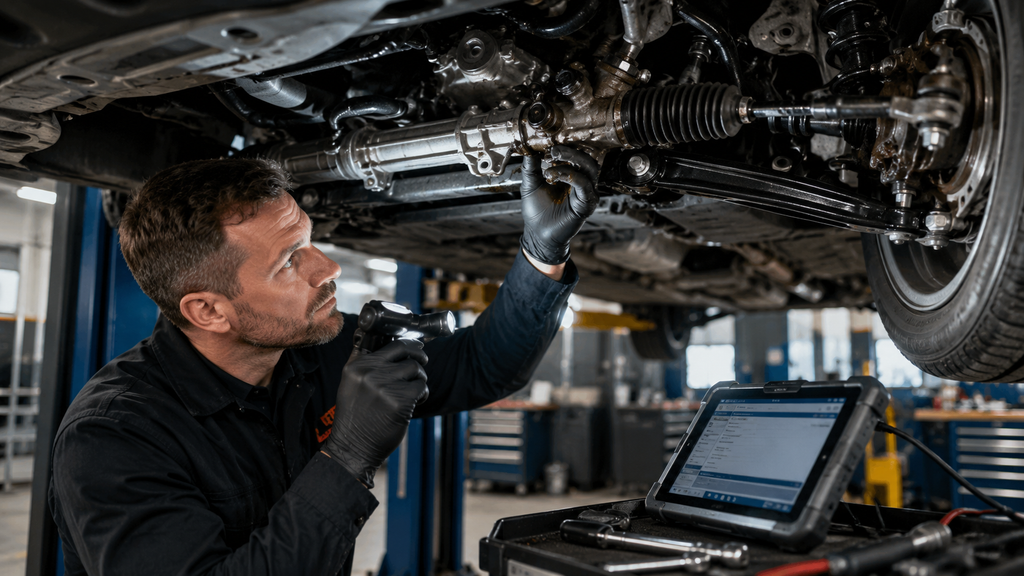
Because the designs differ, their typical faults differ as well. Hydraulic systems are more prone to sealing problems, worn seals, and fluid leaks. Electric racks usually require inspection of electronic components, sensors, and the drive system.
For this reason, the diagnostic and repair approach cannot be the same for both types of mechanism.
Two different designs under one name
Hydraulic and electric steering racks perform the same task but have different internal designs.
A hydraulic system consists of:
- the mechanism housing;
- the toothed rack and pinion;
- fluid passages;
- rack oil seals;
- sealing elements.
When the steering wheel is turned, the pump creates the pressure needed to assist wheel movement.
In an EPS design, an electric drive replaces the hydraulic circuit. The main components are:
- the EPS electric motor;
- the torque sensor;
- the control unit;
- the mechanical part of the rack mechanism.
The electronics analyse steering effort and determine how much assistance should be provided while driving.
Hydraulic steering rack: causes of leaks and typical symptoms
One of the typical faults in a hydraulic mechanism is loss of sealing. Hydraulic fluid constantly circulates through the system, while seals gradually lose elasticity because of mileage, temperature, and load.
Signs of a problem include:
- fluid spots under the vehicle;
- a falling fluid level in the power-steering reservoir;
- traces of oil or fluid on the rack housing;
- unusual noise when turning the steering wheel;
- uneven steering effort.
The main signs of a leaking steering rack are directly related to loss of sealing. Damaged rack seals or wear of internal surfaces are common causes.
Repair in this case may include replacing the seals, restoring working surfaces, and checking the mechanism after reassembly.
Delaying repair increases the risk of damage to other parts of the system because operating with too little fluid puts additional load on the power-steering pump.
EPS electric steering rack: when electronics cause the problem
An electric system contains no hydraulic fluid, so leakage cannot be the cause of the fault. The main problems are related to the electronics or the drive mechanism.
Possible causes include:
- a faulty torque sensor;
- a control-unit error;
- wear of the EPS electric motor;
- damaged wiring or contacts;
- mechanical wear of the rack mechanism.
An electric power-steering warning on the instrument panel is often accompanied by increased steering effort or complete loss of assistance.
Computer diagnostics are required to determine the cause. They make it possible to check system faults, sensor operating parameters, and the condition of electronic components.
Replacing the entire rack without prior testing is not always justified because the fault may be limited to a single component.
Steering play: when the rack is really the problem
Play in the steering system is not always caused by the rack itself. Similar symptoms may be related to worn tie rods, tie-rod ends, or other suspension components.
Before repair, technicians check:
- the condition of the tie rods;
- the tie-rod ends;
- the rack mounting points;
- protective boots;
- the rack’s internal components.
A faulty rack itself may cause knocking on uneven roads, imprecise steering response, and excessive play.
In addition, heavy steering caused by a rack fault may have different causes. In a hydraulic system, the problem may involve fluid pressure or mechanical damage. In EPS, the fault is often in the electric drive or control system.
Repairing individual parts or replacing the complete assembly
The repair method depends on the condition of the steering rack and the cost of restoring individual components.
In hydraulic systems, replacing seals or restoring damaged parts is often sufficient. Electric systems require checks of the sensors, electric motor, and electronic control unit.
The cost of steering rack repair depends on the design type, the price of parts, and the complexity of the work.
If there is significant mechanical wear or damage to several components, replacing the complete rack may be more appropriate.
Correct diagnostics help identify the real cause of the fault and choose the most suitable repair method. Hydraulic mechanisms and EPS systems require different approaches, so repair always starts by identifying the design type and checking the relevant components.
Top popular news
- Preparing a car for a long trip: checklist before departure
- Oil leaking from the valve cover: causes of seepage and finding the source of the problem
- Automatic climate control does not maintain the set temperature: where to look for the cause
- Brake pipes and hoses: different designs with different risks
- Suspension spring sagging: gradual loss of performance without an obvious failure
- PCV crankcase ventilation valve: why a fault leads to oil leaks
- Headlights fogging from the inside: normal condensation or a sign of housing damage
- Engine air and cabin filter replacement: why urban conditions change service intervals

Subscribe to our newsletter!
To stay updated with the latest news


Book a service